

[비즈한국] The mixed-use development project for the "Jeongneung Public Bus Depot" in Seongbuk-gu, Seoul, which has been pursued since 2013, is once again on the verge of drifting. After collapsing once in 2019, the project gained momentum when Mayor Oh Se-hoon took office and included it as a campaign pledge. However, due to being stalled by the Ministry of the Interior and Safety's Central Investment Review last April, the goal of breaking ground in 2026 has become difficult to achieve.
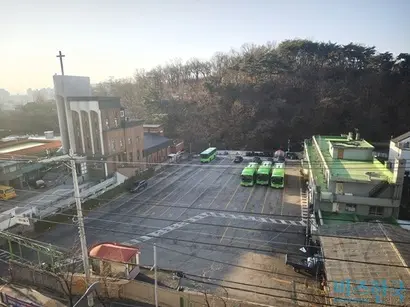
The Jeongneung Public Depot, located in Jeongneung-dong, Seongbuk-gu, Seoul, spans approximately 3,600 square meters. Because it is situated in a densely populated residential area, concerns over noise and safety accidents have been persistent, making the relocation and development of the depot a long-standing desire for nearby residents. The sluggish project gained sudden speed after Mayor Oh Se-hoon made it a key campaign promise. From 2023, the Seoul Metropolitan Government pursued a mixed-use development plan to move the depot underground and build cultural and sports facilities, including a swimming pool, on the ground level.
Initially, the total project cost was estimated at approximately 76 billion won, but it was reduced to 475 billion won in consideration of financial burdens. The Seoul Metropolitan Government requested a local finance central investment review from the Ministry of the Interior and Safety with the goal of breaking ground in 2026. The central investment review is a procedure that verifies the feasibility of budget allocation for new local government investment projects costing over 30 billion won. However, the project hit a snag after receiving a "re-evaluation" decision during the review last April. Ironically, emphasizing public utility by increasing the proportion of cultural and sports facilities backfired, as the reason cited was low profitability relative to project costs.
Ultimately, it appears the Seoul Metropolitan Government is starting over from scratch. To supplement the project plan, it has now embarked on a "re-establishment of basic concepts" study. Previously, at a meeting of the Seoul Metropolitan Council's Housing and Spatial Planning Committee held in June, the Seoul Future Space Planning Officer stated, "We received a notice of re-evaluation from the central investment review," and added, "If you reflect the supplementary budget, we will supplement the development concept plan."
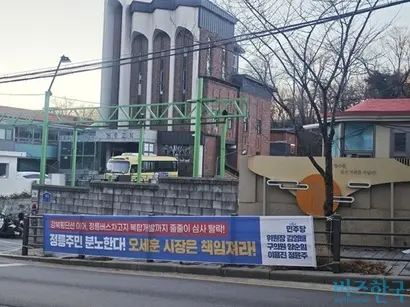
Residents are demanding a responsible attitude from the Seoul Metropolitan Government. Local politicians, regardless of party affiliation, have also spoken with one voice to urge for a swift resumption. Last October, Seoul City Council member Han Shin (Democratic Party of Korea) and residents of Jeongneung-dong held a press conference, strongly demanding, "As promised by the Seoul Metropolitan Government, invest the full municipal budget and push forward with the original plan." Seoul City Council member Kim Won-joong (People Power Party) also lent his support by submitting a "Petition Urging the Rapid Promotion of the Jeongneung Depot Mixed-Use Development" to the Speaker of the Seoul Metropolitan Council last month.
In response, a Seoul city official explained, "A revision of the plan is inevitable following the results of the central investment review in April," adding, "We commissioned a basic concept study last September with the budget secured through the supplementary budget, and we are preparing with the goal of passing next year's central investment review."
However, it is highly likely that the broad framework of the basic concept will be maintained. This is because the "sports facilities," which are the core of the original plan, are an absolute demand from the residents. In particular, as the demand for the construction of sports facilities, including a swimming pool, is strong, the prevailing view is that it is difficult to significantly reduce the scale of the facilities. It is expected that the Seoul Metropolitan Government will seek a breakthrough by adding revenue models, such as cafes, to resolve the issue of insufficient economic feasibility.