

[비즈한국] Environmental pollution caused by industrial waste landfill, incineration, and hazardous recycling facilities is becoming a serious nationwide problem. Cases of construction being halted due to landfill accidents or a lack of post-closure management are occurring one after another. Civil society points to the private-centered treatment structure, the failure to apply the "producer-responsibility" (origin-based) treatment principle, and the lack of resident oversight as the root causes of these structural problems, urging for strengthened public oversight. On the other hand, critics argue that a system where the public sector directly operates industrial waste disposal is unrealistic, raising concerns about potential side effects such as infringement on the freedom of occupation and the weakening of the "polluter pays" principle. The conflict surrounding the industrial waste treatment system is now escalating into a full-scale institutional debate.
Profits for Private Firms, Victims for Residents
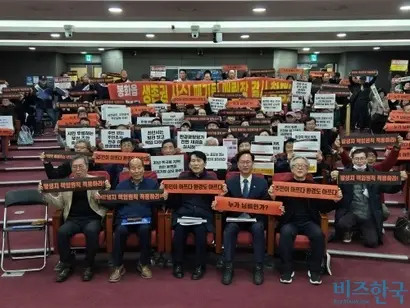
At the 'National Assembly Forum for Industrial Waste Victim Testimony and Institutional Improvement' held on December 10 at the National Assembly Member's Office Building—co-hosted by Democratic Party lawmaker Song Jae-bong, the Public Interest Legal Center Nongbon, and the Korea Federation for Environmental Movements—about 200 residents from areas affected by industrial waste testified about the damages occurring in their regions. The biggest issue highlighted at the forum was a structure where private companies reap the profits and evade post-management responsibilities, while residents and local governments are left to bear the damage.
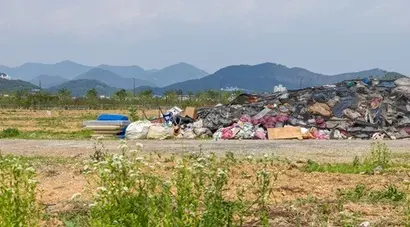
The industrial waste landfill in the Godae and Bugok districts of Dangjin, South Chungcheong Province, is a prime example of "hit-and-run" management. In 2012, a private company went bankrupt while still in the black, leaving the landfill abandoned. The city of Dangjin then took over the site as a donation for public use, shifting all post-management responsibilities to the public sector. Even now, the facility struggles to manage leachate, which remains at 21.8m (Godae) and 13.9m (Bugok), far exceeding the legal safety threshold of 2m. Hundreds of millions of won in tax money, including 966 million won in 2023 and 270 million won in 2024, are poured into treating thousands of tons of leachate each year.
As for incineration plants, the case of the Balan Industrial Complex waste incinerator in Hyangnam-eup, Hwaseong, Gyeonggi Province, was introduced. The Balan complex is an area dense with factories, residential homes, daycare centers, and shops, yet the incinerator is operating just hundreds of meters away from a daycare center. Resident Lee Chang-jae noted, "There is only one hill between the daycare center and the incinerator," adding, "Infants who are vulnerable to air pollution are being exposed to pollutants from the incinerator during outdoor activities."
The issue of hazardous waste recycling was also addressed. While solid refuse fuel (SRF) and cement kilns are classified as "recycling" in industrial waste treatment, they cause environmental damage similar to incineration due to the nature of using waste as fuel. Secondary lead smelting and secondary battery recycling also generate harmful substances like lead and other air pollutants during the smelting and battery melting processes. In Yeongju, North Gyeongsang Province, a controversy erupted this year when it was revealed during a trial that a lead factory had underreported its air pollutant emissions by a factor of 200.
Unlike municipal waste, which is managed by local governments, industrial waste is not handled by the public sector. As of 2023, approximately 99.1% of industrial waste was treated by the private sector. Furthermore, the "origin-based treatment principle" is not applied. While industrial waste is generated in large cities, the facilities that treat it are mostly concentrated in non-capital regions and rural areas where permits are easier to obtain.
Local residents point out the inequality in being forced to handle waste for regions that generate very little of it. Lee Dong-gyo, head of the opposition committee against the designated waste landfill in Beolgyo-eup, stated, "We want to produce healthy agricultural products and provide safe food from places with clean air and water," and added, "Building a landfill in Boseong, which generates less than 0.02% of the total industrial waste, defies both logic and justification."
Industrial Waste Accounts for 87% of All Waste, Mostly Privately Managed
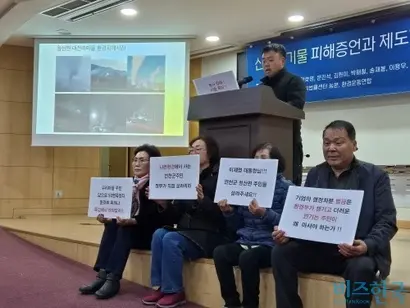
Civil society points out that the current industrial waste industry structure ensures profits go to companies, damages go to residents, and post-management costs come from taxes. Kim Hyung-soo, policy team leader at the Public Interest Legal Center Nongbon, pointed out that while the net profit margin of industrial waste landfills reaches 50-60%, many companies close mid-operation to avoid the decades-long responsibility of leachate and site management, passing the burden of post-management onto the state and local governments.
As of 2023, industrial waste accounts for 87.3% of all waste. Municipal waste, which makes up 12.7%, is managed by local governments under the Waste Management Act, but the treatment of industrial waste, which carries significantly higher volume and toxicity, is almost entirely dependent on the private sector. This is why civil society is demanding that the public sector take responsibility for industrial waste treatment and apply the origin-based treatment principle.
In response, Representative Song Jae-bong (Democratic Party) proposed amendments to the Waste Management Act and the Act on the Promotion of Installation of Waste Disposal Facilities and Support for Adjacent Areas on July 30. The main contents include restricting new industrial waste facility operators to the public sector, applying the principle of origin-based treatment, establishing resident support funds, and operating resident monitoring teams.
Looking at the proposed amendments to the Waste Management Act, new industrial waste landfill and incineration facilities would be restricted to entities with minimum public accountability (public institutions, local public enterprises, etc.). It also mandates that waste be treated within the jurisdiction where it originated, with a "cooperation fee" imposed if waste is transported outside the designated jurisdiction.
The proposed amendments to the Waste Disposal Facilities Act include allowing resident monitors to observe the intake and treatment processes at private waste facilities. It also aims to create a "support fund for adjacent areas" financed by new contributions from private waste facilities to support projects for income improvement, welfare, and environmental conservation for residents in the affected areas.
Climate Ministry and Industry Oppose Public Responsibility
The amendment proposed by Representative Song is currently stalled after receiving a negative review report from the National Assembly's Environment and Labor Committee. According to the report, both the National Assembly Secretariat and the Ministry of Environment expressed concerns. They argued that making industrial waste a public responsibility and applying the origin-based treatment principle is unrealistic, potentially unconstitutional, and could weaken the "polluter pays" principle.
First, they pointed out that restricting the entities allowed to engage in the industrial waste disposal business to public institutions or local public enterprises could be unconstitutional by limiting the freedom of occupation. They also noted that limiting disposal business to the public sector would require enormous financial resources, and due to limitations in treatment capacity, it could lead to rising disposal costs and an increase in illegal waste stockpiling. Regarding the origin-based treatment principle, they argued that it is impractical given that specialized treatment facilities are already established in specific regions.
Kim Yang-dong, Director of the Waste Resource Management Division at the Ministry of Environment, stated, "Even when we held a national contest for public waste resource management facilities, no local government applied, so I question if public-led industrial waste treatment is an effective alternative," adding, "If public institutions bear the duty of treatment, it might weaken the polluter-pays principle by allowing business operators to shirk their responsibilities."
The Korea Waste-to-Energy Association and the Korea Industrial Waste Landfill Association, along with 19 other waste-related associations, argued that the proposed "cooperation fee" could overlap with the existing "waste disposal contribution" currently in operation. To address the "hit-and-run" problem where companies close down and dump post-management costs on the public, they suggested improving the "abandoned waste treatment performance guarantee system" by increasing the ratio of cash deposits over guarantee insurance.
Kim Hyung-soo of the Public Interest Legal Center Nongbon countered, "The public sector can actually manage the polluter's responsibilities more effectively through direct intervention," adding, "It doesn't necessarily exclude the private sector, as it can participate in the form of contracting."
Representative Song Jae-bong stated he would continue to consult with the administration to ensure the passage of the amendments. "Industrial waste must be managed under public responsibility to ensure environmental protection and democratic participation by residents," he said. "Only by creating a system that shares the massive profits of the waste disposal business can we convince local residents."