

[비즈한국] On the 5th, Seoul Mayor Oh Se-hoon, who was visiting Hanoi, Vietnam, boasted of his "waterfront innovation." The Seoul Metropolitan Government stated that Mayor Oh shared policy experience and know-how, such as waterfront innovation development, in Hanoi. Waterfront development is a core task of Mayor Oh Se-hoon’s "Future Sensibility City" strategy. Along with the "Hangang Renaissance" project, which includes the Hangang Bus, Mayor Oh is pushing for the "Seoul-style Waterfront Sensibility City," which reorganizes the streams and rivers flowing throughout Seoul. How far has Seoul’s blueprint to create 30 waterfront vitality hubs by 2025 come?
4 pilot project sites, Jeongneungcheon still ‘incomplete’
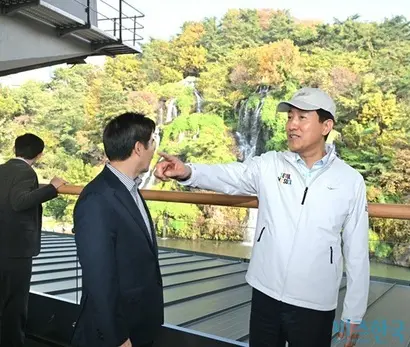
When the Seoul Metropolitan Government launched the "Waterfront Sensibility City" project in 2022, the first pilot sites selected were Dorimcheon, Jeongneungcheon, and Hongjecheon (middle and upper reaches). Among these, the "Waterfront Terrace Cafe" created at the artificial waterfall in the middle reaches of Hongjecheon established itself as a tourist attraction early on. However, with the exception of Hongjecheon, the completion of the other pilot project sites was delayed one after another due to various deliberations, permitting procedures, and construction difficulties during the rainy season.
Dorimcheon in Dongjak-gu and Hongjecheon (upper reaches) in Jongno-gu, which were originally scheduled for completion in the first half of 2023, did not open until the second half of last year, exceeding their target dates by more than a year.
Jeongneungcheon is still under construction. The target was originally set for completion in the first half of 2023; the project period was extended once to December 2024, but construction has yet to be finished now that the year has passed. The current project period has been pushed to June of next year, a delay of one year and six months from the original plan.
16 out of 27 sites opened
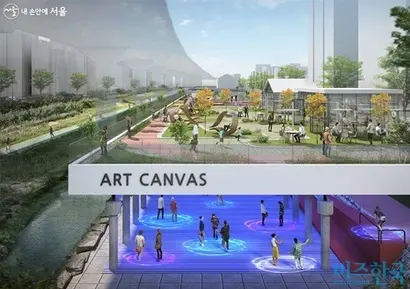
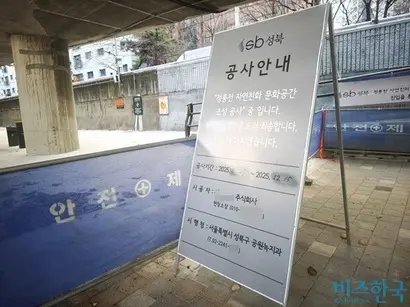
According to Bizhankook’s reporting, out of 27 rivers that the Seoul Metropolitan Government confirmed and is pursuing as waterfront vitality hubs, only 16 have been completed and opened to the public. This means that construction is delayed at 11 sites, which accounts for about 40%. The currently incomplete sites include Jeongneungcheon, Seongnaecheon, Yeouicheon, Anyangcheon, Jungnangcheon, and Uicheon.
In particular, in the case of Seongnaecheon in Songpa-gu, it was scheduled to be completed in June of last year, but the project was put on hold and the design service was re-procured. As a result, the completion target date was significantly pushed back to December 2027. Although the Seoul Metropolitan Government originally aimed to build a total of 30 sites by 2025, it appears that the project scope was adjusted to a total of 27 sites, including the 7 sites selected additionally last year, in consideration of realistic conditions.
A Seoul city official explained, "There are a total of 27 sites currently being pursued with certainty," adding, "Although there are some delays due to budget situations, we plan to proceed with the project through next year. Hubs that have already been created, such as Hongjecheon and Yangjaecheon, are gaining great popularity among citizens."
Residents: “Suffering from construction noise,” Environmental groups: “Concerns about ecosystem destruction”
As construction delays drag on, some are voicing their fatigue. A resident living near Bulgwangcheon, where construction has continued for about two and a half years, complained, "I’ve had to endure construction noise for over two years. When I actually see the completed structure, I even wonder if the artificial structure is ruining the aesthetic."
Concerns are also being raised about the destruction of the ecosystem due to simple civil engineering work. An official from an environmental group criticized, "Even though areas like Seongbukcheon are habitats for various species, the logic of development was prioritized."
Kim Dong-eon, director of the Seoul Korean Federation for Environmental Movement, pointed out, "We are currently monitoring several waterfront vitality hub sites," adding, "The disappointing part is that the project is being carried out by viewing the river merely as an object for 'viewing.' Since they are not confident in water quality improvement or ecosystem conservation, they are being created as spaces where people just watch from a distance, separated from the stream."