

[비즈한국] As Artificial Intelligence (AI) Text-to-Speech (TTS) technology expands into a major feature in the e-book market, a legal battle between Korea's largest e-book platform, Millie's Library397440, and the audiobook platform Welaaa is sparking controversy across the industry. With the court ruling that TTS functionality constitutes an act of reproduction and transmission, shifts in the service structure and accessibility policies of e-book platforms appear inevitable. (Related Article: [Exclusive] "Reading Books Aloud is Also Copyright Infringement," Millie's Library Found Liable for Unauthorized TTS Service)
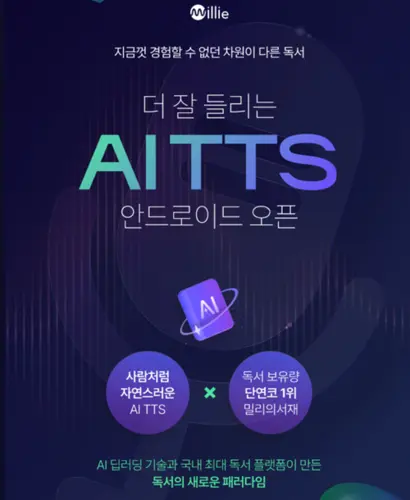
"TTS Subject to Copyright": What is the Fate of Book-Reading Features?
The results of the appellate trial in the exclusive publication rights infringement lawsuit between Millie's Library and Welaaa, handed down this June, sent significant shockwaves through the industry. The Seoul High Court recognized that Millie's Library's provision of TTS features for the books in question constituted copyright infringement. The six books in dispute were titles for which Welaaa had acquired exclusive publication rights for audiobooks from two publishers.
TTS is a service that automatically reads book text aloud. It can be activated simply by pressing a play button within an e-book viewer. This technology was not originally designed with monetization or as a standalone service in mind; rather, it was intended as an auxiliary feature to enhance User Experience (UX) and accessibility.
People with visual impairments and the elderly already use TTS as an essential reading tool. International standards, such as the Web Content Accessibility Guidelines (WCAG) and the European Accessibility Act, list TTS as a technology that should be provided for users who have difficulty reading text. In Korea, instances where web novel or e-book platforms failed to provide TTS have even led to controversies over discrimination against disabled individuals.
The court took issue with the process by which EPUB (standard e-book format) files of these books were converted into audio via TTS in the Millie's Library app and delivered to users. The court determined that even if separate audiobook files were not stored or distributed, it still constituted reproduction and transmission under copyright law. Furthermore, it identified the platform—Millie's Library—not the user, as the primary party performing this reproduction and transmission.
The reasoning included: the structure in which text is extracted from DRM-protected EPUB files to temporarily create and store wav-format audio data upon TTS execution; the fact that the user's role is effectively limited to "selecting a book and clicking the TTS button"; and the fact that Millie's Library entirely manages and controls the relevant programs, servers, and app environment.

Rising Tension Amidst AI TTS Growth; "Attention" Turns to Supreme Court
The lawsuit is currently pending in the Supreme Court. The appellate ruling, which overturned the first-instance decision, is considered an inflection point that could shake the foundations of the domestic e-book and audiobook market beyond just the two companies involved. This is because the status of TTS has abruptly shifted from a simple convenience feature to an act of copyright usage that requires separate permission, contracts, and settlements. While some view this as setting a new standard for protecting copyright across e-books and audio content, there is strong pushback regarding accessibility.
Platforms offering e-book services are deeply concerned about this issue, arguing that the judgment is disconnected from the realities of the market and its users.
The core of the issue is that the court's judgment directly conflicts with industry contract practices. The exclusive publication rights contract at the center of this case has traditionally been applied with "human-recorded audiobooks" in mind. In e-book contracts signed between publishers and platforms to date, TTS has been treated as an auxiliary feature for providing e-books without needing separate clauses.
An official from Platform A stated, "If you look through industry contracts, you can assume that almost none have separate copyright agreements for TTS. Even the publishers who hold the actual copyrights of the authors are puzzled, with many asking, 'How could such a novel lawsuit exist?' The prevailing atmosphere is to wait and see, with hopes for a different judgment from the Supreme Court."
Some suggest that if other publishers and copyright holders begin filing lawsuits, no bookstore or e-book platform would be safe. An official from Platform B noted, "If the industry has to overhaul its contract structures in the future, we expect significant fallout from the contractual vacuum. Transaction costs will skyrocket, creating an incentive to abandon accessibility features altogether. Protecting rights could end up paradoxically reducing the choices available to vulnerable readers."
The industry tension caused by the spread of AI TTS is also a background factor that cannot be overlooked. The e-book market has recently been rapidly adopting AI TTS technology capable of natural voice and intonation. Conversely, for audiobook platforms like Welaaa, which rely on professional voice actor narrations, the sophistication of AI TTS poses a threat as it creates potential competition with the existing audiobook market.
An official from a TTS technology-related firm explained, "Bookstores and e-book platforms are actively utilizing this as a core feature to improve user experience. Technically, as e-book text-to-speech performance advances, it no longer requires the separate production processes of traditional audiobooks, which is expanding the scope of the conflict."
For companies, the problem ultimately comes down to cost. According to industry sources, in many cases, a bookstore's profit on a single e-book sale is less than 100 won. The consensus is that the e-book business is still a "money-losing" venture in the development and investment phase. Adding TTS royalty costs on top of this would likely lead bookstores to abandon the feature rather than absorb the expense.
Predictions are emerging that if copyright costs are incurred for TTS usage, the service might follow the path of becoming a separate paid feature. Some have suggested providing the function for free only to the disabled and the elderly, but critics point out that this is unrealistic, as requiring proof of disability to a bookstore could lead to discrimination and privacy issues.
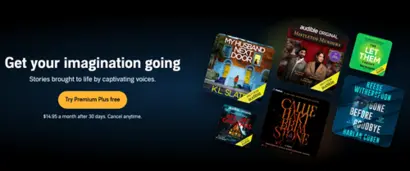
It is difficult to find precedents for "paid TTS" in the e-book market overseas. Europe is strengthening e-book accessibility standards, and even Amazon Kindle, the largest e-book platform cited as an exception, is difficult to compare directly. Kindle provides limited TTS functionality to protect authors' rights, but because Amazon also operates the audiobook platform 'Audible,' the conflict of interest structure is different.
It is understood that there has not yet been significant movement toward contract adjustments within the publishing industry. An official from Platform A remarked, "I am concerned that at a time when TTS is vitalizing the market and expanding the e-book reader base through accessibility, this could turn into a movement that regresses the technology. I believe a broader understanding of the industrial structure and reading culture is needed."
Some interpretations suggest that in the long term, this could be extended to serve as a benchmark for other AI-assisted functions like summarization, translation, and voice cloning. However, the appellate court placed a limitation, stating that even if exclusive publication rights were defined broadly in a contract, one cannot unilaterally interpret them to include activities like excerpting or summarizing that go beyond the scope of derivative work rights defined by the Copyright Act.