

[비즈한국] It has been discovered that at least 150 titles of so-called "click-and-publish" AI mass-produced books have been registered as library holdings in public libraries. These books, created based on content written by generative AI, suffer from low quality due to a lack of basic fact-checking, editing, and proofreading, and have been flagged for copyright issues. Public libraries lack the systems to filter out these mass-produced AI books, leading to the use of taxpayer money to purchase them. Experts express concern that this could undermine the fundamental purpose of public libraries: supporting high-quality reading and cultural activities.
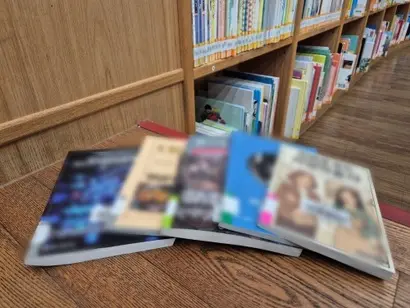
'Click-and-Publish' Books Have Entered Public Libraries
Recently, the publishing industry has been facing an increasingly serious issue with "click-and-publish," where generative AI is used to mass-produce low-quality books.
Publisher A published a staggering 17,000 books in 2025 alone. Most of these books were created using generative AI and are published electronically under the name "Editorial Department." A book on local food released by Publisher A did not even undergo basic editing, with informal ("haera") and formal ("hasipsio") speech styles mixed throughout the text.
Publisher B, which borrowed its name from OpenAI, pushed a "100 People, 100 Books" project and published 100 books simultaneously in a single day. In the book description for most of its titles, Publisher B effectively admitted to a lack of editing by including the disclaimer: "As this was written based on responses from ChatGPT, information such as URL links may not be accurate."
Publisher C has a writer using a specific pen name who utilizes ChatGPT to release books across completely unrelated fields, such as self-help, lyrics collections, and stock market guides. Publisher D, which originally handled study guides and IT books, also released a book on "Anju Pairing" written by ChatGPT. The book contained false information, such as claiming that the French beer "1664 Blanc" is produced by the HiteJinro000080 brewery, and included several instances of inappropriate content, such as referring to tteok-bokki as "spicy rice cakes."
The problem lies in the fact that these AI-mass-produced books are being incorporated into public library collections funded by taxes. A search on "Chaekbada," a public library support service, confirmed that at least 150 titles of AI mass-produced books have been registered in public libraries nationwide.
In addition to publishers that specialize in mass-producing AI books, numerous cases using self-publishing services like Bookk and Kyobo Book Centre Purple were also discovered. The exact scale is difficult to grasp, and as self-publishing continues to rise, the actual number of AI books in public libraries is estimated to be much higher.
Difficulty Refusing Purchases Due to Fears of 'Censorship' Complaints
Most AI mass-produced books are found to enter public libraries through the "requested book" (hope book) system. A district library in Seoul purchased a specific e-book from Publisher A, making it available for loan at its branch libraries. The library stated, "We purchased it because a citizen requested it as a desired book."
The issue is that there are no "generative AI-related regulations" in the criteria for excluding requested books. While there are criteria for "suggestive content," "high-priced books," and "materials requested for commercial or political purposes," there is no basis to exclude mass-produced AI books. An acquisitions manager at the library explained, "If we reject books outside the criteria, we could face complaints regarding censorship," adding, "We bought it because it was registered in the bookstore's e-book service."
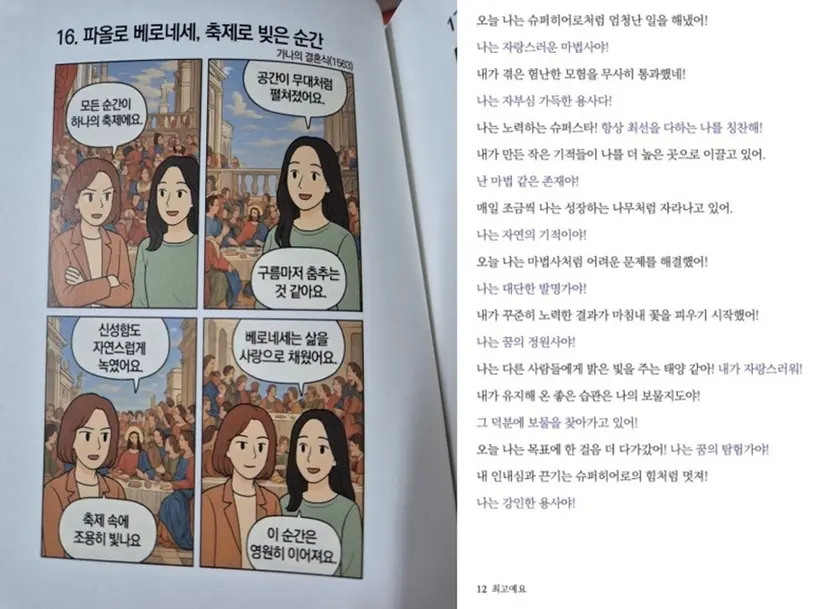
A public library in North Chungcheong Province also purchased a self-help book from Publisher C after it was requested. The book was filled with chapters containing repetitive sentences such as, "I have safely passed the difficult adventure I experienced! I am a warrior full of pride!" A representative from the library said, "There are no established criteria regarding AI, so there is no clear basis to exclude them."
Urgent Need for Pre-screening Systems
It is also pointed out that it is difficult to filter out mass-produced AI books at the acquisition stage due to personnel shortages. In fact, an official from a public library in Seoul stated, "With only one or two librarians having to screen tens of thousands of books every year, it is difficult to check them all individually," adding, "We are considering moving already purchased books to storage or discarding them."
The situation is no different for "regularly purchased books" selected by librarians. This is because most libraries proceed with regular acquisitions based on bestseller lists, new releases, and bookstore recommendations, often relying only on titles and brief introductions.
A book on plants by Publisher B was purchased as a regular acquisition by six public libraries in 2023. An official from a public library in North Gyeongsang Province, which purchased the book, said, "We set the necessary topics for the library and look at the latest books, but we don't have the capacity to investigate the writing methods."
Experts warn that the indiscriminate influx of low-quality AI books could devastate the publishing market and advise that public libraries must supplement their relevant guidelines. Kim Jong-sung, a professor of Library and Information Science at Keimyung University, emphasized, "The burden on librarians is increasing, leading to a greater reliance on external bookstores. By supplementing collection development guidelines and strengthening library-based collection services, libraries can prevent the influx of AI mass-produced books and secure high-quality collections."