

[비즈한국] Nongshim004370 is expected to accelerate investments in new business ventures as it promotes Shin Sang-yeol, Head of the Future Business Division, to Executive Vice President. While Shin has been responsible for Nongshim's new business sector since the end of 2023, he has yet to deliver notable market results. Observers suggest that with this promotion, Vice President Shin has officially entered a significant management trial.
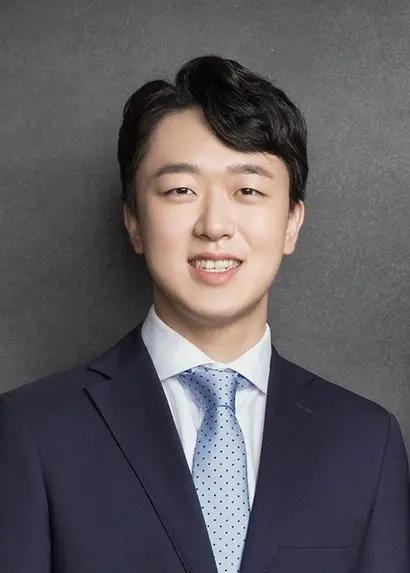
Nongshim Owner 3rd Generation Executive Vice President Shin Sang-yeol Steps to the Management Forefront
Nongshim recently announced through a regular executive appointment that it would promote Shin Sang-yeol, Head of the Future Business Division (Executive Director), to Executive Vice President effective January 1 next year. Born in 1993, Vice President Shin is the eldest son of Nongshim Chairman Shin Dong-won. After joining Nongshim as an entry-level employee in 2019, he worked through the purchasing and planning departments before being selected as a Managing Director in charge of purchasing in 2021 at the age of 29. At the time, he drew attention as “Nongshim’s first executive in his 20s.” With another promotion to Executive Director in 2024 and now to Executive Vice President just a year later, Shin has climbed to the company's core management line within six years of joining.
Recently, the food industry has seen a growing trend of placing 3rd and 4th generation owners at the forefront of management. Samyang Round Square recently promoted Jeon Byung-woo, Chief Operating Officer (COO) and Managing Director—the eldest son of Kim Jung-soo, Vice Chair of Samyang Foods003230—to Executive Director. Born in 1994, Jeon reached the Executive Director position six years after joining Samyang Foods in 2019. CJ001040 Group also established a 'Future Planning Group' and appointed Lee Sun-ho, the eldest son of CJ Group Chairman Lee Jay-hyun, born in 1990, as its head.
This trend is interpreted as a shift to address the stagnation of the domestic market and intensified global competition. As the limits of traditional stable and conservative management styles become apparent, there is a movement to put forward young leaders from the owner family who possess bold and flexible leadership to discover new markets and business opportunities. Nongshim explained, "We understand this appointment was made to refresh the overall atmosphere of the company."
However, there are also not a few voices of concern regarding the trend of young owner generations rising quickly to key positions without proven track records. With promotions occurring within short periods after joining, criticism that "succession has taken precedence over management ability" has been raised repeatedly.
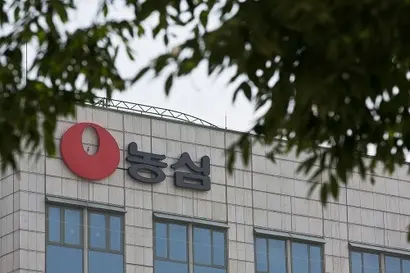
Vice President Shin is not free from such criticism. Some point out that while the new businesses he has overseen have yet to produce meaningful results in the market, his promotion pace might be excessively fast. Since taking charge of the Future Business Division, newly established at the end of 2023, Shin has been developing sectors such as pet food, smart farms, and health functional foods, but none of these ventures have produced results with verifiable market share or revenue significant enough to disclose.
The pet food and supplement brand "Banrye-daum," launched last July, entered the market with three types of dog supplements, but it has not secured a clear presence in the highly competitive pet food market. Nongshim does not disclose key performance indicators such as revenue or growth rates for Banrye-daum, and the industry response is that "it is not yet at a scale worthy of assessment." The health functional food brand "Lifill" also started as an in-house venture and transitioned into a formal business, but it is considered too early to evaluate its market influence.
Smart farms are considered the most externally visible achievement among Nongshim’s new businesses. The company built a mass-production-type smart farm on a 200-pyeong scale and exported a container-type smart farm to Oman in 2022. It is currently expanding exports by signing MOUs for smart farms with Saudi Arabia, Qatar, and others. However, as the specific revenue scale and profitability of this business remain undisclosed, critics point out that it is difficult to gauge actual business performance. Since it is difficult to objectively assess the actual accomplishments of these businesses, controversy surrounding the appropriateness of the 3rd-generation owner's promotion is naturally arising.
A Nongshim official stated, "The Future Business Division led by Vice President Shin is an organization responsible for market expansion and discovering new businesses rather than producing immediate results. The pet food sector is still in the in-house venture stage and has not been incorporated as a formal business, so we are not disclosing specific performance metrics such as revenue."
Regarding the smart farm business, the official explained, "Although it has been officially commercialized after passing through an in-house venture, its technology-based nature means it does not have a structure directly tied to immediate revenue, so we do not disclose separate revenue figures. Rather than seeing results within 1-2 years, we are expecting long-term performance."
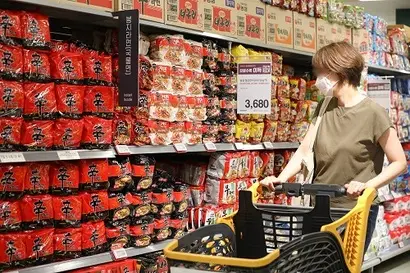
Limits with Ramen Alone, Nongshim Focused on Finding New Businesses
Nongshim is staking its future on discovering new businesses. This is due to a sense of crisis that further growth is difficult with a structure centered only on ramen and snacks. Currently, more than half of Nongshim's revenue comes from the ramen business. As of the third quarter of this year, the proportion of the ramen business in non-consolidated revenue reached 84.4%, and even in last year's consolidated revenue including overseas subsidiaries, the ramen business accounted for over half at 52.3%.
The problem is that the growth of the domestic ramen market has been stagnant for a long time. It is assessed that for Nongshim, which has a high dependency on ramen, there is an inevitable limit to expanding its scale. Furthermore, it is pointed out as a structural vulnerability that performance can fluctuate significantly depending on the external environment, as it is sensitive to price changes in imported raw materials like wheat flour and palm oil, as well as exchange rate fluctuations. Since ramen is considered a representative "national food," the strong resistance from consumers and the government against price hikes also acts as a burden on protecting profitability.
A Nongshim official explained, "Due to the stagnation of the domestic market, it is difficult to achieve results with existing businesses alone. That is why we are trying to discover various new businesses that can connect to company profits beyond simple food products."
The company also plans to embark on a mid-to-long-term strategy to break through the stagnant domestic market next year. The aforementioned official said, "We plan to implement a 'dual-core' strategy of fostering snacks as our second core business alongside ramen. In the mid-to-long term, we will review the noodle, pasta, and sauce markets to prepare various growth engines, and accelerate global growth by focusing on our 7 target countries (the U.S., Mexico, Brazil, India, the U.K., Japan, and China)."