

[비즈한국] With the flu season upon us, most people can easily purchase cold medicine at a pharmacy and alleviate their symptoms quickly. However, for a visually impaired person, a single pill is a completely different matter. It is difficult to identify the medicine, and the challenge becomes even greater when they have to administer it to a child. Living in a reality where they must rely solely on their "fingertips" to determine the name, dosage, and usage of the medicine, visually impaired individuals face anxiety and danger every time they pick up a pill, all due to the lack of adequate Braille labeling on pharmaceuticals.
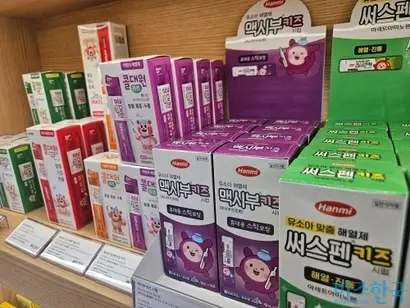
Following the enforcement of amendments to the Pharmaceutical Affairs Act and regulations regarding drug labeling, the inclusion of Braille and codes for voice or sign language video conversion became mandatory for 28 types of pharmaceuticals starting July 21 of last year. The same requirement was applied to 11 types of household medicine sold in convenience stores. However, a one-year grace period was granted to exhaust existing inventory and reduce confusion in the field. Notably, this list does not include children's medicine. Ultimately, it remains structurally difficult for visually impaired parents to administer cold medicine to their children.
Even for visually impaired adults, sufficient options for pharmaceuticals are not provided. According to the Ministry of Food and Drug Safety, there are 31,852 types of finished pharmaceuticals currently in circulation domestically. Of these, only 39 types (0.12%) are subject to the mandatory Braille labeling requirement. Even among these 39 types, the situation is even more dire when verifying whether the Braille labeling has been properly implemented. According to the "2025 Pharmaceutical Braille and Accessibility Code Labeling Monitoring Report" recently published by the Siloam Center for Independent Living, out of the 39 items including 11 types of convenience store household medicines and 28 types of mandatory pharmaceuticals, only 17 products (43.6%) actually featured Braille.
Household medicines showed a 72.7% implementation rate, with Braille present on 8 out of 11 items. However, for Tylenol 500mg tablets, the most commonly used antipyretic/analgesic in the country, it was difficult to find products with Braille labels in convenience stores. A representative from Kenvue, the manufacturer of Tylenol, explained, "We are complying with the mandatory Braille labeling policy in accordance with relevant laws, and targeted products are being distributed sequentially following the exhaustion of existing inventory based on the pharmaceutical distribution structure," adding, "This may cause differences in when Braille-labeled products are found at individual stores." Among the 28 types subject to mandatory Braille labeling, only 9 products actually had Braille, resulting in a 32.1% implementation rate. A Ministry of Food and Drug Safety official explained, "We understand that all products manufactured or imported after July 22 of this year have Braille labels," adding, "There may be no Braille on products produced before that date."
Even when Braille is provided, the inconvenience for the visually impaired persists. The size, position, spacing, and protrusion of the Braille vary from drug to drug, making it difficult to distinguish them. Often, Braille is only present on the outer packaging, not on the contents or instructions, making it impossible to identify the medicine once it is removed from the box.
For medicines dispensed at pharmacies based on hospital prescriptions, Braille labeling itself is difficult. This increases the risk of medication misuse or overdose, as patients cannot determine when to take which medicine—whether in the morning, afternoon, or evening. Last August, an 80-year-old visually impaired person accidentally handed a neighbor edible glacial acetic acid, which has a similar texture to a vitamin drink, leading to the death of a 70-year-old man who consumed it. An official from the Korean Blind Union stated, "Although labeling is legally mandatory, there are still many shortcomings in the field as it is in the settling phase," adding, "We hope the Ministry of Food and Drug Safety will actively consider ways to utilize Braille stickers for dispensed medicines as well."
Representative Kim Ye-ji of the People Power Party (proportional representation), a member of the National Assembly's Health and Welfare Committee who initiated the related legal amendment, criticized the situation, saying, "The pharmaceutical safety information labeling system for the visually and hearing impaired is a fundamental rights policy to guarantee the right to life and the right to information access." She added, "Despite having a sufficient preparation period, the fact that the implementation was effectively delayed by a year because the notification was not prepared on time is a clear administrative failure." She emphasized, "The practice of delaying implementation dates set by law for administrative convenience can never be tolerated from the perspective of disabled people who have been waiting for the system," and urged, "The Ministry of Food and Drug Safety must immediately provide inspections and follow-up measures, and establish systematic improvements to ensure that implementation dates are never delayed due to administrative convenience in the future."
In response, a Ministry of Food and Drug Safety official stated, "We are currently conducting an on-site survey through the Korea Institute of Drug Safety and Risk Management with the participation of people with disabilities to determine whether the provided Braille is at a level that is actually recognizable and understandable," adding, "We plan to recommend improvements based on the results."
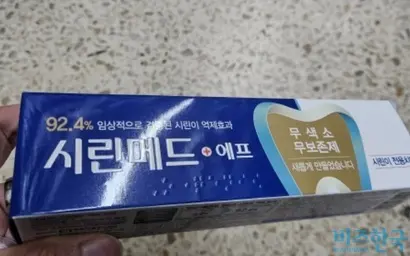
The pharmaceutical industry often adopts a passive attitude, citing the cost burden of replacing printing plates or introducing Braille machinery. Nevertheless, some pharmaceutical companies are expanding Braille labeling even when it is not mandatory, taking steps to improve information accessibility for the visually impaired.
Dong-A Pharmaceutical000020 is applying Braille to a total of 11 items, including not only 'Pancol-S Oral Liquid', which is subject to mandatory Braille labeling, and the household medicine 'Pancol-A Oral Liquid', but also Fucidin Ointment, Fucidin Cream, Posterisan Suppository, and Barzio Modu Cream. A Dong-A Pharmaceutical representative stated, "We began Braille labeling starting with Fucidin in 2006," adding, "We will continue to faithfully implement Braille labeling in accordance with the Ministry of Food and Drug Safety's guidelines."
Bukwang Pharmaceutical is known to have the most items with Braille labeling among domestic pharmaceutical companies. In addition to the digestive medicine 'Pazyme-95mg Double-Layer Tablet', which is subject to mandatory labeling, it applies Braille to about 40 items, including about 30 types of pharmaceuticals and 10 types of toothpaste. A Bukwang Pharmaceutical representative stated, "We have been paying attention even to the smallest details for the health and convenience of the visually impaired," adding, "We will continue to prioritize patient convenience and health as our core value."
In addition, Yuhan Corporation000100 provides Braille labeling for 18 types of products including the allergic rhinitis treatment 'Pheniramin Tablet' and the multivitamin 'Becom-C Tablet', while Daewoong Pharmaceutical069620 also applies Braille to 6 types, including 'Bease Tablet' and 'Daewoong Ursa Soft Capsule'.