

[비즈한국] It has become common for artificial intelligence (AI) to create works of culture, art, and content, and reactions of surprise have become rare. What we must consider important is that even for the same work or content, interest and preference change depending on who created it.

A research team from the Department of Linguistics at Charles University in the Czech Republic asked 126 native Czech speakers to distinguish between human-written poems and AI-written poems, and the accuracy rate was only 45.8%. This was lower than the 50% chance of guessing randomly. For modern poetry, the accuracy rate was even lower at 40.2%. This suggests that AI can write modern poetry more convincingly than humans. In a blind test, AI-written poems received an average score of 2.0, while human-written poems scored only 1.4. This indicates that AI-written poems actually have more room to resonate with people than human-written ones; in other words, they are easier to accept. However, the scores changed once it was revealed who wrote the works. A "human-authored work" received 2.3 points, while an "AI-authored work" received 1.0 point. In the "imagination" category, the gap widened further, with human works scoring 2.5 points and AI works scoring 1.6 points.
Similar results were found in a survey on music. According to a study by the French music streaming service Deezer, which surveyed 9,000 people in 8 countries, people could not distinguish between AI-generated music and human-created music. A staggering 97% failed to distinguish them, with only 3% succeeding. However, trust was very low. Only 19% trusted AI music. Furthermore, 51% evaluated it as stale or of low quality.
Moreover, when they later learned it was AI music, 52% responded that they felt unpleasant, and 80% responded that the fact it was produced by AI should be disclosed. It is evident that people prefer music or songs created by humans and believe that if artificial intelligence was used, that fact should be revealed.
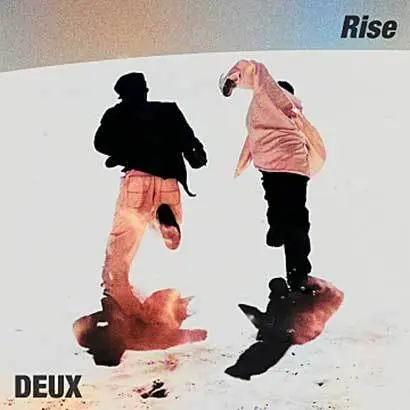
Recently, the new song 'Rise' by Deux was released, and it was disclosed that AI was used. Since Deux member Kim Sung-jae has already passed away, this disclosure was inevitable.
The situation is similar for webtoons. In May 2023, the webtoon 'The Knight King Who Returned with a God', serialized on Naver035420 Webtoon, was hit with a flood of negative star ratings. This happened after it became known that the author used AI to create the webtoon. A web novel serialized on Kakao035720 Page faced protests due to its cover, as the cover design was created using generative AI. In the cases of webtoons or cover designs, the authors themselves voiced their protests, largely because there is a high possibility that the works of unknown authors were used as training data for the AI.
Controversy has also arisen in the publishing industry regarding AI authors. A certain publisher released thousands of books, all of which are presumed to have been written by AI. However, there is no obligation to disclose this. One doesn't even have to reveal if AI was used to write the manuscript. Because freedom of the press is guaranteed by the Constitution, this cannot be enforced. However, even if an "AI real-name system" is implemented, the extent of contribution must be specified. A distinction is needed depending on whether it was merely used as a tool or if the work relied on it entirely.
The important thing is that the readers' right to know must be guaranteed. At the very least, there is a need to know whether the author is human or not, as trust in artificial intelligence is low. If one finds out late that a book was written by artificial intelligence, they may feel unpleasant, as if they were deceived.
There are also points to consider in the public sector. First, let's look at the legal deposit system. Legal deposit is a system mandated by the Libraries Act, requiring newly published materials to be submitted to the National Library of Korea and the National Assembly Library. However, opinions have been raised to exclude AI-generated works from this requirement. Methods such as denying or retroactively canceling the ISBN (International Standard Book Number) if the use of AI is not disclosed or is falsely declared are also being considered.
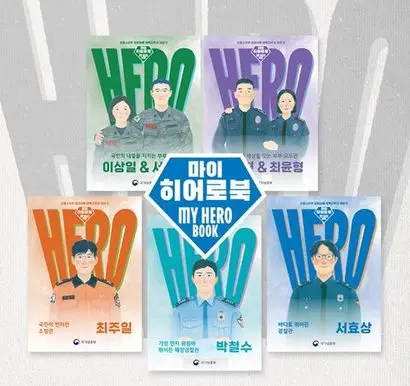
Book publishing through AI authors should also be reconsidered. The Ministry of Patriots and Veterans Affairs recently created 50 volumes of the picture book series 'My Hero Book', featuring soldiers and firefighters as parents, using AI. While using AI might save time and budget, it could miss a greater public value. In terms of fostering future writers, there is room to think from the perspective of creators rather than just economic efficiency. Above all, since public preference for content created by AI is still low, policies should be drafted and implemented with this in mind.
The author Kim Heon-sik has been walking through or navigating the forest of pop culture phenomena since his 20s, with the expectation that there is a way to make the world a better place through culture. He continues on the same path in the 21st century, where artificial intelligence and quantum computers are active, with the same belief.