

[비즈한국] When discussing the European startup ecosystem, one event is always mentioned: Web Summit, held in Lisbon, Portugal. Although Lisbon—the European capital furthest from Seoul—is known as a city of tourism and the birthplace of the egg tart (pastel de nata), it is renowned in the European startup world as a hub for both a thriving ecosystem and global nomads.
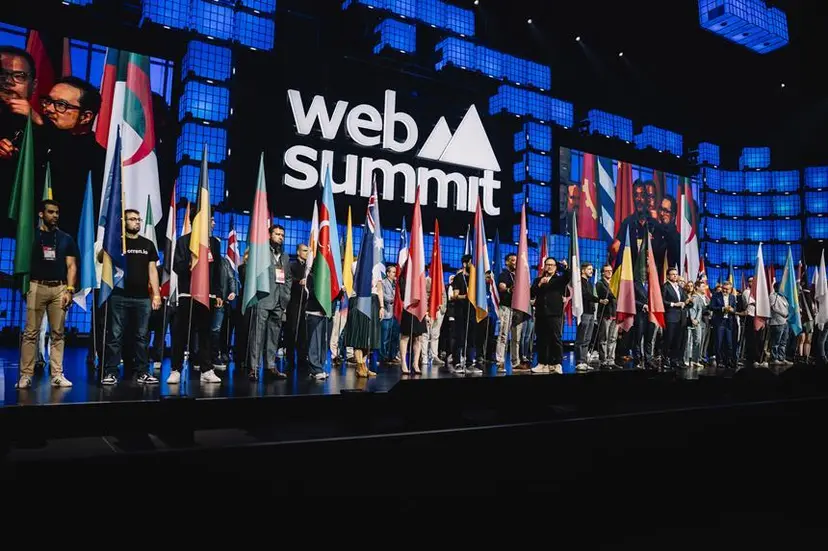
From Dublin to Lisbon: A History of Web Summit
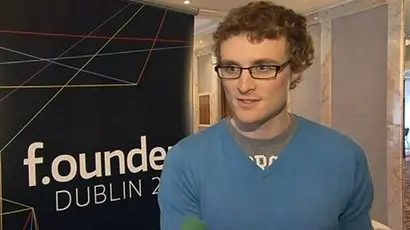
Web Summit takes place every November in Lisbon. With this event at its core, Lisbon has become a central stage for a "global tech village" where entrepreneurs, investors, and tech companies from all over the world converge. Web Summit began in 2010 in Dublin, Ireland, as a small tech and startup event founded by Irish entrepreneurs Paddy Cosgrave, David Kelly, and Daire Hickey.
The initial goal was simple: the core idea was, "Let's gather European entrepreneurs, engineers, and investors in one place." At the time, Europe lacked tech conferences on the scale of those in Silicon Valley, and Web Summit filled that gap perfectly. About 400 people attended the first event in Dublin in 2010. The number exceeded 1,500 the following year, and by 2012, it had become a hot event with about 4,000 attendees and global companies like Facebook, Google, and Amazon. It subsequently grew rapidly into an international event drawing tens of thousands of people across Dublin. By its fourth year, Web Summit had become the largest tech conference in Europe.
It established a unique "urban event model" where networking took place throughout Dublin, allowing early-stage startups to meet major investors. From the very first event, the three founders invited prominent tech figures under 40. These included YouTube co-founder Chad Hurley, Twitter co-founder Jack Dorsey, and Skype co-founder Niklas Zennström. Excluding Niklas Zennström, who was a "somewhat older" 44 at the time, it was a future-oriented event built by young people.
However, as Web Summit scaled rapidly, criticism emerged that Dublin's accommodation and transportation infrastructure could not keep up. In 2016, Web Summit made a major decision: it moved the entire event to Lisbon, Portugal.
This decision sent a fresh shockwave through the European tech ecosystem. At the same time, it served as a critical turning point that established Lisbon as an emerging startup mecca in Europe. The Portuguese government and the city of Lisbon also devised strategies to turn Lisbon into a European tech hub by hosting Web Summit, providing various support measures.
Lisbon boasted excellent hotel and transport infrastructure, characteristic of a tourist city, with an international airport located close to the city center. Its accessibility to the US and South America, despite being in Europe, also played a part. The openness and safety characteristic of Southern Europe received high marks, and its high English proficiency and foreigner-friendly culture were also decisive factors.
Web Summit grew explosively after moving to Lisbon. On average, 50,000 to over 70,000 people have participated each year, with world-class figures such as Elon Musk and Stephen Hawking appearing as speakers.
Web Summit 2025 was no exception. This year’s event, which drew around 70,000 participants from 157 countries, was more vibrant than ever, establishing itself as a space that most vividly showcases the global trends where technology, policy, industry, and culture intersect.
Korean Startups Fly to the European Capital Furthest from Seoul
There was a particularly notable presence on this massive stage this year: a delegation of eight Korean startups selected and supported by the Seoul Startup Hub (SBA). Their booths were ranked among the busiest throughout the event, and they received high interest from global partners not only in scheduled sessions but also in impromptu meetings.
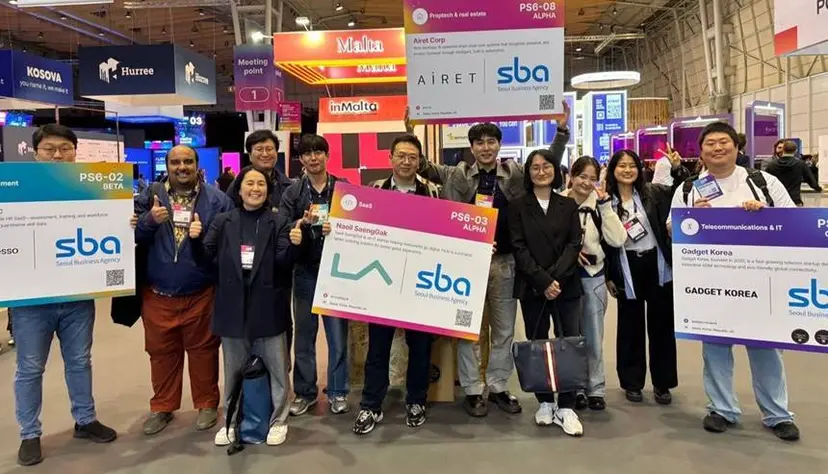
The delegation covered diverse fields including manufacturing, logistics, content, healthcare, collaborative development, video analysis, consumer data, and EdTech. They demonstrated that the Korean tech ecosystem is growing in a balanced manner across all technology-based innovation sectors, rather than being confined to a single sector.
First, Gadget Korea, well-known in Korea for its "USIMSA" brand, drew the interest of many participants by showcasing an international eSIM connection service that can be used immediately when traveling abroad without purchasing a local SIM. In particular, it was evaluated as having high potential for collaboration with the European digital travel ecosystem by providing an affiliate system that can be linked with travel platforms, credit card companies, and fintech firms.
LYWAY, which showcased consumer data-based technology, presented new market possibilities by introducing a voice AI-based education solution instead of traditional commerce-centered analysis. This solution, which combines voice AI with English/language learning, caught the attention of European education and HR companies.
Naeil Saenggak, which provides digital menu and store management systems, received practical inquiries from various customers, including restaurants and tourist attractions in Europe, through its cloud-based digital menu platform and AI multilingual translation function. Buyers who checked the demo on-site praised it as a solution that fits well with Lisbon, a global tourist city.
Codepresso, an AI-based education firm, introduced skill certification for AI, data, and cybersecurity roles, as well as employee competency monitoring and AI interview-based skill report generation solutions, based on its Europe-friendly structure with subsidiaries in the UK and Luxembourg. Thanks to the structure combining HR Tech and EdTech, it focused the attention of education institutions and corporate HR teams on-site.
In the field of AI infrastructure technology, CLIKA showed off its presence. CLIKA showcased AI model weight reduction, model compression, optimization solutions across Edge and Cloud, and a platform applicable directly to various hardware backends. Global VCs evaluated it as "core AI infrastructure technology that overcomes hardware limitations."
Logistics SaaS company Coconut Silo put forward an integrated logistics platform offering a freight data central platform, real-time route monitoring, AI-based transport optimization, and multilingual functions. European logistics companies and fleet management firms, interested in the company’s already proven success in Southeast Asia, kept visiting the booth.
OpticMix was one of the companies that showed the greatest technological differentiation by showcasing hologram-based optical screen module technology. It is evaluated as a solution with great potential in the fields of 3D, augmented displays, and next-generation modules. Officials from European public institutions and smart city projects proposed multiple PoC (Proof of Concept) meetings.
Finally, Airet showcased technology to digitize shoe management and rental processes in stores, institutions, and sports facilities, centering on a smart shoe management system. The AI-based usage tracking and automation function was assessed as highly practical for the European retail and sports facility sector.
This Web Summit is significant in that Korean startups created "actionable global opportunities" that immediately connected beyond simple exhibitions to actual partnerships, investments, and PoCs in Europe.
Is Web Summit Past Its Prime? Think Again!
Web Summit is often called one of Europe's "top 3 tech events," alongside VivaTech (France) and Slush (Finland). Amid the flood of events, stories have occasionally been heard that Web Summit is not quite what it used to be compared to VivaTech or Slush.
In 2023, after the Web Summit CEO posted comments on social media criticizing Israel's bombing of the Gaza Strip, global companies such as Google, Meta, Amazon, and Intel withdrew from the event that year, arguing that the neutrality and diversity of the event as a whole were compromised. Although it showed a slight downturn after that, the heat of Web Summit 2025 confirmed that it has not cooled down.
While VivaTech and Slush are events with a strong European focus, Web Summit had a very high proportion of startups and investors from the US, South America, and Africa. It is unique in that it is a global event held in Europe compared to other events.
Also, if Slush is characterized by "in-depth meetings centered on pre-matching" and VivaTech by "open innovation centered on European large corporations like LVMH and L'Oréal," Web Summit is much more dynamic and open. All of Lisbon moves like an event venue. Since most travelers during the Web Summit period are participants, "impromptu meetings" pile up regardless of location, including hotel lounges, trams, streets, and cafes.

The event venue itself is also conceptualized as an "exhibition hall without exhibits" rather than a layout for showing off large displays or products, with small booths lined up where people can talk. There is no need to guard the booth every day. You can rent a booth for just one day and spend other days meeting at different booths or at investor meet-up lounges. It is a principle based on prioritizing communication and meetings.
Considering the environment, it is also forbidden to place paper promotional materials at the venue. Startups explain their solutions with just a laptop or tablet. However, this policy actually makes people focus more on conversation. It is Web Summit's unique way of having people who want to know more seek you out after reading the one-line description written on the booth.
If you want to showcase your ideas on a global stage and meet as many people in the world tech scene as possible to build a network, Web Summit is the reason it is the top choice. Although it is the European city furthest from Seoul, if you are considering expanding beyond Europe to the Americas, it can be a good base.
The author, Eunseo Lee, majored in Law in Korea and studied theater in Berlin. Based in Berlin, a city of art and a European startup hub, she leads 123factory, growing with the city and connecting the Korean and German startup ecosystems.