

[비즈한국] The official introduction of Tesla's Full Self-Driving (FSD) (Supervised) feature in South Korea marks a new inflection point for the domestic automotive market. Korea is considered a challenging market for the commercialization of autonomous driving technology due to its narrow and complex road structures, frequent lane changes, and diverse user patterns. Nevertheless, with Tesla enabling FSD through a software update, both domestic and international automakers are accelerating their efforts to join the race for autonomous driving.
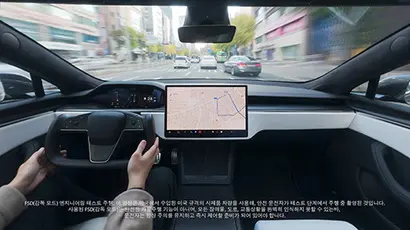
The feature Tesla is offering in Korea is "FSD (Supervised)," which is legally classified as a Level 2+ driver assistance system. While the driver must remain alert and maintain control at all times, the vehicle independently performs tasks such as lane changes, lane keeping, deceleration, and acceleration. Some early users have shared experiences, noting that it "responds relatively stably even in narrow alleys or during cut-in situations."
Global Firms Join the Tech Race… “Korea as a Validation Market”
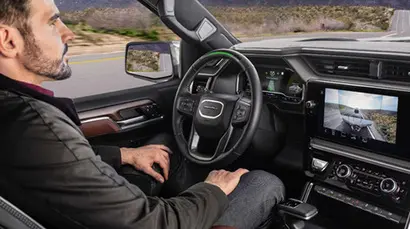
Tesla’s entry into Korea has also accelerated the moves of other global automotive brands. General Motors (GM) of the U.S. is considering the domestic introduction of its advanced driver assistance feature, "Super Cruise." It is a system that allows hands-off driving on highways, and the company is expanding its application, primarily focusing on the Cadillac brand.
Mercedes-Benz has not yet introduced Level 3 technology in Korea; currently, all models sold in the country are equipped only with Level 2-based advanced driver assistance systems. While its Level 3 "Drive Pilot" has received certification in some countries abroad, a schedule for its introduction in Korea has not been disclosed.
An industry insider commented, "Korean consumers have a high acceptance of technology, and the traffic environment is complex, making it a crucial market for global brands to test the performance and stability of their autonomous driving technology."
Hyundai-Kia000270 to Gradually Commercialize SDVs and HDP from 2026–2027
Domestic automaker Hyundai-Kia is choosing a "perfection-focused strategy" over a "speed race." The group has announced its transition to a Software-Defined Vehicle (SDV) system starting in 2026, presenting over-the-air (OTA) updates and the expansion of autonomous driving features as its core competitiveness. This strategy is expected to be fully reflected in new vehicles equipped with the next-generation electric vehicle platform, "Pleos Connect."
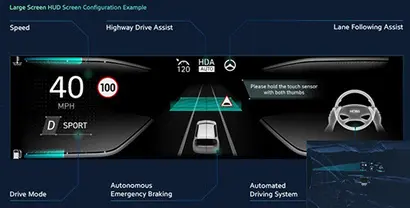
In terms of autonomous driving technology, the first step is to apply Highway Driving Pilot (HDP) to mass-produced vehicles in 2027. This is a Level 2+ system where the vehicle performs most highway driving functions, provided the driver maintains focus on the road ahead. Based on this, Hyundai-Kia is also keeping the door open for the potential application of Level 3 or higher technology in the future.
Industry experts evaluate that "Hyundai-Kia is approaching the market in a way that prioritizes stability and validation over sheer speed; while it may look conservative in the short term, it could secure a competitive advantage in terms of completeness and reliability in the long run."
Government Aims for 2027 as the First Year of Autonomous Driving Commercialization
The government is also accelerating institutional improvements, setting 2027 as the first year for the commercialization of autonomous vehicles.
Key tasks include: establishing safety standards for Level 3 autonomous driving, permitting limited Level 4 operations, setting standards for autonomous driving-specific insurance and accident liability, and building integrated road infrastructure systems.
In particular, Level 4-based autonomous shuttles and robotaxis are already operating in pilot zones, and the government is considering plans to gradually expand these into full-scale urban services.
Shift in the Core Axis of the Auto Industry… “An Era of Software Competition”
Tesla's introduction of FSD represents more than just a new feature launch; it signals a fundamental shift in the automotive industry paradigm. In the past, engine performance and design were the benchmarks for competition, but moving forward, software and AI models, OTA update cycles, the level of advanced driver assistance, and map/sensor data processing capabilities will become the core elements of a vehicle's competitiveness.
The Korean market is at the forefront of this transition. Foreign brands like Tesla, GM, and Mercedes-Benz are intensifying their technical competition in Korea between 2025 and 2027, and Hyundai-Kia is scheduled to launch a large volume of SDV and autonomous driving features during the same period.
Autonomous driving technology competition on Korean roads is expected to intensify over the two to three years surrounding 2027, a process that will significantly transform the consumer's driving experience and the competitive landscape of the automotive industry.