

[비즈한국] South Korea’s move toward phasing out coal is accelerating. The government has joined the Powering Past Coal Alliance (PPCA), and three opposition parties in the National Assembly have proposed a "Just Coal Phase-out Act." However, the cost of shutting down coal-fired power plants has become a stumbling block. In particular, it appears that more funds will need to be poured into the privately-owned coal power plants on the East Coast that began operations in recent years. Critics point out that the coal power plant permits granted by previous administrations are undermining the nation’s future and draining taxpayer money.
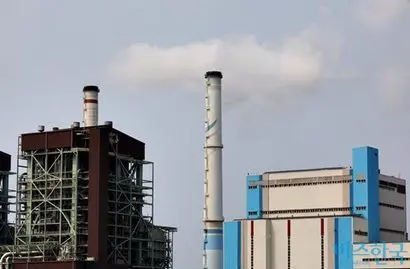
Declaration to Abolish Coal Power by 2040
On November 17 (local time), Minister of Climate, Energy, and Environment Kim Seong-hwan announced at the 30th UN Climate Change Conference (COP30) held in Belém, Brazil, that South Korea would join the "Powering Past Coal Alliance (PPCA)," an international cooperation initiative aimed at achieving the phase-out of coal power. By joining the alliance, the Korean government declared that it would abolish coal power generation by 2040.
In the National Assembly, three parliamentary parties—the Democratic Party of Korea, the Rebuilding Korea Party, and the Progressive Party—jointly proposed the "Special Act on the Cessation of Coal-fired Power Generation and a Just Transition (Just Coal Phase-out Act)" on the 25th. This bill specifies that the coal phase-out should occur between 2030 and 2035. The main pillars of the bill include ensuring workers' rights—such as job retention and protection of working conditions—during the establishment and implementation of the phase-out plan, as well as providing support for regions transitioning away from coal power.
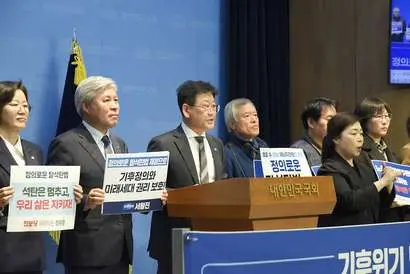
The bill stipulates the setting of a target year for coal phase-out and the establishment of a "Coal Phase-out Committee" to deliberate and vote on the closure of and compensation for coal-fired power plants. The committee is set to include not only government officials and experts but also stakeholders such as workers, local residents, and business operators.
The labor sector welcomed this bill, which was born out of cooperation with civil society. Lee Tae-sung, head of the Power Plant Irregular Workers Solidarity branch, commented, "This is the first bill to include concrete content on job security when power plants are closed," adding, "Since workers' representatives are included in the Coal Phase-out Committee as specified in the bill, it is important that the parties affected participate in policy decision-making moving forward."
East Coast Coal Power Plants Also Face Low Utilization Rates
The key issue is the compensation cost for closing coal power plants. Compensation is calculated by considering expected power generation profits (based on unit generation price and plant utilization rate), investment costs, financial expenses, and various operating costs. The Just Coal Phase-out Act allows the Ministry of Climate, Energy, and Environment to provide compensation for coal-fired facilities that have been operational for less than 20 years, taking their remaining value into account. As of 2035, 13 out of the 61 coal-fired units are expected to be eligible for compensation.
In particular, if the privately-owned coal power plants on the East Coast, which were built recently and have high remaining values, are shut down, the compensation costs could be significantly higher. Samcheok Coal Power Plant (Samcheok Blue Power) began commercial operation in 2024, Gangneung Anin Coal Power Plant (Gangneung Eco Power) in 2022, and Bukpyeong Coal Power Plant (GS Donghae Electric Power) in 2017. Furthermore, with the Shin-Hanul Unit 2 entering commercial operation in 2024, the utilization rates of these coal plants—which are lower in the grid dispatch priority than nuclear plants—have plummeted. In the first half of 2025, the utilization rates were low at 13.8% for Samcheok, 25.5% for Gangneung Anin, and 21.8% for Bukpyeong.
These power plants are already receiving loss compensation via massive electricity purchase costs. According to the "Report on Excessive Coal Power Compensation and Solutions" released by the climate crisis response group Solutions for Our Climate on the 10th, about 70% (51.9 trillion won) of Korea Electric Power Corporation’s015760 total electricity purchase cost of approximately 73.8 trillion won in 2024 was spent on compensating coal and LNG power plants. Additionally, according to a report by Newstapa, about 480 billion won in electricity bills was used in 2024 to compensate for losses at three privately-owned coal power plants on the East Coast.
Park Soo-hong, an activist at Green Korea United, pointed out, "This is a policy failure caused by overestimating electricity demand," adding, "Even after the Lee Myung-bak and Park Geun-hye administrations that approved these projects, this wouldn't have happened if the construction of new power plants had been halted."
The closure costs are also substantial. In its report "Pathways to Coal Phase-out and Asset Divestment in Line with the Paris Agreement (2023)," Solutions for Our Climate estimated that closing all domestic coal power plants by 2030 would cost approximately 6.6 trillion won. Of that, the closure costs for the Samcheok and Gangneung Anin plants alone are projected to be about 3.7 trillion won.
Lim Jang-hyeok, a researcher at Solutions for Our Climate, said, "It is regrettable that the Samcheok Coal Power Plant was built despite campaigns against it due to these exact concerns," adding, "Since business operators entered the market at their own risk, the government and the operators must find a middle ground on the scale of compensation."
Critics point out that permits for building coal power plants granted by previous administrations, without considering future energy transitions, have landed squarely on the shoulders of the public. Ha Tae-sung, chairman of the Samcheok Anti-Coal Power Plant Committee, remarked, "In the end, permits were granted where they should not have been," noting, "We are in a situation where the sunk costs and stranded assets resulting from early closure must inevitably be covered by taxes."
Regarding this, Democratic Party lawmaker Kim Jung-ho, who co-proposed the Just Coal Phase-out Act, said, "It is unfortunate that we have reached a point where we need to discuss settlements and compensation even for power plants that were excessively permitted by past administrations," adding, "I hope that through the Coal Phase-out Committee, we can transparently discuss compensation standards and scales to minimize the public burden and achieve a fair transition."