

[비즈한국] Shareholders usually engage in collective action when they are dissatisfied with a company's management policies. Nowadays, this typically happens through online platforms like Act or HeyHolder. However, lately, a group of shareholders has been catching attention for meeting in person offline to form a shareholders' alliance. We met with the shareholders of Nature Cell007390, a stem cell therapy developer, to hear about the background and future plans of their initiative.
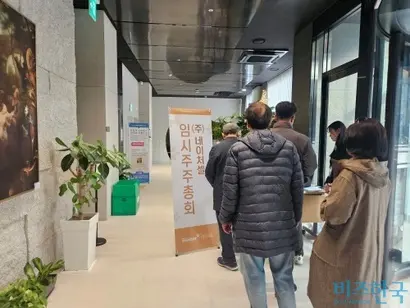
Small shareholders of Nature Cell are scheduled to officially launch their alliance on the 29th. It is expected that 100 to 150 people from across the country will gather. Shareholders are suspicious that the Ministry of Food and Drug Safety (MFDS) may have unfairly rejected the domestic product approval for the degenerative arthritis stem cell therapy 'Jointstem.' Believing that the company cannot easily challenge the regulatory authority that holds the power to grant approval, their primary goal is to shed light on aspects of the MFDS's drug review process they consider unfair or inadequate. Regarding Jointstem, Nature Cell’s affiliate R-Bio holds the domestic product approval application and development rights, while Nature Cell holds the domestic distribution rights.
This is the third time Jointstem has failed to obtain domestic approval. Following the rejection of a conditional product approval application in 2018 based on clinical phase 2 results from South Korea and the US, a subsequent application following phase 3 clinical trials was rejected in April 2023. A third attempt, made after supplementing data, also met with failure last August. Nature Cell's stock price, which soared to 62,200 won on March 16, 2018, when expectations for Jointstem approval were high, slumped to 21,300 won as of the 27th following the series of rejections.
Jointstem was denied approval by the MFDS on the grounds that while statistical significance was recognized in domestic phase 3 clinical trials, clinical significance was insufficient. However, Nature Cell shareholders raise issue with the fact that the MFDS, after approving the phase 3 clinical trial plan with the understanding that satisfying statistical significance in primary endpoints WOMAC (joint function improvement) and VAS (pain reduction) would be sufficient, later argued during the review phase that this level of efficacy was not clinically significant.
Shareholders claim that for the MFDS to apply clinical significance standards and then explain them as criteria set by the applicant (R-Bio) itself is a case of setting a rejection outcome in advance and retrofitting unreasonable standards to justify it. The applicant has previously stated during the review process that clinical significance was not established as the primary criterion.
This point was also noted by Lee Jang-ik, a professor at Seoul National University's College of Pharmacy, who served as a clinical pharmacology reviewer and team leader at the FDA for 11 years. Professor Lee remarked, "When the MFDS approved the phase 3 clinical trial plan for Jointstem, they did not use clinical significance as a judgment criterion, but it suddenly appeared during the approval review stage." He added, "To use a soccer analogy, how is this different from a referee allowing a goal without applying the offside rule, only to suddenly enforce it later?"
Furthermore, shareholders allege there are signs that the MFDS, which seeks advice from the Central Pharmaceutical Affairs Council for new drug approvals, induced the council members to recommend rejection. During the council meeting held in June to decide on the approval of Jointstem, some members judged that efficacy was recognized. However, an MFDS official remarked that since the drug had already been rejected in 2023 due to lack of clinical significance, the committee should not judge efficacy but instead discuss the validity of supplementary data regarding the lack of clinical significance. In the subsequent discussion, 9 out of 10 members voted against approval. In response, Nature Cell filed a lawsuit against the MFDS last September to cancel the rejection of Jointstem's approval.
While the small shareholders will respond to the MFDS in the short term, they also plan to voice their concerns regarding transparent management at Nature Cell in the long term. Chairman Ra Jung-chan holds a 79.66% stake in the Biostar Stem Cell Research Institute, through which he controls both R-Bio and the publicly traded Nature Cell. The major shareholders of Nature Cell are the Biostar Stem Cell Research Institute (9.24%) and R-Bio (6.68%), and the largest shareholder of R-Bio is also the Stem Cell Research Institute (12.7%). Chairman Ra is also the second-largest shareholder of R-Bio (6.17%). With Chairman Ra’s sole control system firmly in place, concerns have been raised about high owner risk due to weak checks and balances by the board of directors. In the 2025 domestic listed company ESG ratings announced by the Korea ESG Institute on the 24th, Nature Cell received the lowest grade, D (Very Weak), in the governance (G) category. Nature Cell has consistently received a D grade since the ESG ratings were made public in 2019, with the exception of 2020 and 2021 when it received a C (Weak) grade. This is why improving corporate governance is considered a key challenge.
Some shareholders who attended the extraordinary general meeting on the 11th expressed disappointment that the company did not share specific future plans. Despite the meeting being held on a weekday at 4 PM on a Tuesday, more than 200 shareholders attended, showing their high level of interest. One shareholder, A, said, "I wanted to hear the details of the lawsuit against the MFDS, but because Chairman Ra was away on a business trip to the US, I just voted on the agenda to appoint internal directors (Ra Jung-chan and Jung Sang-mok) and left in a hurry."
Shareholder B, who is leading the launch of the small shareholders' alliance, stated, "The alliance has currently secured about 4% of the shares, and the goal is to gather shareholders scattered online and offline to expand this to 10%." They added, "If the company acts cowardly or goes down the wrong path, the shareholders will act as a check-and-balance force." As of the end of last year, there were 47,374 small shareholders of Nature Cell, collectively holding 76.11% of the total issued shares.