

[비즈한국] Samsung and Celltrion068270, the key pillars of K-Bio, are leveraging their capabilities and cash-generating power secured through the biosimilar business to venture into new drug development. While Samsung has chosen a strategy of establishing a new domestic subsidiary for drug development, Celltrion is focusing on expanding its capabilities by securing overseas bases, drawing market interest to their differentiating strategies.
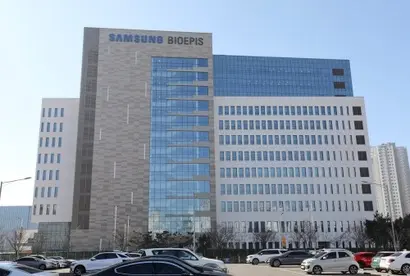
According to the Financial Supervisory Service and others on the 24th, Samsung Biologics207940 completed a change in listing, while Samsung Epis Holding underwent re-listing on that day. Through a spin-off, Samsung Biologics has been transformed into a pure CDMO (Contract Development and Manufacturing Organization) company, and Samsung Epis Holding has shifted into a bio-investment holding company that manages the biosimilar subsidiary Samsung Bioepis and the new drug development subsidiary EpisNexLab.
EpisNexLab’s business model is to discover new drug candidates based on novel platform technologies such as ADCs (Antibody-Drug Conjugates), bispecific antibodies, peptides, and AAV (Adeno-Associated Virus), and generate revenue by pursuing joint development or technology transfer agreements with global pharmaceutical companies. Having launched a total of 11 biosimilar products to date, the company has accumulated antibody-related technical expertise and is striving to internalize technology by making equity investments in promising domestic and international biotechs through Samsung Life Science.
The Samsung Life Science Fund is a venture investment fund created with a 240 billion KRW investment jointly contributed by Samsung C&T028260, Samsung Biologics, and Samsung Bioepis, and is managed by Samsung Venture Investment. Starting with the U.S. gene therapy developer Jaguar Gene Therapy in March 2022, the fund has invested in 9 companies specializing in ADC, RNA (ribonucleic acid), AI (artificial intelligence), and protein biomarker technology, including Senda Biosciences, BrickBio, and LatusBio. Among these, Samsung is particularly focusing on ADCs.
Last month, Samsung Bioepis signed a joint research agreement for a bispecific antibody-based ADC with Chinese biotech Frontline Medicines to jointly develop two drug candidates. Frontline is a biotech developing bispecific antibody-dual payload technology, considered a promising next-generation ADC technology. In December 2023, the company also signed a joint development agreement with the domestic biotech InnoCure for the discovery of five ADC candidates, leveraging the latter's linker and payload technology.
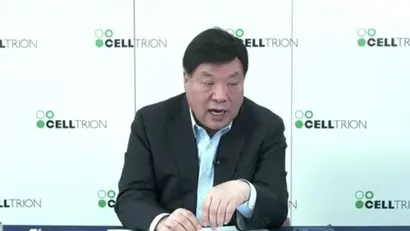
Unlike Samsung, which has kept the foundations of not only Samsung Biologics but also Samsung Bioepis and EpisNexLab in Korea, Celltrion is also looking toward expanding its global infrastructure by securing overseas new drug research laboratories. To mitigate risks associated with changing U.S. tariff policies, Celltrion confirmed the acquisition of Eli Lilly's factory in New Jersey, U.S. This facility is also considered to be well-equipped with R&D capabilities. During an online press conference on the 19th, Celltrion Chairman Seo Jung-jin explained, "The site has sufficient engineering personnel, so there will be no need to build a separate U.S. laboratory," adding, "With global pharmaceutical companies like Bristol Myers Squibb (BMS), Johnson & Johnson (J&J), and Lilly nearby, we expect R&D and business synergies."
Celltrion is venturing into developing new drugs using platforms such as ADCs and bispecific antibodies. It is collaborating with domestic and international ADC specialists, including Britain's Iksuda Therapeutics, Korea's Pinotbio, and China's WuXi XDC. On May 2, July 4, and the 10th of this month, the Ministry of Food and Drug Safety approved Phase 1 clinical trial plans for their solid tumor-targeting ADC candidates 'CT-P70', 'CT-P71', and 'CT-P73', respectively, marking their entry into clinical stages. CT-P70 and CT-P71 have also received Phase 1 clinical trial approval from the U.S. Food and Drug Administration (FDA) and are currently undergoing clinical trials.
Chairman Seo also expressed his determination to develop an obesity drug that surpasses Wegovy and Mounjaro. The goal is to secure patents within this year for three candidates, including 'CT-G32'—which is being developed as a quad-agonist including GLP-1 (glucagon-like peptide-1)—and to begin preclinical trials starting next year. Chairman Seo stated, "The non-response rate among clinical trial participants for Wegovy is 14-31%, with a weight loss rate of 12-15%, but we expect the quad-agonist we are developing to have a non-response rate of 5% or less and a weight loss rate of around 25%."