

[비즈한국] The debate surrounding the online sale of contact lenses has entered a new phase. Opticians filed a lawsuit opposing the government's decision to conditionally allow online lens sales through a regulatory sandbox (exemption/deferral of regulations). However, the court ruled that there is no reason to cancel the government's administrative action, acknowledging the validity and purpose of testing new technology.
The conflict between existing opticians, who argue for the "protection of eye health," and platforms promoting "enhanced consumer accessibility" has been recurring for years. Current law stipulates that no one, including licensed opticians, may sell contact lenses online. This administrative lawsuit took place against the backdrop of the Constitutional Court's decision last year that upheld the constitutionality of the relevant provisions. If the demonstration period for the lens sales brokerage platform is extended once in the first half of next year, the government will initiate a review process for institutional improvement or legislative revision three years later. With the impact expected to ripple through the industry, attention is focused on whether conditions for online lens sales will expand in the future.
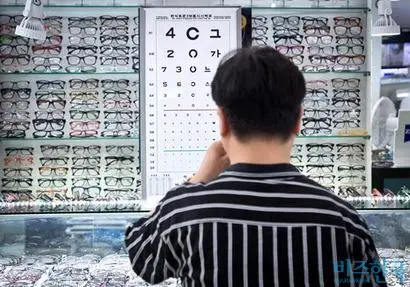
Opticians’ Request to Cancel Special Exception ‘Dismissed’… “Temporary Experiment Is Not a Problem”
It has been confirmed that the court sided with the Ministry of Science and ICT (MSIT) in a lawsuit filed by contact lens-selling opticians to "cancel the regulatory special designation for demonstration purposes." In principle, glasses and lenses can only be purchased at brick-and-mortar optical shops. An exception applies to "Naenun N," a contact lens sales brokerage platform that the MSIT permitted to bypass regulations last year.
On the 31st of last month, the Seoul Administrative Court ruled that there were no problems regarding the conditions, procedures, or content of the MSIT’s decision to designate the company for regulatory demonstration and permit the related business. The opticians’ argument that the legal intent to ban e-commerce for contact lenses was ignored and that it harms public eye health was not accepted.
The Medical Technologists Act prohibits the transaction of glasses and contact lenses through e-commerce and mail-order sales. In principle, requesting delivery, using delivery proxies, or placing online orders based solely on product names and prescriptions is prohibited. From a consumer's perspective, the structure requires visiting a store for services like vision tests (optometry) to get glasses.
"Naenun N," operated by Pixelo, is temporarily permitted to sell online under the regulatory sandbox. In March last year, the government held its 34th New Technology and Service Deliberation Committee and approved the demonstration special exception for Pixelo. This measure aims to increase consumer convenience through non-face-to-face purchases and address the issue of reverse discrimination between domestic and international markets. Overseas shopping malls such as Amazon in the US, Rakuten in Japan, and Tmall in China are currently selling lenses to domestic consumers.
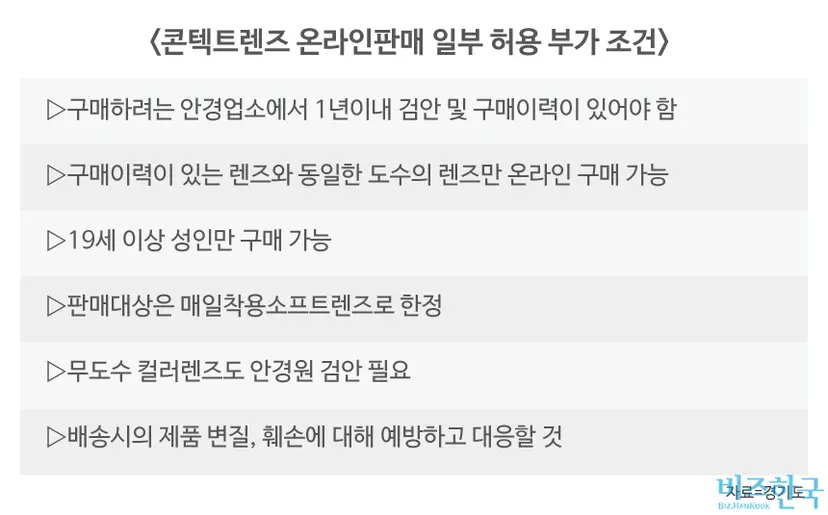
Operating conditions are restrictive. Initially, "Naenun N" was designed to focus on repurchasing lenses from optical shops where optometry records were kept. According to the MSIT’s regulatory special designation, Pixelo is defined as a "service that brokers the online sale of the same lenses between contact lens consumers who have purchase history within one year and optical shops." Eligible products are limited to one-day (daily wear) soft lenses, and age restrictions are in place, meaning only adults can make purchases. To change lens prescriptions, users must visit an optician again for an examination.
Regarding these safeguards designed to ensure safety and suitability, the court dismissed the opticians' concerns, stating, "It is difficult to view the designation conditions as unclear." The court considered that: prevention measures have been implemented to avoid situations where accurate lens wearing and management methods are not communicated; the target of sales is limited to lens types classified as Grade 2, which have low potential risk under medical device item regulations; and the platform has clearly committed to proactively responding to potential issues during the demonstration process, including preventing and addressing product deterioration or damage during delivery.
Whether Opticians Will Participate Remains Uncertain Even if Permitted
This ruling is highly significant as it follows the Constitutional Court’s decision last March that upheld the online sales ban. The Constitutional Court concluded that these provisions were not unconstitutional. The interpretation was that the existing regulations were justified for the sake of public health, as having opticians meet customers in person to provide warnings and sell properly stored products helps reduce the risk of accidents and ensures clear accountability, thereby contributing to the improvement of public health.

Following the Constitutional Court's decision, some predicted there would be constraints on regulatory easing, such as MSIT’s demonstration specials. There was a view that contradictory judgments between the government and the judiciary would increase industry confusion. In this regard, the MSIT drew a line, stating, "The regulatory sandbox system is a mechanism that exempts or defers the application of current regulations to allow innovative services to enter the market, and it assumes that the current regulations are constitutional." This emphasized the position that the Constitutional Court's decision does not ultimately conflict with the regulatory exception.
Above all, opticians are wary of the initiative for lens sales shifting to online platforms. The concern is that beyond simple business disadvantages, it could shake the entire existing distribution system in the long run. There is also no small amount of anxiety that if the online lens market opens in earnest and large platforms join in later, the expertise and standing of the optician profession could be weakened. In fact, Naver035420, Coupang, and Kakao035720 officially requested the National Assembly to allow online sales last year, revealing their interest in participating in the market.
The administrative court did not recognize the claim that the demonstration special exception infringes on the rights of opticians. The court ruled, "The MSIT's decision is for limited testing and technical verification of an online service," adding, "Considering that platform sales could mean new sales channels for optical shops, it is difficult to conclude that this is uniformly unfavorable to opticians, and therefore difficult to view it as infringing upon or usurping the optician system."
However, the actual market participation rate remains another issue. The government initially planned to conduct the demonstration project targeting 500 optical shops in the Seoul and Gyeonggi regions in the first year, and an additional 500 in the second year. However, it is pointed out that within the optical industry, where interests are complexly intertwined, there is still a strong current of opposition, and the willingness to participate may not be as high as expected.
Regulatory special exceptions are maintained for a base period of 2 years, and if a company applies for a temporary extension, it can be extended for another 2 years following review by the regulatory agency. An MSIT official stated, "If an extension request is accepted, procedures such as reviewing legal system adjustments can be conducted at the end of the maximum 4-year period," adding, "The regulatory agency checks data from the demonstration period and determines the necessity for an extension and legal revisions."