

[비즈한국] The labor sector's recent demands to restrict early morning deliveries have caused significant stir in the industry. The Korea Confederation of Trade Unions (KCTU) Delivery Workers' Union is raising its voice, arguing that deliveries during the deepest hours of the night must be restricted to protect workers' health. Conversely, consumers and small business owners are strongly opposed, warning that it would be a direct blow to their daily lives and livelihoods.
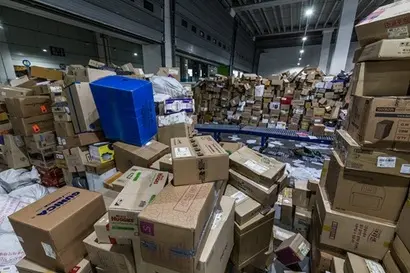
KCTU Delivery Union Argues for "Early Morning Delivery Restrictions" Following Workers' Deaths from Overwork
Discussions on "restricting early morning deliveries" gained momentum last month. On October 22, at the "Social Dialogue Organization for Delivery Services," which includes the Democratic Party, the Ministry of Land, Infrastructure and Transport, delivery companies, and labor unions, the KCTU Delivery Union proposed a "ban on deliveries during the deepest night hours from 12:00 AM to 5:00 AM." This follows a series of deaths of delivery workers due to overwork, with the intention of improving the late-night (early morning) delivery system.
The KCTU Delivery Union argued, "The International Agency for Research on Cancer classifies night work as a Group 2A carcinogen. In particular, 'continuous fixed night work' like that at Coupang completely destroys biological rhythms and causes serious health problems. Therefore, we must restrict deliveries during the most dangerous hours (12:00 AM to 5:00 AM) to guarantee minimum sleep and health rights for workers."
Amidst this, the controversy spread further following the recent death of a Coupang early morning delivery worker. Around 2:00 AM on the 10th, a 1-ton truck driven by a delivery worker in his 30s, identified as "A" and affiliated with a Coupang Logistics Service (CLS) subcontractor, crashed into a utility pole. Though taken to the hospital, A passed away. The police are investigating the exact circumstances of the accident, keeping the possibility of drowsy driving in mind.
The delivery union claimed, "According to our own fact-finding investigation, the deceased worked 6 days a week on a continuous, fixed night shift. Based on legal standards for recognizing death from overwork, it has been confirmed that the worker suffered from the worst overwork and night labor, with an average of 83.4 hours of work per week." They added, "Following continuous night work and long hours, he returned to night shifts after his father's three-day funeral without having had proper rest, which drove him to this tragic accident."
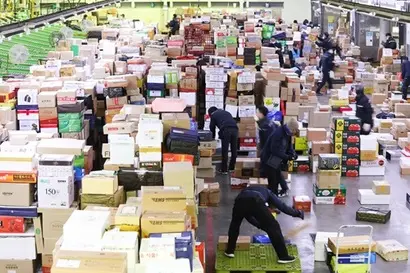
Will Morning Deliveries, Now a Part of Daily Life, Stop? Opposition from Consumers and Small Businesses
The measure proposed by the delivery union is not a total ban on early morning delivery, but a restriction during the late-night hours of 12:00 AM to 5:00 AM. However, the industry evaluates that if deliveries are suspended during these hours, the current early morning delivery model will be virtually impossible to maintain. Because of this, public opinion against it is spreading rapidly among consumers and small business owners.
The Korea Federation of Micro Enterprise Owners issued a commentary on the 8th demanding the withdrawal of the demand to ban early morning delivery. The Federation criticized, "Many small business owners prepare their daily business by receiving ingredients via early morning delivery. If these are stopped, they would be forced into a situation where they have to drive to purchase ingredients themselves, requiring the hiring of additional labor," calling it "an act that pours cold water on the government's efforts to revive the people's economy."
On the 13th, a petition opposing the restriction of early morning delivery was posted on the National Petition Bulletin Board. Opposition was expressed on the grounds that it would cause direct harm to the daily lives of dual-income families, parents, and single-person households. As of 2:00 PM on the 16th, the petition had gained 6,092 signatures.
Opinions are also divided within the labor sector. While the KCTU strongly argues for limiting deliveries during deep night hours, the Federation of Korean Trade Unions (FKTU) does not agree with a total ban. Kim Dong-myung, chairman of the FKTU, stated at a press lunch on the 5th, "There are workers who realistically have to work to make a living, and there are consumer groups who absolutely need early morning delivery. It is a task that should be improved in stages, not banned completely and immediately."
Early morning delivery, first introduced in Korea in 2015 by Market Kurly as "Saetbyul Delivery," has entered its 11th year. The spread of early morning delivery has significantly changed the daily lives of consumers. Grocery shopping has moved from offline to online, and the pattern of receiving items ordered at night the next morning has become a natural lifestyle habit. Especially during the COVID-19 pandemic, as non-face-to-face consumption surged, early morning delivery expanded into a mass-market service.
For now, the government is focusing on institutional improvements rather than a total suspension of early morning delivery. The Democratic Party also holds the opinion that "it is not easy to forcibly ban early morning deliveries, which have become a part of daily life." However, as there are ongoing points of concern regarding health issues caused by late-night deliveries, they express a will to review supplementary measures such as improving working conditions, strengthening safety standards, and upgrading logistics center environments.
The Ministry of Land, Infrastructure and Transport is scheduled to hold the third meeting of the Social Dialogue Organization for Delivery Services on the 28th. The Ministry is currently reviewing measures to prevent death by overwork submitted by delivery companies and plans to discuss various options, including improving the late-night delivery structure, hiring additional staff, and adjusting work processes.