

[비즈한국] The Korea Art Support Project, which began as an initiative solely to support artists, has now continued for 10 years. Keeping true to our initial intentions, we have supported over 230 artists. It was a unique endeavor that no media outlet, cultural organization, or state institution in the country had ever attempted. We take pride in the belief that this decade of persistence has become a value etched into the 21st-century Korean art scene. As a result, it is evaluated as having created a "point of observation from which to view the flow of contemporary Korean art, as represented by the 10-year history of the Korea Art Support Project." Now, in Season 11, we aim to pave another path for Korean art.
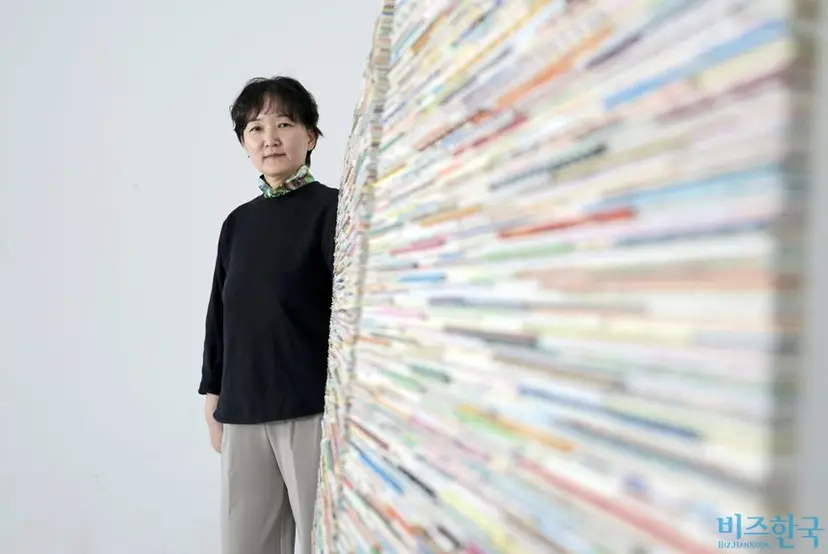
Moving the heart. This is how we define the meaning of "inspiration." All art attempts to shake people's hearts and leave a resonance within them. The degree of that resonance speaks to the value of the art.
Where can we find the inspiration that art provides? Perhaps it is in the "human touch." Inspiration in art comes from the visual traces created by the hands. It is the result of labor-intensive work that knocks on people's hearts and opens the doors of their minds.
These days, it is not easy to find works with such resonance in our art scene. This is because the industry is dominated by an unidentifiable blend of superficial ideas, shallow works that appeal to intellectual vanity, pop art with unclear nationalities, and shock therapy intended for mere spectacle.
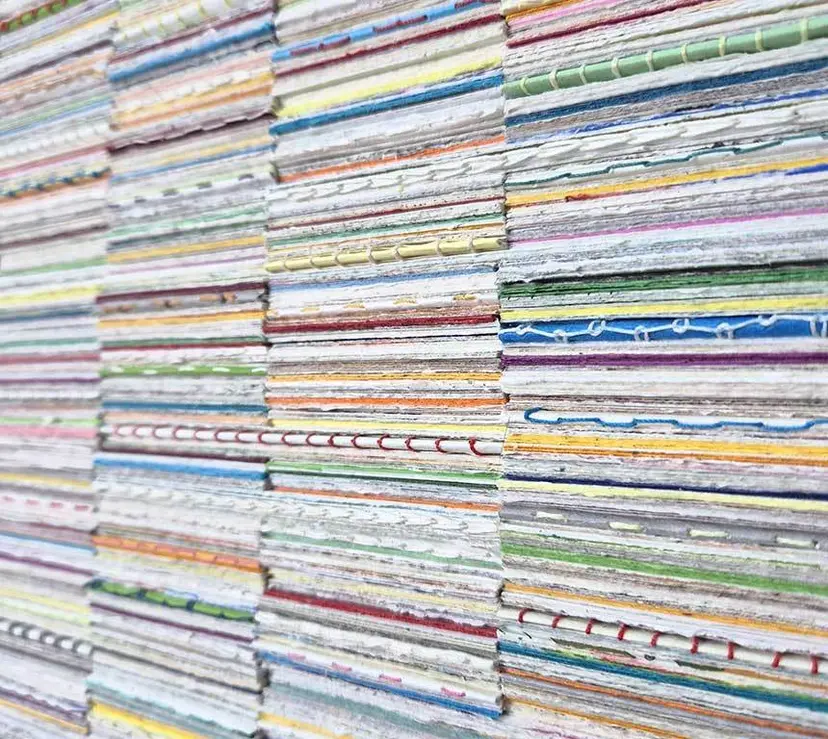
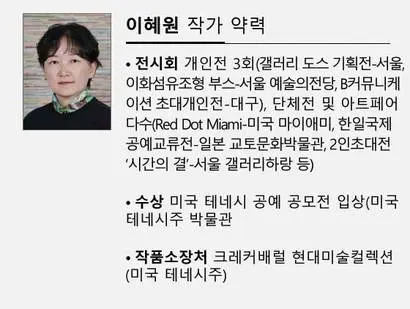
To encounter work that goes against this mainstream trend to explore one's own artistic language is a precious visual experience. Such is the work of Lee Hye-won. She demonstrates a patient, artisan-like approach to her craft. She creates her own unique canvas through the texture of paper and subtle color palettes.
It is an approach that seeks to find the inspiration borne from the crystallization of labor. She attempts to discover her own profound beauty within the abstract effects that emerge from layering colored hanji. She demonstrates a Korean abstract language through the transparent, deep-seated resonance of colors soaked into the hanji, and the lines and color planes created as the multiple layers are stacked.
Lee Hye-won's paintings bring to mind minimalist abstract canvases where the characteristics of the materials are well expressed. They evoke the cross-section of a bookshelf stacked with books. This feeling exists precisely because of the traces of labor.
She creates her work by cutting materials—such as colored hanji, thick hardboard paper, drawings made by children in kindergartens or daycare centers, or carefully wrapped paper—into uniform sizes and stacking them onto a canvas. As the thickness of the paper overlaps, color planes resembling the edge of a book fill the canvas.
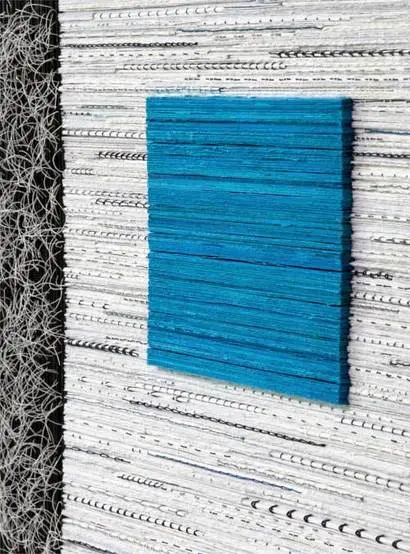
Because of this, Lee's work requires a great deal of effort and physical time. Her work is the result of immense manual labor. By adhering to such a seemingly reckless working method, what is she trying to say?
"My work is motivated by books. Books are made by stacking pages that contain an author's thoughts. I wanted to create an abstract canvas by stacking papers that contain people's stories. You could say that my painting is the result of taking people's joys and sorrows, turning them into a single unit, and stacking them up."
The various types of paper she chooses as her painting units contain different stories. It is the artist's hope to stack these stories to create a harmonious canvas. Just as our lives take many forms but achieve harmony and peace when brought together, this is the Korean aesthetic sense that Lee Hye-won pursues.