

[비즈한국] It has been confirmed that OKF, which has dominated the global beverage market with its aloe drinks, recently sold real estate assets to its CEO and second-largest shareholder, Lee Yeon-han. The assets sold include two buildings, one of which is the company's headquarters, for a total of 45.2 billion won. While OKF saw significant growth in revenue and operating profit last year, it has faced increased liquidity pressure due to the expansion of short-term borrowings.
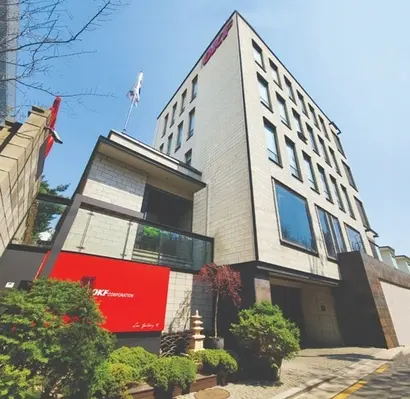
According to industry sources, OKF sold its headquarters, the OKF Building in Nonhyeon-dong, Gangnam-gu, Seoul, and the Hansung Building in Seocho-dong, Seocho-gu, to OKF CEO Lee Yeon-han on the 20th of last month. The sale prices were 18.4 billion won and 26.8 billion won, respectively, totaling 45.2 billion won. The OKF Building has two basement levels and four floors above ground (total floor area of 1,433㎡), while the Hansung Building has two basement levels and five floors above ground (1,707㎡); OKF had purchased them for 7 billion won in September 2013 and 27 billion won in February of last year, respectively. CEO Lee signed the sales contract on the 17th of last month and completed the transfer of ownership just three days later.
OKF is a global beverage manufacturing company established in July 2000. It grew by developing and exporting the world's first aloe vera drink. It holds a 76% market share in the global aloe drink market. Currently, the company exports approximately 1,850 types of beverages to around 180 countries. Last year, its consolidated revenue was 172.9 billion won, with an operating profit of 15.8 billion won. The company's shares are held by co-CEOs Lee Sang-shin (51%) and Lee Yeon-han (49%).
OKF has been facing growing liquidity pressure due to an increase in short-term borrowings last year. According to the audit report, as of the end of last year, OKF's short-term borrowings with a maturity of less than one year stood at 99.3 billion won, an increase of approximately 26.7 billion won (37%) compared to the previous year. The proportion of short-term borrowings in total debt jumped from 63% in 2023 to 69% last year. During the same period, while revenue increased by 22.2 billion won (15%) from 150.7 billion won to 172.9 billion won, and operating profit increased by 5 billion won (46%) from 10.8 billion won to 15.8 billion won, the short-term liquidity burden became heavier.
BizHankook reached out to OKF to ask about the background of the real estate asset sale but did not receive a response.