

[비즈한국] The Busan International Art Fair, which has led the Asian art market and breathed new life into the art scene, is taking a bold leap forward in its 24th year, rebranding itself as the 'Eurasia Busan International Art Fair.'
The 'Eurasia Busan International Art Fair (EBIAF)' will host its grand opening on December 4 at BEXCO Exhibition Center II in Busan. The K-ART International Exchange Association (Chairwoman Heo Sook) announced that the 24th edition of the event will run for four days from December 4 (Thursday) to December 7 (Sunday), featuring approximately 3,000 works by 250 domestic and international artists.
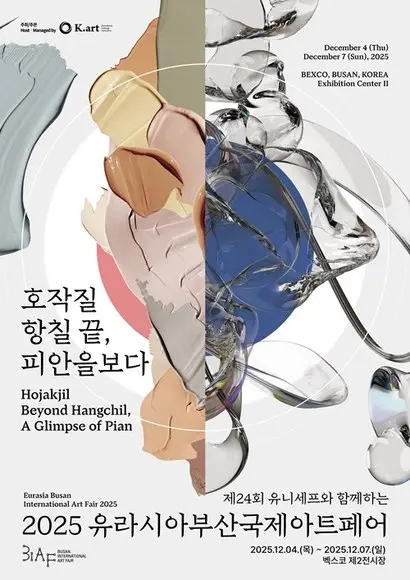
This year marks a historic milestone as the 'Busan International Art Fair' adopts its new name, expanding the stage for artistic exchange across the entire Eurasian continent. It is expected to establish itself as a new platform symbolizing the meeting of Eastern and Western art, serving as a hub for cultural exchange that connects not only Busan but the entire Eurasian continent.
A New Challenge Toward Eurasia: The Meaning Behind the Name Change
The rebranding to 'Eurasia Busan International Art Fair' is more than just a marketing refresh; it is a strategic vision to develop Busan into a core hub for the Eurasian cultural network. Through this, the event aims to elevate itself into an international art festival that breaks down the boundaries between Eastern and Western art.
For the past 23 years, the Busan International Art Fair has laid the groundwork for revitalizing the domestic art market and fostering Northeast Asian artistic exchange. Starting this year, a large number of artists from Eurasian countries—including India, Mongolia, Kazakhstan, Armenia, and Ukraine—will participate, forming a cross-continental cultural consensus and recreating the 'Art Silk Road' for the modern era.
An Art Market Where Artists and Audiences Meet
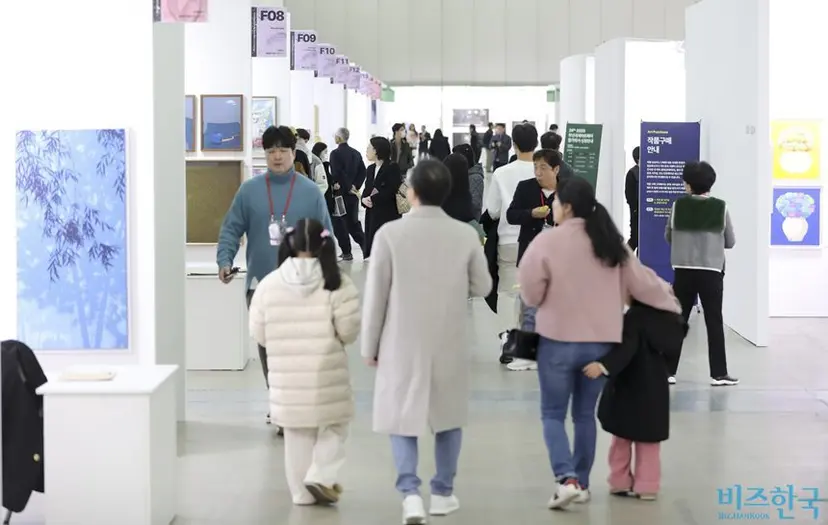
This event is a '100% artist-participatory art fair,' characterized by direct interaction and transactions between artists and the audience. Since 2020, an organizing committee led by active artists has managed the fair, setting it apart from others. Moving away from a market dominated by large, exclusive galleries, it has helped establish a culture of reasonable and transparent direct transactions. Visitors can interact directly with about 250 artists in one place and view or purchase a wide range of works, including painting, sculpture, photography, and media art.
The exhibition hours are from 10:00 AM to 7:00 PM from December 4 to 6, and until 5:00 PM on the final day, December 7. Admission is free for all visitors.
Connecting Society Through Art: The Value of Sharing with UNICEF
The 'Eurasia Busan International Art Fair' is positioning itself as more than just an art festival; it is a cultural event that practices social responsibility. A portion of the event's proceeds will be donated through UNICEF to support global child relief efforts, and a scholarship program will also be operated to support art students and emerging artists.
Heo Sook, Chairwoman of the K-ART International Exchange Association, stated, "I hope the newly launched 'Eurasia Busan International Art Fair' will become a festival where Eurasian artists, citizens, and children are all connected through art and grow together."
For exhibition viewing and more detailed information, please visit the K-ART International Exchange Association website or the BIAF website.