

[비즈한국] China's move to tighten rare earth export controls has triggered a global race to secure these critical materials. The South Korean government is also preparing comprehensive measures to secure rare earth supply chains to protect its high-tech industries. Industry insiders are looking forward to stable supply through the recycling of rare earths and government-backed expansion into the Chinese market.
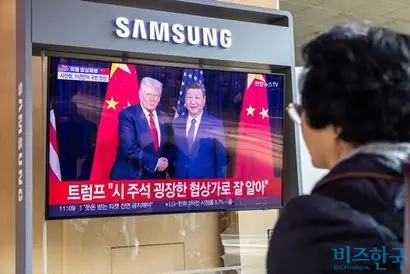
China officially announced on October 30, following the conclusion of the U.S.-China summit in Busan, that it would postpone the strengthening of rare earth export controls for one year. While immediate export controls were avoided, government efforts to ensure a stable supply of rare earths continue.
On October 31, the government held the 6th Supply Chain Stabilization Committee chaired by Minister of Economy and Finance Koo Yoon-cheol, where it discussed △countermeasures for rare earth supply chains, △achievements and improvement plans for the first anniversary of the Supply Chain Stabilization Fund, and △plans to revitalize the recycling of core minerals.
In his opening remarks, Minister Koo Yoon-cheol stated, "To ensure the supply of rare earths, we will promote investment and financing for overseas resource development, and actively push for the development of rare earth reduction technologies, the recycling of rare earth permanent magnets, and the expansion of public stockpiles."
Countries around the world are also introducing measures to reduce dependence on China and secure rare earths. On the 3rd, the U.S. signed partnerships to provide a total of $1.4 billion (approximately 1.9 trillion won) to rare earth startups Vulcan Elements and ReElement Technologies to achieve supply self-sufficiency. During President Trump’s recent Asian tour, he also signed a series of agreements related to rare earth supplies with countries including Japan, Malaysia, Thailand, Vietnam, and Cambodia.
In Russia, President Putin instructed his cabinet to prepare a rare earth mining plan by December 1, and also ordered the development of logistics networks in border areas with China and North Korea. Malaysian Prime Minister Anwar Ibrahim also stated on the 4th (local time) that the joint factory between South Korea's JS Link and Australia's Lynas, currently under construction in Pahang, would contribute to the development of his country's rare earth industry.
South Korea has also jumped into the global race to secure rare earth supply chains. After China’s rare earth export control measures were announced, the Ministry of Trade, Industry and Energy held a public-private joint rare earth supply chain response meeting on October 16 and decided to launch a rare earth supply chain Task Force (TF). The TF includes relevant ministries such as the Ministry of Economy and Finance and the Ministry of Foreign Affairs, as well as affiliated organizations such as the Trade and Security Management Institute, the Korea Mine Rehabilitation and Mineral Resources Corporation (KOMIR), the Rare Metals Center, and KOTRA. The rare earth supply chain TF plans to release comprehensive measures within the year.
Moon Shin-hak, Vice Minister of Industry and head of the TF, said, "There is significant concern about the impact of China's recent measures on our high-tech industries, such as semiconductors, electric vehicles, and batteries," adding, "We will cooperate closely between the public and private sectors to establish a stable foundation so that our industries are not shaken by external shocks."
The 6th Supply Chain Stabilization Committee announced specific plans regarding mid-to-long-term rare earth supply chain response capabilities. Key contents include △expanding support for R&D on rare earth substitution, reduction, and recycling, △supporting overseas rare earth mine and refinery investment projects, and △expanding the items and volumes of public rare earth stockpiles.
A core strategy among these is the revitalization of the rare earth recycling industry. The goal is to achieve a 20% recycling rate for the top 10 strategic core minerals by 2030. These 10 core minerals include five types of rare earths (neodymium, dysprosium, terbium, cerium, and lanthanum).
The government is also investing the Supply Chain Stabilization Fund into the core mineral recycling industry and has created a 'Core Mineral and Energy Supply Chain Stabilization Fund' worth 250 billion won. Fiscal support plans, such as government subsidies for recycling facilities, equipment, and R&D verification, are also included.
An official from the Korea Mine Rehabilitation and Mineral Resources Corporation, the agency overseeing recycling, explained, "Compared to other minerals, the recovery system for rare earths is not yet properly established. The plan is to provide government subsidies for part of the costs related to expanding rare earth production processes and purchasing environmental facilities or equipment."
Measures to promote rare earth recycling through regulatory rationalization were also included. This involves reclassifying rare earth-related raw materials currently designated as 'waste' into 'circular resources' to facilitate recycling. The government is reviewing the designation of printed circuit boards (PCBs) and spent catalysts containing rare earths as circular resources. It also announced plans to simplify import procedures for waste resources containing rare earths and to lower the current 3% tariff on waste resources within the first quarter of next year.
In addition, plans were established to increase overseas resource development financing from 36.9 billion won this year to 71 billion won next year to support overseas rare earth mine and refinery projects, as well as to expand the items and volumes of public stockpiles.
Industry stakeholders are hopeful that government policies will help secure a stable rare earth supply chain. A representative from the rare earth industry said, "We haven't felt the effects of the government policies yet, and overseas mine development is currently sluggish," adding, "We look forward to sourcing raw materials domestically through rare earth recycling and receiving support for entering rare earth businesses in China."