

[비즈한국] The 'New Leap Fund' (Saedo-yak Fund), a bad bank established by the government to professionally handle and acquire non-performing loans, has recently begun operations by purchasing long-term overdue debt. Launched on October 1, the New Leap Fund is part of the Lee Jae-myung administration's inclusive finance policy, designed to cancel long-term overdue debt and support debt restructuring for small business owners and socially vulnerable groups. However, as interest in the fund grows, fake websites have emerged, causing confusion among vulnerable populations and debtors.
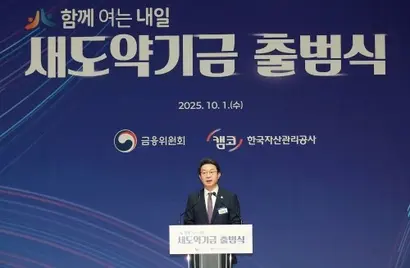
The New Leap Fund is a bad bank jointly launched by the Financial Services Commission (FSC) and the Korea Asset Management Corporation (KAMCO). It acquires debt in bulk from contracted institutions, specifically targeting debt overdue for seven years or more with a principal amount of 50 million won or less. Once acquired, the debt undergoes a review of the debtor's repayment capacity, followed by a sequential process of cancellation or debt restructuring beginning in 2026.
Criteria for cancellation of long-term overdue debt include having a median income of 60% or less and possessing no salvageable assets other than those necessary for basic living. Debts of vulnerable groups, such as basic livelihood security recipients, are prioritized for cancellation without a repayment capacity review. For debt restructuring, 30–80% of the principal can be reduced, with a maximum repayment period of 10 years and up to 3 years of deferred payment.
Debt related to stock investments, gambling, entertainment businesses, or debt owed by foreigners is excluded from purchase. Individuals found to have fraudulently obtained debt reductions face the nullification of their benefits and are subject to financial transaction penalties for up to 12 years. The government expects the fund to acquire 16.4 trillion won in debt, benefiting 1.13 million people.
However, with rising interest in the fund, similar sites have appeared, requiring caution. When searching for "bad bank" on portal sites, "badbank.kr" appears. The official website for the New Leap Fund uses the domain "newleap.or.kr," which incorporates the words "new leap." While the design of the fake site is crude, it includes a "New Leap Fund Application" menu and displays logos of institutions like the Financial Services Commission, the Credit Counseling & Recovery Service, and the Korea Asset Management Corporation, causing confusion.
In particular, clicking the "Talk Consultation" channel at the bottom of the site links to a "Small Business Policy Funds" KakaoTalk account, which has been confirmed not to be an official channel operated by the Korea Small Business Institute. The Korea Small Business Institute stated, "The KakaoTalk channel in question is an impersonation account, and we plan to take action after verifying its authenticity."
Such sites are believed to be increasing traffic by using high-search-volume keywords to generate advertising revenue. Recently, posts on portal sites claiming, "Check if you are eligible for New Leap Fund debt forgiveness," have been popping up everywhere. The links within these posts redirect users not to the official fund site, but to blogs cluttered with various banners and pop-up ads.

Because the New Leap Fund purchases debt in bulk from financial institutions, debtors do not need to apply individually. Once the fund acquires the debt and completes the review, the debtor is notified individually. If you are eligible for a reduction, you can check your status—such as the results of your repayment capacity review or whether your debt has been cancelled—only after the fund has purchased your debt from the financial institution.
The Korea Asset Management Corporation explained, "When checking debt status on the New Leap Fund website, we provide information on creditor changes via the Korea Credit Information Services' 'Personal Credit Information Inquiry Service.' Eligible individuals can verify their status through the 'Review and Cancellation Inquiry' feature. Only debt acquired by the fund can be searched. The review and cancellation inquiry service is currently in preparation. Users will undergo an identity verification process using their name, date of birth, and mobile phone number."
Meanwhile, the New Leap Fund, which launched amid high interest, announced on October 30 that it had completed its first purchase of long-term overdue debt. The debt, held by the Korea Asset Management Corporation and the National Happiness Fund, totals 5.4 trillion won, affecting 340,000 individuals. Collection efforts are halted immediately after purchase, and debt for vulnerable groups will be cancelled within the year.
In response to concerns that government-led debt forgiveness creates a sense of deprivation among those who consistently repay their debts and violates fairness, measures have been introduced. Starting November 14, special debt restructuring programs and special loans for those with less than 7 years of overdue debt—who are not eligible for the New Leap Fund—will be implemented. Debtors with 5 or more years of overdue debt can receive debt restructuring at the same level as the New Leap Fund (30–80% principal reduction, up to 10 years for repayment), regardless of the debt amount. For those with less than 5 years, Credit Counseling & Recovery Service programs (20–70% reduction, 8 years) will apply.
For debtors who are 7 or more years overdue but are currently enrolled in a debt restructuring program for at least 6 months, a special loan of up to 15 million won per person is provided. The interest rate is 3–4% per annum, with lower rates for longer repayment periods. Eligible individuals can repay the principal and interest in equal installments over a period of up to 5 years.
It was also pointed out that while private lenders hold a significant portion of long-term overdue debt, their participation as fund partners is low (as of late October, only 4 of the top 30 firms had signed). In response, the FSC stated, "We will actively encourage participation from private lenders and mutual finance sectors, and we plan to prepare incentives so that private lenders who join the agreement within this year can receive priority benefits."