

[비즈한국] The Ministry of Food and Drug Safety (MFDS) is set to step up its efforts for patients with rare diseases. The ministry reiterated its commitment to not only expedite the introduction of orphan drugs but also to actively support companies developing these specialized medicines.
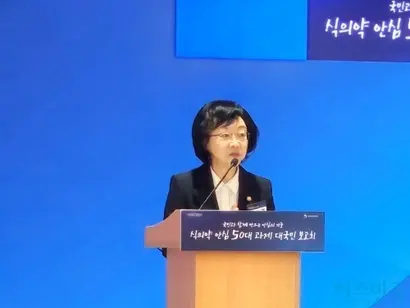
At the "50 Key Tasks for Food and Drug Safety" public briefing held on the 5th at the Seoul Foundation of Women and Family in Daebang-dong, Dongjak-gu, Seoul, Minister Oh Yu-kyoung responded to a question regarding specific plans and effects of designating orphan drugs by stating, "Once the Orphan Drug Center stocks a 3 to 4-month supply of these drugs, patients will no longer need to wait 2 to 3 weeks; they will be able to receive their medicine at a pharmacy upon presenting a medical certificate." She added, "This has the advantage of not only saving time but also reducing the customs clearance costs that patients have had to bear."
Minister Oh also stated that she intends to boost the development motivation for companies creating treatments for rare diseases in the long term. She explained, "Previously, if there were a first and second treatment, a third could only be approved if it was significantly superior to the existing ones. This structure made it difficult for third or fourth treatments to emerge, so we will improve the process through a rare disease track review that allows for approval even without data showing superiority over the first and second treatments."
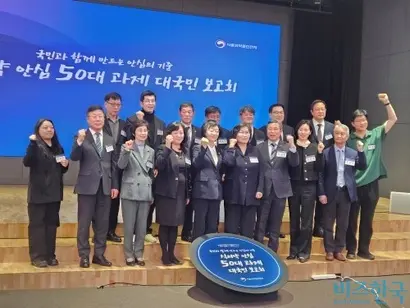
Through these tasks, the MFDS aims to increase overall trust in food and drug safety management and establish a scientific management system based on AI and big data. In addition to Minister Oh, the event was attended by Lee Jae-guk, Vice Chairman of the Korea Pharmaceutical and Bio-Pharma Manufacturers Association; Kim Kyung-ah, CEO of Samsung Bioepis; Kang Sung-ji, CEO of Welt; Kim Beop-min, Head of the Korea National Enterprise for Clinical Trials; Moon Mi-ran, President of the Korea National Council of Consumer Organizations; and Bae Jun-ho, Chairman of the Korea Glycogen Storage Disease Patient Association.
The MFDS selected 7 representative tasks to expand treatment opportunities for rare disease patients through the rapid introduction of orphan drugs, including: △Improving clinical trial participation requirements for anti-cancer drugs to expand opportunities for innovative cancer treatments, △Operating a hotline for fast and convenient one-stop regulatory pre-consulting, △Real-time guidance on hazardous food information via a 'user-customized SNS', △Verifying safety information for health functional foods via QR codes, △Rapid safety management of foreign substances in livestock products (meat) using AI, and △Establishing clear caffeine content standards for decaffeinated coffee.
The ministry's efforts to improve the system are also expected to expand treatment options for cancer patients, as those who have not yet received treatment will be able to participate in clinical trials. Previously, clinical trials for anti-cancer drugs were only open to terminal cancer patients who had seen no effect after first or second-line treatments. Minister Oh stated, "With the recent emergence of new technologies such as ADC (antibody-drug conjugates) in addition to targeted anti-cancer drugs, many patients are voicing their desire to participate in clinical trials for innovative treatments. Moving forward, we will establish criteria that allow even cancer patients who have access to standard treatments to participate in clinical trials for innovative drugs, thereby strengthening the lifeline of hope for cancer patients." The MFDS plans to establish selection criteria for initial clinical trial participants for anti-cancer drugs within this year.
To select these tasks, the MFDS visited more than 30 sites and gathered opinions from the pharmaceutical, food, and medical device sectors through over 100 meetings. The ministry explained that it communicated extensively with the public, particularly by holding a "Policy Connection Open Forum" intensively from July to September.
During the Q&A session that followed the public briefing, a question was raised regarding setting standards for caffeine content in decaffeinated coffee. In the United States, for coffee to be recognized as decaffeinated, the residual caffeine content based on coffee bean solids must be 0.1% or less, while in Europe, it is regulated at 0.3% or less. In contrast, in Korea, coffee is classified as decaffeinated if at least 90% of the caffeine has been removed. As caffeine content varies by bean type, people sensitive to caffeine—such as those suffering from insomnia or arrhythmia—have faced difficulties, leading to calls for the establishment of clear standards. Regarding this, Minister Oh explained, "After gathering on-site opinions, we found that reducing caffeine content to below 0.1% or 0.3% is feasible, so we will adjust it to align with international standards."