

[비즈한국] A BizHankook investigation has confirmed that Hyundai E&C000720 was recently ordered to pay 13.3 billion won in damages for delaying the start of construction while demanding an increase in construction fees at a maintenance project site operated under a trust model. The project developer, Korea Real Estate Investment & Trust (KOREIT)034830, had signed a construction contract worth approximately 120.5 billion won with Hyundai E&C, agreeing to adjust construction costs based on the Consumer Price Index (CPI) starting from a specific point. However, when Hyundai E&C demanded a price hike roughly three times higher than the CPI increase rate, KOREIT eventually notified the company of contract termination following a prolonged dispute.
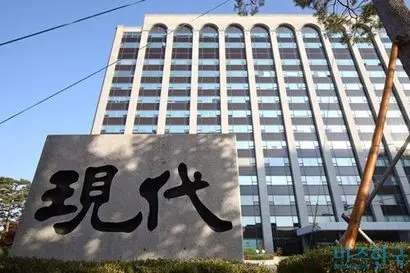
On the 21st of last month, the 18th Civil Division of the Seoul Central District Court (Presiding Judge Ryu Seung-woo) ruled in a damages suit filed by KOREIT against Hyundai E&C that the latter must pay 13.255 billion won. The court stated, "It is reasonable to conclude that grounds for contract termination under the construction agreement arose because Hyundai E&C delayed the start of construction for more than one month without justifiable cause," adding, "Hyundai E&C must pay KOREIT the scheduled damages for contract termination along with accrued late interest."
The dispute between the two parties originated from the 78 Taepyeong Sangga Apartment street-housing maintenance project in Jung-gu, Daegu. After being appointed as the project developer in October 2018, KOREIT signed a construction contract with Hyundai E&C in May 2020. In September of the following year, they signed an amendment increasing the construction period by one month and the construction cost by approximately 11.5 billion won. The final agreed-upon construction period was 39 months after the submission of the construction commencement notice, with a construction cost of 120.5 billion won and a contract security deposit set at 10% of the construction cost. The 78 Taepyeong Sangga Apartment project received business implementation plan approval in May 2021 and completed resident relocation in February 2023.
One year after the contract amendment, in September 2022, Hyundai E&C requested an increase in construction fees from KOREIT. Citing inflation, design changes, and material finish adjustments, the company requested a 48.8 billion won hike. About 38.6 billion won of the requested increase was attributed to inflation. Previously, the two sides had agreed that the base date for calculating construction costs would be May 2019, with no increases until September 2020, and that any adjustments between October 2020 and the actual start of construction would be based on the CPI increase rate.
KOREIT refused the construction fee hike request multiple times starting in October 2022, arguing that the scale of the increase demanded by Hyundai E&C exceeded the scope of the contract. In the official letters sent to Hyundai E&C, KOREIT demanded that the company fulfill its obligations, including starting demolition, submitting a demolition execution plan, and paying the contract security deposit or providing a security bond. However, Hyundai E&C stood its ground, insisting it could not fulfill these obligations without the fee increase.
The hike requested by Hyundai E&C far exceeded the level agreed upon with KOREIT. According to the contract, construction costs were to be adjusted based on the CPI increase rate from October 2020 to September 2022; during this period, the CPI rose by only 8.42%. However, the total increase requested by Hyundai E&C reached 40% of the original contract price. Even when looking only at the portion attributed to inflation, the requested rate was 32%.
Ultimately, the two parties parted ways after the dispute. Last March, KOREIT requested again that Hyundai E&C submit its demolition plan and provide the security deposit or bond, stating that failure to comply by April would be viewed as an abandonment of the project. When Hyundai E&C did not comply, KOREIT notified the company of contract termination in October of last year, citing contractual rights to rescind the agreement as well as statutory rights due to Hyundai E&C's delay and refusal of performance.
KOREIT filed a lawsuit against Hyundai E&C last November, seeking damages for the breach of contract. The suit contended that Hyundai E&C must pay the predetermined damages stipulated in the contract. Under the agreement, if the contract is terminated due to the contractor's default, the security deposit is forfeited to KOREIT. KOREIT argued that based on this, Hyundai E&C must pay 13.255 billion won, which includes the contract deposit (12.05 billion won) plus value-added tax.
The court ruled that the responsibility for the contract termination lay with Hyundai E&C. The court noted, "Despite having an obligation to begin construction, Hyundai E&C demanded a 40% increase in total construction costs—32% of which was attributed to inflation—far exceeding the 8.42% adjustment rate stipulated in the contract, and did not proceed with construction until KOREIT terminated the contract in October 2024." The court added, "It is reasonable to view this as a valid ground for termination due to the delay in construction commencement for over a month without justification."
During the lawsuit, Hyundai E&C argued that the contract clause using the CPI as an inflation indicator was invalid. It claimed that the CPI does not properly reflect actual cost increases and that applying the clause forced an unfair burden onto the company. Hyundai E&C also argued that it could not meaningfully negotiate the clause due to KOREIT’s superior bargaining position. Furthermore, it claimed that the agreement's validity had expired due to significant changes in external economic conditions and the delay in construction.
However, the court dismissed these arguments. Based on correspondence shared during the contractor selection process, the court determined, "It is reasonable to conclude that Hyundai E&C clearly intended to accept the clause when signing the contract," adding, "It is difficult to conclude that KOREIT held a superior position over Hyundai E&C, nor is there evidence to suggest that KOREIT coerced the inclusion of the clause while acting as the project owner." The court also ruled that the circumstances forming the basis of the clause had not changed significantly.