

[비즈한국] As the personnel season for the telecommunications industry arrives, leadership transitions are in full swing: SK Telecom017670 has appointed a CEO with a legal background for the first time since its founding, and KT030200 has begun the process of public recruitment for its next leader. This year, the three major telecom companies faced the dual challenges of hacking risks and the shift toward AI. With the industry requiring both a restoration of trust and the expansion of new businesses, attention is focused on the leadership models each company will choose.
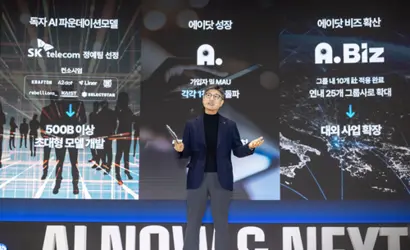
SK drives trust recovery with a 'former judge' as CEO
Starting with SK Telecom, which unveiled its executive lineup about a month earlier than in previous years, the telecom industry's personnel season has begun. This year, the focus is not just on generational change, but on reorganization strategies aimed at managing crises and creating new growth engines in AI.
On the 30th of last month, SK Telecom appointed Jung Jae-heon, an external affairs president with a legal background, as CEO. Outgoing CEO Ryu Young-sang will step down from the helm of SK Telecom to oversee SK Group's overall AI strategy. The appointment of CEO Jung is seen as a symbolic move to emphasize the reorganization of internal control and management systems following the USIM hacking incident. Jung previously served as a presiding judge at the Seoul Central District Court before being recruited by SK Group in 2020 to promote the expansion of its 'New ICT' business. At that time, he served as the first head of the newly created Legal Group 2, established to strengthen legal and risk review. Following this, he served as the head of the Investment Support Center during the establishment of SK Square402340 in 2021, overseeing strategy, legal affairs, and finance as a founding member.
SK Telecom stated, "CEO Jung, who spearheaded the establishment of 'AI Governance'—which embodies AI-pursued values and codes of conduct—and led the recovery of customer trust and the strengthening of information protection systems following cyber-security incidents, is the right person to lead both our AI and telecommunications businesses."
Specifically, his unique background stands out. Although CEO Jung is from the legal profession, he possesses experience in operating national computing and security infrastructure. Before serving as a presiding judge, he led the Computing and Information Management Bureau of the National Court Administration. This bureau manages and operates the judiciary's overall judicial information projects, handling informatization policies, securing budget for funding, and system construction and management. During Jung's tenure as director, the bureau was an organization composed of approximately 130 court staff and 800 outsourced workers.
With hacking risk emerging as the biggest threat to the telecom industry, attention is focused on what solutions CEO Jung, who encompasses law, security, and external communication, will present for SK Telecom's trust restoration and management stability. In his keynote speech at the 'SK AI Summit 2025' on the 3rd, CEO Jung said, "Amidst this era of AI transformation, I feel a heavy sense of responsibility as the CEO of a company representing the nation's AI industry. SK Telecom will grow into a 'national representative AI operator' that contributes to making the country an AI powerhouse. I promise to see you again soon with meaningful achievements."
Kim Young-sub gives up on reappointment; eyes on KT's leadership
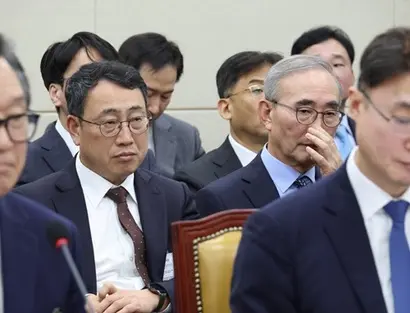
According to industry sources on the 4th, it is understood that KT CEO Kim Young-sub expressed his intention not to seek reappointment during the KT board meeting held that day. While KT once dismissed the rumors as "unconfirmed," the company officially announced after the board meeting that "CEO Kim will not participate in the public recruitment for the next KT CEO."
CEO Kim, who took office in August 2023, was once expected to pursue a second term, but a series of adverse events held him back. The decisive factor was the unauthorized micro-payment and hacking incident that surfaced in September. As political circles raised allegations of the incident being downplayed or covered up, criticism regarding management's responsibility grew, and Kim's position became precarious. During a National Assembly hearing on the 21st of last month, CEO Kim hinted at the possibility of resignation by stating, "Once the situation is resolved to a certain extent, I will take appropriate responsibility."
With the notion of his reappointment discarded, KT is embarking on the search for its next CEO through an open competition process. Candidates mentioned in the industry include former Seoul Metro President Kim Tae-ho (who has experience at KT), former Samsung SDS018260 CEO Hong Won-pyo, and former KT Corporate Division Head Park Yoon-young. The focus will be on how KT, which has declared its transition to an 'AICT (AI + Information and Communications Technology) company,' will balance the continuity of its AI business with innovative leadership.
CEO Kim had shown an aggressive approach, leading KT's AI corporate transformation strategy, pushing for large-scale organizational restructuring and asset sales, and securing a 2.3 trillion won contract with MS Cloud. However, internal criticism regarding AI reinforcement and cost-cutting also indicated a wavering sense of unity. The challenge for the next leader is to restore organizational stability while continuing the path of innovation.
LG Uplus likely to retain current leadership
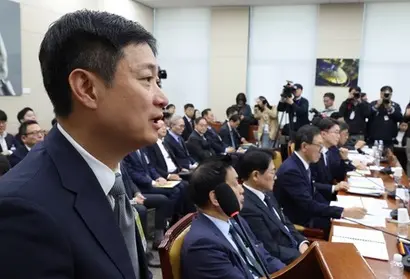
LG Uplus is considered relatively likely to retain its current CEO. In the regular executive reshuffle scheduled for next month, it is expected that there will be little room for the replacement of CEO Hong, who officially took office this year.
Coming from a background in a global management consulting firm, CEO Hong has strengths in strategic planning and discovering new businesses. Since taking office, he has pursued a strategy that combines LG Group's AI and DX (digital transformation) capabilities with the company's telecommunications infrastructure, with expanding AI and data-based new businesses as a core pillar. This year, he has been growing AI services by strengthening enterprise AI solutions and industry-customized platform businesses.
Although the company was relatively unscathed by the hacking crisis, concerns about its security management system were raised anew after it was revealed that it had reported signs of a hack late in October. Internally, efforts are underway to strengthen security organizations and inspect management systems to prevent recurrence. The task remains to produce visible results in new AI businesses while proving the restoration of customer trust. Attention is on whether the company can continue to grow amidst stability while strengthening its role as an AI collaboration hub within the group.