

[비즈한국] Controversy is rising after it was confirmed that workers from a labor dispatch agency, who were victims of the Aricell disaster, were classified as "service industry" employees in industrial accident statistics. Civic groups argue that the current method of classifying deaths based on the industry registered for industrial accident insurance leads to statistical distortion, and that statistics should be improved based on the actual workplace where the industrial accident occurred.
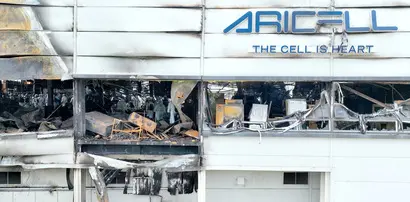
It was found that among the 23 victims of the Aricell disaster that occurred in June last year, 20 workers from the labor dispatch agency "Maisell" were classified as service industry employees in the "Industrial Accident Status" statistics. Of these, 18 were migrant workers. Critics argue that since the accident took place at the Aricell factory, a primary lithium battery manufacturer, it is only logical to classify them under the manufacturing industry.
This controversy stems from the fact that industrial accident statistics are categorized based on the industry code of the company registered for industrial accident insurance. While Aricell is registered as "Other Electrical Machinery and Equipment Manufacturing (22404)" and classified as manufacturing through its workplace management number, Maisell, the agency that dispatched the workers, is assigned the code for "Business Support Services (90104)" and thus classified as the service industry. Consequently, the victims from Maisell were tallied as service industry deaths. Regarding this, an official from the Industrial Safety and Health Policy Division of the Ministry of Employment and Labor stated, "We compile statistics based on accident victims whose workers' compensation claims have been approved," adding, "Since the standard for extracting workers' compensation data is based on industrial accident insurance, we reflect the industry code as is."
Kwon Mi-jeong, Steering Committee Chair of the Kim Yong-gyun Foundation and a member of the Aricell Major Disaster Response Committee, said, "Just as we argue that the primary contractor should be held responsible for industrial accidents, the statistics should also reflect the fact that the accident occurred at Aricell, the primary contractor."
In its first trial, Maisell was fined 30 million won for illegally dispatching workers to Aricell, and its CEO and some executives received prison sentences. Although Maisell had registered its business as primary and secondary battery manufacturing in its corporate registry, its industry code for industrial accident insurance remained designated as business support services.
Industrial accident status is a nationally approved statistic compiled based on the Occupational Safety and Health Act. It is released cumulatively every quarter and covers cases where workers have died in relation to their duties or received approval for workers' compensation from the Korea Workers' Compensation & Welfare Service due to injuries or illnesses requiring four or more days of medical treatment. Major indicators include the number of casualties, accident rate, number of deaths, and fatality rate per 10,000 workers, and it serves as basic data for establishing industrial accident prevention policies.
Civic groups criticize that the industrial classification based on industrial accident insurance registration is disconnected from the industry of the actual accident site. Choi Jin-il, representative of the Chungnam Labor Health and Human Rights Center Saeumteo, pointed out, "Since the purpose of industrial accident investigations is to understand the causes and the context of the site to reflect them in future policy-making, statistics should not be left based on industrial accident insurance industry standards as they are now."
However, "Death Accident Investigation" statistics are tallied reflecting the primary-subcontractor relationship. This is a statistic compiled based on fatal accidents that require investigations by industrial safety inspectors into the cause of the accident, which differs from general industrial accident statistics. In the case of the Aricell disaster, all deaths were classified under the manufacturing industry, which is Aricell's industry.
In response, an official from the Major Industrial Disaster Supervision Division of the Ministry of Employment and Labor explained, "It is a structure where the primary contractor is held responsible even if an accident occurs at a subcontractor," and added, "In the case of the Aricell disaster, since the accident occurred during manufacturing operations, it was classified as the manufacturing industry (in the death accident investigation statistics)."