

[비즈한국] Financial authorities announced on the 2nd that they have paid a reward of nearly 100 million won to a reporter of stock manipulation activities. Furthermore, discussions are underway to revitalize the reporting incentive system. However, legal experts raise concerns that without prioritizing strict punishment for stock manipulation—as is the case in the United States—rewards alone will be insufficient.
Recently, with the confirmed abolition of the Prosecutors' Office, investigations into stock manipulation by the Seoul Southern District Prosecutors' Office have virtually come to a halt. Experts point out that revitalizing the whistleblower system must be accompanied by robust investigations and strict judicial sentencing.
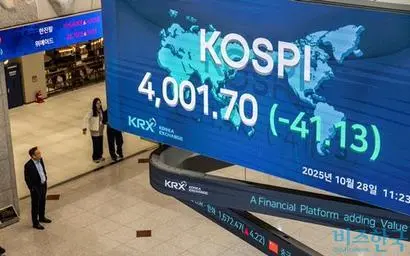
100 Million Won Paid to Whistleblower Who Submitted Key Evidence
The Securities and Futures Commission under the Financial Services Commission (FSC) decided at a meeting on the 29th to pay a reward of 93.7 million won to an individual, 'A', who reported unfair trading activities in the capital market. According to financial authorities, 'A' submitted evidence such as transcripts, claiming that suspects were using illicit methods to intentionally inflate stock prices. Based on this, the Financial Supervisory Service (FSS) conducted an investigation and referred six individuals to the prosecution for violating prohibitions against unfair trading and reporting obligations for large shareholdings.
Financial authorities operate a system to pay rewards to those who help prove allegations to encourage reports of unfair capital market trading, such as stock manipulation. Rewards are categorized into 10 grades based on the significance of the misconduct, ranging from a minimum of 15 million won to a maximum of 3 billion won. Reporters must submit evidence verifying their identity and their status as the informant within one year.
The FSC stated, "The need for a budget increase for reporting rewards was mentioned during this year's National Audit, and we will actively strive to secure an increase through close consultation with the National Assembly and the Ministry of Economy and Finance to ensure the smooth implementation of the program."
Looking at the US Example
The United States operates a much more powerful 'whistleblower reward system' than South Korea. The Securities and Exchange Commission (SEC), which oversees Wall Street, paid 600 million dollars (approximately 791.4 billion won at the time) in 2023 to whistleblowers who reported securities and financial crimes. Notably, one whistleblower received 279 million dollars (approximately 370 billion won).
As President Lee Jae-myung has emphasized 'strict punishment for stock manipulation,' it is possible that we may see cases where rewards are paid out in much larger amounts, similar to the US. In reality, damages from stock manipulation can range from billions to hundreds of billions of won, but a key characteristic is that such crimes are difficult to prove. Even if transaction records remain through securities firms, it is not easy to prove the 'intent' behind the process of inflating or selling stocks.
The reason multi-billion-won payments exist in the US is that informants submitted evidence proving such intent. The rewards are viewed not merely as compensation, but as an investor protection mechanism.
'Strict Punishment' Must Come Before Rewards
Legal experts unanimously agree that 'strict punishment' is more important than a reward system. The reason it is rare to find stock manipulation or insider trading in the US is that even a single instance of stock manipulation can lead to a severe, life-altering sentence. Bernard Madoff, who ran a Ponzi scheme involving 37,000 people across 136 countries with damages exceeding 72 trillion won, was sentenced to 150 years in prison in 2009 and died in custody in 2021. The consensus is that it is difficult to eradicate financial crimes like stock manipulation without such harsh punishments, regardless of how active the reward system is.
In particular, there is significant concern regarding the prosecution, which is considered effectively shuttered following the passage of the bill to abolish the Prosecutors' Office. The Seoul Southern District Prosecutors' Office had a large number of prosecutors with excellent skills in tracking the 'flow of money,' but many of them are currently dispatched to the Special Prosecution on insurrection and the First Lady special investigation. If the financial authorities secure key evidence and hand it over to the prosecution, they should investigate quickly to root out manipulation syndicates, but the investigative agency capable of this has come to a standstill.
A capital market industry official noted, "The biggest reason why manipulation syndicates are moving again amidst the recent stock market surge is that the prosecution is not conducting investigations. Even if a reward system is in place, if the structure allows for a brief detention during the investigation followed by a suspended sentence after the first trial, we will never be able to eradicate these syndicates."
A lawyer with experience at the Seoul Southern District Prosecutors' Office added, "I think giving rewards to whistleblowers is an excellent system given the nature of stock manipulation crimes. However, what is ultimately more important is that we must offer them a guarantee of no punishment (plea bargaining). Whether it is correct for only the accomplice who betrays the group first to receive the reward and avoid punishment is a matter for discussion."