

[비즈한국] An IPO (Initial Public Offering) serves as a primary means for private biotech companies—which develop new drugs and novel diagnostic services—to raise large-scale capital. For some time, the public offering market remained sluggish due to factors such as the global economic downturn, which constricted investment into biotech firms, and the threat of delisting for some KOSDAQ-listed biotech companies. Recently, as the stock market has shown a vibrant trend, fueled by expectations of improved corporate earnings coupled with government stock market stimulus policies, expectations for the biotech IPO market are rising again.
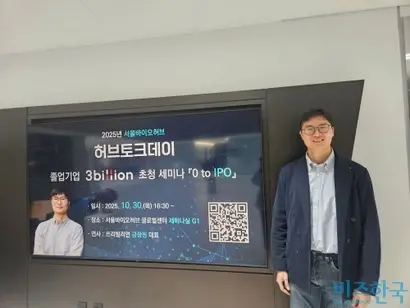
Keum Chang-won, CEO of 3Billion, gave a lecture titled '0 to IPO' at the Seoul Biohub Global Center in Dongdaemun-gu, Seoul, on the 30th. He shared his personal IPO experience to introduce necessary strategies for private companies preparing for listing. 3Billion is a biotech company that entered the KOSDAQ market on November 15 last year through the special technology listing track and has now reached its one-year anniversary since listing. Based on AI (Artificial Intelligence), the company analyzes genomes to develop diagnostic services for rare diseases and therapies. Having attempted an IPO in 2021 before voluntarily withdrawing it, he possesses experience with both the successes and failures of the IPO process.
CEO Keum emphasized, "An IPO is something that is achieved through evaluation. Running the business well is a given; if you manage areas like patents, accounting, HR, and board operations well from the beginning, you won't face significant difficulties when pursuing an IPO." He added, "If you have a clear goal that can convince the market rather than a vague target, your corporate value will be properly recognized. Even if you receive an evaluation that doesn't meet your expectations, if the opportunity has arrived, I believe it is better to proceed with the listing, as you never know when the next opportunity will come."
However, he warned against pursuing an IPO that deviates from the inherent purpose of a biotech company. "Biotech founders likely aimed to provide solutions (new drugs, services) to solve problems with unmet social needs," Keum said. "While founders have different reasons for starting businesses and there is no single equation for success, a company that grows into a lasting enterprise will go further than one whose sole goal is just 'making a lot of money' through an IPO." He pointed out, "I question whether it is right for some biotech companies to change their existing business models or R&D strategies solely to succeed in an IPO."
He also highlighted that succeeding in an IPO is not the end. "Although 3Billion is listed, not much has changed since before," Keum said calmly. "I don't think listing is the end; I believe we are in the process of growing into a unicorn company or beyond, so there is still much to do."
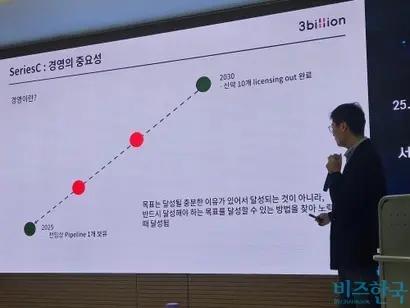
Furthermore, CEO Keum offered suggestions for improving the current special technology listing system. The special technology listing track was introduced in April 2005 to lower the hurdle compared to regular listing procedures, allowing even loss-making companies to list on the KOSDAQ. It is being utilized as a major entry point for biotech companies with technology and growth potential to access the stock market. However, there is strong demand from the biotech industry for improvements regarding the application of the same 'net loss before corporate tax' (loss before income tax) requirements applied to regular listed companies, especially since biotech companies require a long time to produce meaningful results. Listed companies must maintain a ratio of net loss before corporate tax to equity of 50% or less. If they fail to meet this twice within three years, they may be designated as an administrative issue and potentially delisted after a substantive review of eligibility for listing by the exchange.
CEO Keum suggested, "Since massive investment is needed until achievements like new drug development are made, it will be difficult for biotech companies to grow if the special 'net loss before tax' regulation, which exists only in Korea, continues. It would be good to reform the system to align with global standards." A CEO of a private biotech company who attended the lecture also cautiously said, "The special technology listing track has significance in preventing excellent technology from being buried. Although there are limits to evaluation, I hope it will be supplemented so that the intent of the system is not faded." Lee Seung-kyu, Vice Chairman of the Korea Biotechnology Industry Organization, emphasized, "We are not asking for a complete exemption from the 'net loss before tax' regulation, but we hope they will consider easing regulations while maintaining the intent of the special technology listing, such as by excluding R&D expenses when calculating the net loss before tax."