

[비즈한국] It has been confirmed that the bankruptcy proceedings for Hanmac Securities, the “unfortunate brokerage firm” that closed its doors following a momentary order error, have recently concluded. In December 2013, Hanmac Securities suffered a loss of over 46 billion won due to a trading mistake and was unable to recover, eventually leading to its closure. The bankruptcy process was delayed due to a protracted legal battle with the Korea Exchange (KRX) over the reimbursement of settlement funds, which exceeded 40 billion won. Although the KRX won the lawsuit, it failed to recover even 10% of the indemnity.
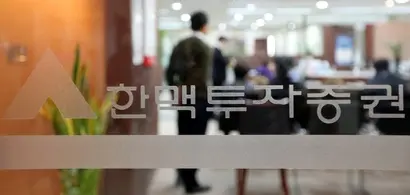
On October 23, the 16th Division of the Seoul Rehabilitation Court announced the conclusion of Hanmac Securities' bankruptcy. This comes approximately 11 years after the bankruptcy declaration in February 2015. The Korea Deposit Insurance Corporation (KDIC) had served as the bankruptcy trustee and managed the process.
After completing the final dividend payment, the KDIC held a creditors' meeting on October 23 to report on the accounts and conclude its duties as bankruptcy trustee. A corporation whose bankruptcy has been concluded ceases to exist. According to the corporate registry, Hanmac Securities applied for bankruptcy registration on October 29.
The "Hanmac Securities incident" refers to the December 12, 2013, event where an employee mistakenly placed buy and sell orders for KOSPI 200 options at abnormal prices, resulting in a 46.2 billion won loss. Immediately after the error, Hanmac requested the KRX to hold the settlement, but the request was denied. While Hanmac managed to recover some of its losses by appealing to industry peers, it failed to recover funds from a foreign hedge fund that had gained over 36 billion won in profit from the mistake, leading to its bankruptcy.
The Hanmac incident is considered a classic example of a "fat finger" error, which refers to human input mistakes. While it took only 143 seconds from the initial order error to the shutdown of the system, the losses incurred in that brief time were enormous. The lack of domestic mechanisms to rectify erroneous trades or prevent abnormal transactions further exacerbated the damages.
Since then, systems have been introduced to reduce fat finger accidents. Starting in 2016, the KRX implemented a "bulk order cancellation system (Kill Switch)" allowing brokerages to cancel pending orders and block new ones in case of an error, and a "large-scale erroneous trade relief system" where the exchange can intervene to provide relief to brokerages in cases of large trades executed at prices significantly deviating from the market price.
The KRX, which covered the settlement costs on behalf of Hanmac, filed a lawsuit in March 2014 against the KDIC, which was managing Hanmac’s bankruptcy estate, to claim indemnity. At the time, the settlement funds were covered by the joint damages compensation fund accumulated by brokerage firms.
The KDIC responded with a countersuit, arguing that the KRX had been negligent in its market management and oversight duties. The legal battle lasted nearly a decade and ended in April 2023 with a ruling in favor of the KRX. On the same day, the KDIC also lost its lawsuit against Catchia Capital, the hedge fund that gained the most from the erroneous trades, demanding the return of unjust profits.
Despite winning the long legal battle, the KRX could not recover even half of the settlement funds. According to the final distribution record of Hanmac Securities, while the total debt to be distributed was 43.5 billion won, the distributable amount was only 3.4 billion won—less than 10% of the total debt.
The debt to be distributed consisted of 41.1 billion won in priority debt owed to the KRX and 2.4 billion won in general debt, such as commercial claims and unpaid wages. However, since Hanmac could only pay 3.4 billion won, the entire amount was distributed to the KRX.
While additional distributions are possible if further liquidatable assets are discovered after the final distribution, the likelihood is slim. A KDIC official explained, "In principle, we would perform additional distributions if contingent assets arise, but we believe all of Hanmac's assets have been liquidated. Since the KRX's claims take legal priority, they are the only creditor that received a payout." Even if further distributions were possible, the KRX is still owed a significant amount, making it difficult for general creditors to receive anything.
Once a corporation is dissolved after bankruptcy, the debts effectively disappear. The KDIC stated, "In principle, the legal personality ceases to exist, so the proceedings have concluded. If additional assets were to emerge, the legal personality would technically be revived for the limited purpose of distributing those funds." The KDIC, as the bankruptcy trustee, has no obligation to compensate for remaining debts.