

[비즈한국] While the government pushes the 4.5-day workweek as a national policy task, Jeongseon County in Gangwon Province—the first local government in the nation to pilot the system—has begun developing an automated administrative system where artificial intelligence (AI) searches for and summarizes documents and data. The plan is to establish a generative AI administrative platform based on its own graphics processing unit (GPU) server to enhance the efficiency of civil servants' document tasks and public grievance responses. Attention is focused on how this local government-level AI administrative experiment will impact public sector productivity and the establishment of the 4.5-day workweek.
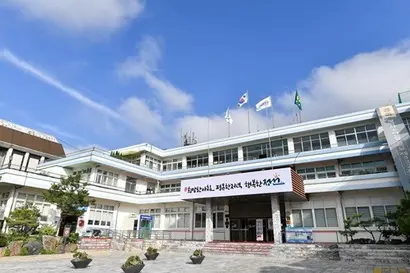
'First Attempt by a Local Government': Installing In-house GPU Server to Develop System
According to the Public Procurement Service’s KONEPS, Jeongseon County issued an order on the 23rd for the "Construction of an In-house Administrative AI Project to Promote the 4.5-Day Workweek." The project, with a budget of 225 million KRW, focuses on installing an in-house GPU server to create an on-premises large language model (LLM) infrastructure, and developing an AI system capable of searching, summarizing, and answering queries within administrative documents. The idea is to secure both data security and cost-efficiency by opting for an internal network-based model rather than an external cloud.
Jeongseon County was the first among the nation's 228 local governments to introduce and pilot a 4.5-day workweek last September. It allows civil servants of Grade 7 and below, as well as public service workers with children aged 8 or under (elementary school 2nd grade or below), to opt for a 4-day workweek every other week. The system involves working normal hours from Monday to Thursday, while counting the 6:00 PM to 8:00 PM childcare period as working hours, thereby granting time off every other Friday. Grade 7 and below civil servants utilize a flexible work system where they take every other Friday off once they accumulate 8 hours of overtime from Monday to Thursday.
At the time of the 4.5-day workweek pilot launch, Jeongseon County stated, "In a situation facing multiple difficulties such as the crisis of population extinction, we will do our best to provide better administrative services through radical changes in the public official society."
Once the project is completed, Jeongseon County will be able to perform AI administrative tasks on its own servers without relying on external clouds. Employees are expected to be able to use AI-supported systems to search for vast internal materials such as administrative documents, laws, and company regulations using natural language. The intention is to minimize administrative gaps caused by the adoption of the 4.5-day workweek by reducing the time spent on document-based public complaints and the drafting of various official documents.
According to the task manual announced by Jeongseon County, the project scope includes the introduction and configuration of a GPU server, as well as the construction of internal GPU resources, data pipelines, AI model operation, and security and monitoring systems based on the generative AI infrastructure. It will adopt open-source-based LLMOps (Large Language Model Operations) solutions and apply RAG (Retrieval-Augmented Generation—an AI technology that improves response accuracy by finding external information) that can link with the in-house LLM. A Single Sign-On (SSO) system integrated with the 'Sae-eol' administrative system, which supports the integrated processing of major administrative tasks for city, county, and district offices across the country, as well as an operational monitoring dashboard, will also be established.
Jeongseon County stated, "We will prevent sporadic redundant investments by department in the future through a platform design not tied to any specific model and a configuration that considers GPU resource clustering per project," adding, "We expect to strengthen the AI capabilities of our personnel, which is necessary for efficiency and AI-based public administration."

Can AI Be the Solution to Work Productivity?
Discussion of the 4.5-day workweek is gradually expanding due to expectations regarding the spread of a "work-life balance" culture, improvement of long working hour practices, and increased productivity. In the case of Jeongseon County, the current participation rate is less than 10% of total staff, so it does not represent a large portion of the organization. However, there is significant room for expansion in line with the central government's efforts to improve working systems. With the government recently making the 4.5-day workweek a major national policy task, its implementation is expected to gain momentum.
Starting last year, some local governments have already begun relevant experiments. Jeju Province implements a so-called "Friday at 1:00 PM" policy, where employees can ensure a Friday afternoon break while maintaining a 40-hour workweek by utilizing a flexible work system. It works in a format where if an employee works an additional 4 hours between Monday and Thursday, they can leave work at 1:00 PM on Friday. Gyeonggi-do is operating a 4.5-day workweek pilot project with no wage cuts for some companies and public institutions within the province.
A local government official said, "Because internal awareness and institutional foundations are not yet clear, there is pressure to be proactive," adding, "The atmosphere will change only when guidelines at the central government level are provided."
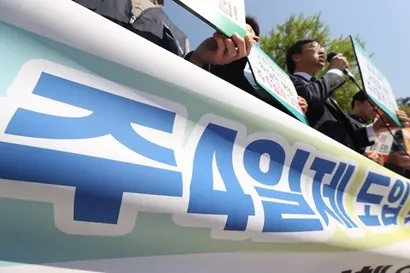
A 4.5-day workweek entails a structural transition where the same performance as before must be achieved in a shorter time. There are also significant concerns about side effects such as work gaps and decreased productivity due to reduced working hours. Local governments currently piloting the system are limiting the number of participants to minimize work gaps. Jeongseon County manages participation to 50% or less per department, and Jeju Province to 30% or less per team.
Accordingly, administrative efficiency through AI is emerging as a key alternative. Attention is focused on whether this project will provide a new solution to enhancing local administrative efficiency and the discussion on the 4.5-day workweek reform. Given the nature of AI systems that handle administrative documents and personal information, securing reliability and data security is pointed out as a key challenge when introducing generative AI into public administrative networks.
Jeongseon County will carry out the project for four months after signing the contract. It plans to build the system and LLM in the first and second months, and complete the project through training and operational support in the third and fourth months.
A Jeongseon County official explained, "We could use cloud or external APIs, but considering long-term operational efficiency and security issues, the on-premises approach is suitable for local governments," adding, "We consider it important to operate stably in a verified environment without relying on external platforms. We plan to approach it in stages, starting with internal administrative support services."