

[비즈한국] According to the Korea National Park Service, the number of foreign visitors to the 22 national parks across the country, excluding Palgongsan, reached 885,282 last year, an 18-fold increase compared to 2021. This is likely because most metropolitan areas, such as Bukhansan National Park in Seoul, have national parks with excellent accessibility, and Korea’s unique hiking culture has become an attractive factor. Foreigners often bring gimbap as a packed lunch or enjoy makgeolli and pajeon after their hike.
This is closely linked to the high number of foreign visits to the National Museum of Korea. Both share the characteristic of having no entrance fees. National park entrance fees were abolished in 2007. Previously, one had to pay a total of about 3,000 won, covering both the national park admission and cultural heritage viewing fees.
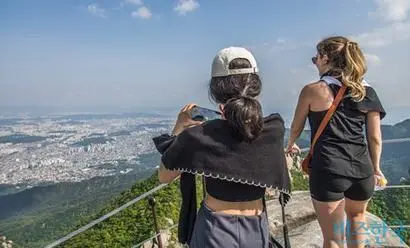
Famous overseas national parks not only charge entrance fees but sometimes charge higher rates for foreigners. On July 3, U.S. President Donald Trump signed an executive order to impose higher entrance fees on foreign tourists. New Zealand will start charging entrance fees to foreigners at some famous natural landmarks from 2027. Ecuador’s Galapagos National Park charges its own citizens $10, while foreigners pay $200. Thailand charges foreigners 10 times what it charges its own citizens.
Now, let’s look at museums. The National Museum of Korea’s popularity among foreigners is attributed to its accessibility, planning ability, "MU:DS" (museum goods), convenient ancillary facilities, and furthermore, the influence of K-Pop. Special exhibitions utilizing cutting-edge technology such as AI and virtual reality also have an effect. Above all, the fact that it is free plays a significant role.
Unlike us, famous overseas museums charge significant entrance fees. The Louvre in France charges 22 euros (about 32,200 won), the Metropolitan Museum of Art in New York charges $30 (about 41,000 won), the National Palace Museum in Taipei, Taiwan charges 350 New Taiwan dollars, and the Prado Museum in Madrid, Spain, charges about 14 euros. However, they often offer free or discounted admission for children, students, and people with disabilities.
The discussion about imposing an entrance fee for the National Museum of Korea arose because the number of visitors has skyrocketed. From January 1 to October 20 of this year, the museum reached a total of 5,103,709 visitors. This record surpassed the number of visitors to the Tate Modern in London, UK, which ranked 5th in global museum attendance in 2024 (4,603,025 visitors). Of this, the number of foreigners is about 185,000, accounting for 3.7% of the total. Due to free admission, visits from not only the general public but also foreigners have increased. As the number of visitors grows, management costs rise. Funds are also needed to provide better services.
Setting aside the issue of visitor numbers, museums naturally need ample finances to acquire more artifacts and heritage. The acquisition budget for the National Museum of Korea averaged 3.981 billion won annually from 2015 to 2024. This is vastly insufficient compared to the Metropolitan Museum of Art (81.7 billion won) or the Museum of Modern Art in New York (28.2 billion won). Moreover, hosting special exhibitions requires bringing in artworks or artifacts from overseas, which costs a massive amount. These costs are covered by the state treasury, meaning the taxpayers' money. This has led to the argument that it is inequitable for foreigners, who do not pay taxes, to visit for free.
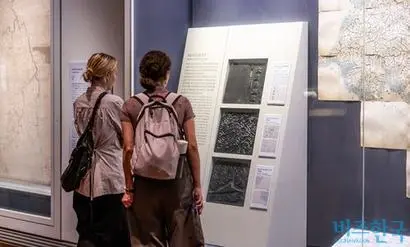
The National Museum of Korea’s annual operating budget exceeds 80 billion won, but its revenue is only 2.3 billion won. Therefore, it is necessary to secure required funds through entrance fees; some analyses suggest that even charging 2,000 won for adults and 1,000 won for teenagers could generate a maximum of 10 billion won in revenue based on 5 million visitors.
Some express concern that turning to a paid model could reduce the number of visitors. However, according to the British art magazine ‘The Art Newspaper,’ given that the Louvre ranks 1st in visitor numbers and the Metropolitan Museum of Art ranks 4th, it seems that charging for admission does not necessarily lead to a decrease in visitors. However, there might be an impact during the initial phase of implementing the entrance fee.
There are various suggestions regarding entrance fees. Some suggest charging only at certain times or offering free entry like some European museums. There is also an idea to sell paid tickets for guaranteed entry. Discussions also include offering discounts on goods with paid tickets, or introducing supporting memberships and donation events. For instance, while the British national museums operate for free, they cover operating costs through voluntary donations and membership systems. Membership at the British Museum starts from an annual fee of 74 pounds (about 139,000 won).
However, compared to famous overseas museums, the vast majority of visitors to the National Museum of Korea are Korean, so whether it is appropriate to apply different rules for foreigners is a matter that requires further thought. Some hold the view that this could dampen the mood of foreigners who are finally showing interest in Korean culture.
The reason foreigners visit the Metropolitan Museum of Art and the Louvre even after paying higher entrance fees is that they are worth it. The same applies to overseas national parks. These landmarks have built an immortal brand value over a long period. Does the National Museum of Korea have that level of brand value yet? Not quite.
The most important thing is to build a "hardcore" fandom. Like the fans who love K-Pop music and idols, if a fandom for the National Museum of Korea is born, it would be better to encourage voluntary paid entry centered around them. Creating fans and deepening relationships with them should take precedence over a hasty paid admission policy. We must not forget the fact that local festivals and movie theaters have faced crises while obsessing over visitor numbers.
The author, Kim Heon-sik, has spent his time since his 20s walking through or exploring the forest of pop culture phenomena, fueled by the expectation that there is a way to make the world better through culture. Even in the 21st century, where artificial intelligence and quantum computers are active, he continues on the same path with the same belief.