

[비즈한국] "How long will we be able to drink coffee?" Seo Pil-hoon, CEO of Coffee Libre, who took the stage as the fourth speaker at the 'BrandBiz Conference 2025,' spoke about the sustainability of coffee. Having spent the last 16 years traveling to coffee-producing regions around the world, which led him to ponder the future of coffee, he opened his lecture with a surprising remark: "I don't think we will be able to drink coffee for much longer."
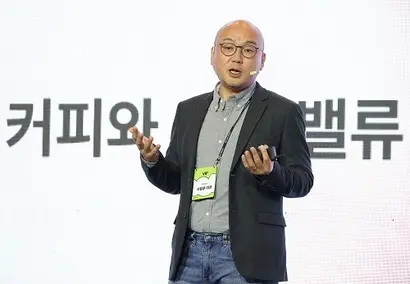
'405 cups.' This is the amount of coffee consumed by Koreans in a year. With South Korea ranking first in the world for coffee consumption, the domestic coffee market continues to grow. The 'specialty coffee' market, which was unfamiliar just over a decade ago, has also become popularized. Seo Pil-hoon, CEO of Coffee Libre, said, "I believe this is the 'Hwayangyeonhwa' (the prime, flower-like days) of coffee. Never in human history have we enjoyed such high-quality coffee from such diverse origins as we do today."
CEO Seo is considered a pioneer who opened up the domestic specialty coffee market. In 2007, he became the first Korean to obtain the Q-Grader certification from the SCAA (Specialty Coffee Association of America), and in 2012 and 2013, he won the 'World Roasters Cup,' a global coffee roasting competition. He founded 'Coffee Libre,' a first-generation specialty coffee brand, in 2009 and opened its first store in the alleys of Dongjin Market in Yeonnam-dong in 2012.
CEO Seo pointed out that a sense of crisis regarding coffee has recently intensified. Coffee is a crop highly sensitive to temperature and rainfall patterns. It can only be cultivated at high altitudes within the 'Coffee Belt,' which lies between 25 degrees north and 25 degrees south latitude. Due to recent climate change in these regions, production is decreasing significantly.
Because there has been little change in international coffee prices over the past 50 years, the economic difficulties for coffee farmers are also increasing. With farmers trapped in an intergenerational cycle of poverty, it is difficult to secure a young workforce. Many farms are struggling due to labor shortages during the coffee harvest season. CEO Seo stated, "The demand for coffee is rising every year. However, it is estimated that by 2050, 50% of the current coffee cultivation area could become unsuitable for farming, and there are projections that coffee production in Central and South America could decrease by up to 88%."
CEO Seo emphasized that to continue enjoying good coffee for a long time, we must start contemplating 'sustainable coffee.' He said, "For specialty coffee, quality is paramount. The entire process of coffee production is connected like a chain; if sustainability is not guaranteed at each stage, high-quality coffee cannot be produced."
Interest in coffee sustainability is also rising socially. Typically, specialty coffee referred to coffee rated 80 points or higher (out of 100) by the 'Specialty Coffee Association (SCA)' based on consistency, harmony, aroma, and taste. Recently, however, 'sustainability' has been added as a critical evaluation criterion.
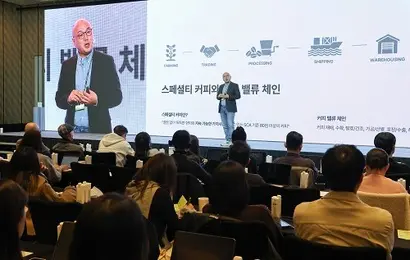
Coffee Libre is making various efforts for sustainable coffee. They supply leftover coffee chaff (coffee bean skins) from roasting as bedding for chicken farms, and green bean sacks are provided to nearby military units as sandbag substitutes or distributed for free as mulch for neighboring farms.
CEO Seo said, "Coffee Libre uses about 200 to 300 rolls of plastic tape per month for shipping orders. We use over 20,000 coffee bean bags a month. In the past, we simply chose materials that looked good, but since last year, we have replaced all tapes and bean bags with eco-friendly materials."
A 'Geisha Project' is also underway for a circular economy. It is a project where Coffee Libre receives high-quality Geisha variety seedlings—which can generate significant income when cultivated—and distributes them for free to local smallholder farmers. Small farmers struggling to make a living can participate in the Geisha Project to harvest high-quality coffee and earn a stable income. They also host local auctions to promote coffee from regions like Honduras and continue efforts such as purchasing beans at prices about 50% higher than those set by Fair Trade to increase farmers' income.
In recognition of these efforts, Coffee Libre received B Corp certification this past March, a global sustainability assessment standard. B Corp is granted to companies worldwide that practice the highest level of social responsibility. They are evaluated based on governance, workers, community, customers, and the environment.
CEO Seo emphasized that to enjoy coffee for a long time, we must continue our efforts to reduce carbon emissions in our daily lives. He mentioned specific methods such as 'flying less,' 'abstaining from beef and lattes,' 'taking the trouble to walk a little more,' 'buying less of everything,' and 'reducing waste and disposable products.' He concluded, "I have presented a bleak outlook for the future of coffee, but I hope my prediction is proven gloriously wrong. Recognizing that we are all connected will help create a better world that we can pass on to the next generation."