

[비즈한국] Design is a language that captures the sensibilities of an era. The lifestyle brand "OIMU"—a name derived from the phrase "oneday I met you"—proposes a reinterpretation of Korea's unique culture through a contemporary lens. By focusing on the stories embedded in forgotten objects such as matches, incense, scrolls, and erasers, the brand finds new utility in daily life through design. As the first speaker at "BrandBiz Conference 2025," Shin So-hyun, CEO of OIMU, spoke on the theme "A Cute Heart Connecting the Past and Present," identifying the reason for a brand's existence in the act of "connecting."
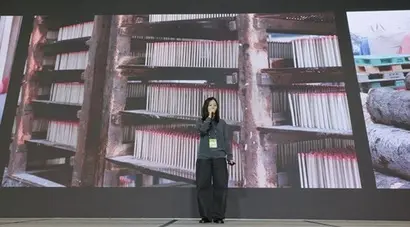
A brand that transformed matches—now largely vanished from daily life—into a package people want to own. Shin So-hyun, who leads OIMU, has an extraordinary affection for the "past." She believes that the objects disappearing in our rapidly changing society tell the stories of our culture and community. Her decision to plan stationery and miscellaneous goods with a Korean sensibility, and to launch a project expanding the names of colors in the Korean language, stems from her belief that design can act as a bridge. Speaking at the "BrandBiz Conference 2025" on the 28th, CEO Shin introduced OIMU's key projects built on connection, coexistence, and collaboration.
OIMU is a design studio and lifestyle brand founded by CEO Shin So-hyun in 2015. At the heart of every OIMU project is "connection." It is a process of linking the memories of people with objects that might otherwise fade away over time. Design, in this context, does more than just create something new; it breathes life into what is disappearing.
The "Match Project," which marked the beginning of OIMU, revitalized an industry whose flame was flickering out. After hearing news that match factories were closing, CEO Shin visited the sites. She discovered the potential to communicate the industry's history and apply a new aesthetic to matches through design. Collaborating with "UN Sangsa," which was still producing in a traditional manner, she found elements like match length and head color that could be varied through design, resulting in the launch of a new match package.
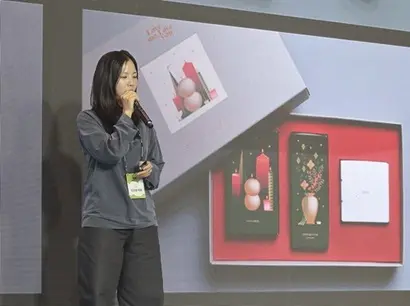
This match project led to collaborations with various companies and brands, including Kakao035720, Toss, Hyundai Department Store069960, publishers, and film studios. CEO Shin explained, "Because we wanted to recreate objects that no longer had a purpose, unlike ordinary promotional items, we ensured that every product was consumed as something imbued with a design story and value." She added, "In 2015, matches weren't consumed in this way. It is a highly meaningful project because it was conducted based on a specific philosophy."
The collaboration with "Hwarang Rubber," which had been producing erasers in Korea since 1950 and helped popularize them, was also highlighted. The standing of the eraser, an indispensable item in the stationery industry, had diminished due to the influx of overseas products and the general decline of the industry. Only square erasers remained, while the diverse and colorful erasers of the past had left no trace. OIMU embarked on a project to archive the history of erasers. Erasers of the time carried phrases and words reflecting the lifestyle of the era, such as "Let's brush our teeth," "Magic," "Yomojomo," "Maknaedungi," and "Hodori."
CEO Shin stated, "I judged that documenting the history of erasers would be more meaningful than simply making something new. We compiled domestic erasers in a catalog format and published a book that provides insight into the cultural context and facets of the time. We even held a small exhibition called 'The Golden Age of Erasers.' While working on this, I felt a sense of witnessing the era." In addition, she also carried out the "Bok (Fortune) Project," incorporating the concept of "good fortune" into everyday items like socks, candles, and keyrings.
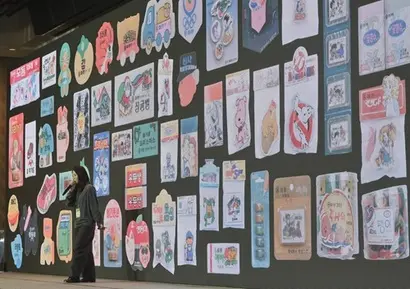
For OIMU, which focuses on connecting the past and present, "coexistence" is also a crucial keyword. While English color names like "cobalt blue" and "pale pink" are diverse, Korean color descriptions are often limited to basic terms like green, blue, and red. OIMU published a "Korean Color Name" dictionary for the next generation. Using a book published in 1991 (now out of print) as a foundation, the team worked to supplement it and incorporate a design sensibility. This book contains 352 Korean color names, illustrations, and the stories behind the colors.
"Adjust the density, and add more waste paper." Japanese terms that are still used in printing, publishing, and manufacturing sites were another issue that needed addressing. The "Gomdori Project," which replaces Japanese industry jargon with Korean terms, is advancing slowly but steadily rather than through a quick-fix approach. After creating a book, the project expanded to include a dedicated website, NFC tag keyrings, and advertisements in the Chungmuro printing district to improve utility in busy workplaces.
CEO Shin emphasized that the most important aspect of collaboration is "the same goal, the same heart." Minumsa is one of OIMU’s long-standing partners. They met during the match collaboration and have been growing Minumsa’s book club together since 2016; they have collaborated nine times this year alone. In collaboration with "mt.d," a brand founded by mountain enthusiasts, they created an archiving book on Korean mountains. With this book, which contains the names, origins, and images of summit stones of 239 mountain ranges on the Korean Peninsula, OIMU won the "Most Beautiful Books in Korea" award this year, and mt.d was selected as a startup supported by the Korea Forest Service.
CEO Shin stated, "With Minumsa, both companies put their heads together to provide diverse reading experiences and produced meaningful results. With mt.d, we maximized each other’s capabilities. The key to collaboration is to recognize each other’s uniqueness, set a direction, and align effectively toward a shared purpose."