

[비즈한국] U.S. President Donald Trump has sparked a diplomatic controversy by referring to North Korea as "a kind of nuclear power" while embarking on his trip to Asia. Analysts suggest that this not only keeps the door open for talks with North Korean General Secretary Kim Jong Un, but may also signal a shift in the "denuclearization-first" principle that the U.S. has maintained for decades.
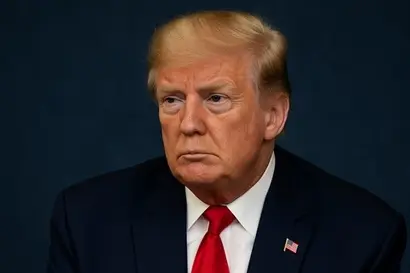
On the 24th (local time), when asked aboard Air Force One whether he was willing to accept North Korea's demand that they must be recognized as a nuclear state to engage in dialogue, President Trump replied, "I think they are a kind of nuclear power." He added, "If they say they must be recognized as a nuclear power, well, they have a lot of nuclear weapons." This statement leaves room for interpretation that it goes beyond a simple statement of fact and effectively acknowledges North Korea's "nuclear-armed status."
Until now, the U.S. has insisted on complete, verifiable, and irreversible denuclearization (CVID) as a prerequisite for negotiations with the North. However, this remark is seen as a signal that the principle could be adjusted with more flexibility. Following General Secretary Kim Jong Un's statement last September that he was "open to dialogue if the U.S. retracts its delusional demand for nuclear abandonment," President Trump appears to have partially accepted that demand.
President Trump stated, "I have maintained a very good relationship with Kim Jong Un," and added, "If he reaches out, I am 100% open to it," hinting at the possibility of a "surprise meeting" at Panmunjom during his visit to South Korea. In fact, with tourism to the Joint Security Area (JSA) temporarily suspended and signs of maintenance activity detected in the North Korean sector, rumors of back-channel contact between the North and the U.S. are circulating.
President Trump will visit Malaysia, Japan, and South Korea consecutively from the 25th to the 30th. His visit to South Korea is scheduled for the 29th and 30th; he is set to hold a summit with President Lee Jae-myung on the 29th and meet with Chinese President Xi Jinping on the 30th. If President Trump meets with General Secretary Kim Jong Un during his visit to South Korea, it would mark the first North Korea-U.S. summit in six years, following their 2019 meeting at Panmunjom.
Experts are divided on the meaning of these remarks. One diplomatic expert analyzed, "President Trump may be acknowledging the reality of North Korea's nuclear arsenal to build a justification for dialogue." Conversely, concerns have been raised that "effectively acknowledging North Korea's nuclear-armed status could cause confusion in South Korea-U.S.-Japan trilateral coordination."
If President Trump officially recognizes North Korea as a nuclear power, a fundamental shift in South Korea's policy toward the North would be inevitable. This could shake the framework of U.S.-South Korea coordination on denuclearization and have a significant impact on the diplomatic order in Northeast Asia in the future.
Ultimately, President Trump's latest remark is interpreted as a political maneuver to break the ice for new North Korea-U.S. dialogue ahead of the Gyeongju APEC summit. As North Korea continues to advance its nuclear capabilities and the U.S. must manage both the containment of China and the Korean Peninsula issue within its Indo-Pacific strategy, Trump's words are expected to become a major variable for both the future situation on the Korean Peninsula and the U.S.-China competitive landscape.