

[비즈한국] Every year, October 19th is 'World Breast Cancer Day,' and the 'Love Your W' event held by fashion magazine W Korea ahead of this day has come under fire. Although it was billed as a campaign to raise breast cancer awareness, many felt it lacked sincerity. Images were released showing participants drinking alcohol without wearing pink ribbons, the international symbol for breast cancer awareness. It seemed as though there was no room for the color pink, which symbolizes social solidarity and messages of hope.
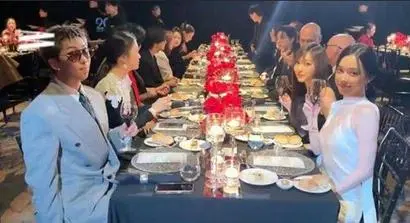
Many celebrities attended the event. The guest list reportedly included actors Lee Young-ae, Ha Jung-woo, Lee Min-ho, Go Hyun-jung, Lim Ji-yeon, Park Eun-bin, Jung Ryeo-won, Lee Chae-min, Jung Hae-in, and Byeon Woo-seok, as well as idol groups such as IVE (Jang Wonyoung, An Yujin, Rei), aespa (Karina, Winter), BTS (RM, V, J-Hope), All(H)ours, ILLIT, and Kiki. The attendees faced public scrutiny, with some drawing harsher criticism than others. Jo Se-ho of tvN’s 'You Quiz on the Block' faced additional backlash because the next guest on his show was Park Mi-sun, who is battling breast cancer. Most of all, the performance of Jay Park’s song 'Mommae,' which includes lyrics about "sister twins hanging on your chest," sparked further outrage.
W Korea stated, "Love Your W is a campaign that began in 2006, and we have spent 20 years striving to promote the importance of early breast cancer screening," leaving many to wonder how these events have been conducted in the past. The purpose of the event is to donate all proceeds to support surgery and treatment costs for low-income breast cancer patients, but the donation amount also became a point of contention. W Korea claimed to have donated 1.1 billion won to the Korea Breast Cancer Foundation over 20 years. However, according to data received by the National Assembly’s Health and Welfare Committee from the Ministry of Health and Welfare, the amount donated by W Korea to the foundation from 2007 to November of this year was 315.69 million won. With a discrepancy of 700 million won, suspicions were bound to arise. In response, W Korea argued, "When adding up corporate and individual donations and the amount donated to the Seoul branch of the Korean Association for Health Promotion over three years, the total donation is 960 million won, and adding this year's 150 million won brings the total to 1.1 billion won."
Public criticism is currently focused on the celebrities. It may be inevitable for celebrities to participate in fashion magazine events. Furthermore, individual celebrity preferences might not have been reflected due to the intertwined interests of their agencies. The event was not a formal ceremony but rather a dinner-style banquet where participation fees were treated as donations. Paying to enjoy a meal and wine while feeling the satisfaction of contributing to a good cause can be rewarding. The question is whether the general public needed to know that they gathered to eat and drink.
In truth, these scenes should not have been publicized. The organizers forgot that SNS (Social Network Service) is meant to be social. The fact that the organizers proudly posted these photos shows a complete lack of critical awareness. At the very least, there should have been no alcohol. Excessively joyful expressions or behaviors should have been restrained. The organizers should have also screened out Jay Park's song. This was a responsibility not just for the host, the fashion magazine, but also for the celebrities' management agencies to control and manage.
Of course, the organizers bear the greatest responsibility. It is surprising that they have held this event for 20 years with such a lack of human rights sensitivity regarding the wearing of pink ribbons and appropriate attire. It seems no one has properly raised these issues until now. Even if they had, the lack of concern likely allowed the problem to grow. Perhaps if their influence had been immense, it might be understood. If patients suffering from breast cancer had participated, would this concept and content have been created? A banquet that excludes the very people it is supposed to support will never be well-received.
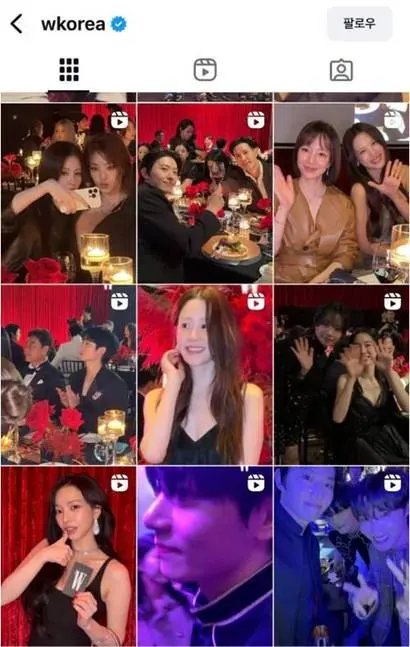
There are many celebrities who truly strive to exert a positive influence. It would be unfortunate for their sincerity to be distorted. However, the K-style industry needs to take to heart the saying, "Let not your left hand know what your right hand is doing." In the age of smart mobile technology, good deeds will inevitably become known even without promotion. 20th-century promotion methods can actually backfire.
It seems time for some general guidelines. First, social donation events must involve the affected parties. If it is for patients, they should participate and provide advice. A party concept is inappropriate for donation events related to patients. In the case of a dinner, alcohol should be reconsidered. No matter how good the intention, when there are aspects that contradict the spirit of the cause, any celebrity should be able to point it out, and organizers should reflect on it. Agencies should also do their best to support this. Forcing celebrities to make choices against their will is a breach of contract and a betrayal of trust. Prior consent should be obtained when uploading event photos or videos to social media. We must also refrain from using people in unfortunate circumstances as mere tools for publicity.
Relevant organizations should lead the way so that these points can be practiced autonomously. That would be the foundation for a positive influence where everyone can coexist and thrive in the era of global Hallyu.
The author, Kim Heon-sik, has been wandering through or cutting through the forest of pop culture phenomena since his 20s, with the expectation that there is a way to make the world a better place through culture. He continues on the same path in the 21st century, where AI and quantum computers are active, with the same belief.