

[비즈한국] In 2019, Germany introduced DiGA, a system that allows physicians to prescribe digital healthcare applications—the first of its kind in the world. Patients download the apps, and the costs are fully covered by health insurance. This marked the beginning of a medical innovation where "apps are prescribed like medicine."
However, four years later, the system is not spreading as fast as expected. The reasons include administrative procedures that move slower than the speed of innovation, low awareness within the medical field, and costs that are difficult for startups to bear.

'Apps as Medicine'
DiGA is managed by the Federal Institute for Drugs and Medical Devices (BfArM) under the Federal Ministry of Health. It is a system where digital health apps that have received medical device certification (CE) become eligible for insurance coverage once they prove their clinical efficacy and data security. Germany officially introduced the system through the "Digital Healthcare Act" (Digitale-Versorgung-Gesetz, DVG) in December 2019. The core is simple: through the public health insurance (GKV) system, prescribed apps receive recognized medical fees for reimbursement, and once a doctor prescribes an app, the patient can access the service via an activation code. For companies developing these apps, it means generating stable revenue through public health insurance.
The procedures and criteria for this system were specified in the "Digital Health Applications Ordinance (DiGAV)" enacted in April 2020. DiGAV defines how an app becomes eligible for insurance coverage by specifying requirements for proving "positive therapeutic effects," reimbursement procedures, registration requirements, and quality assessment criteria.
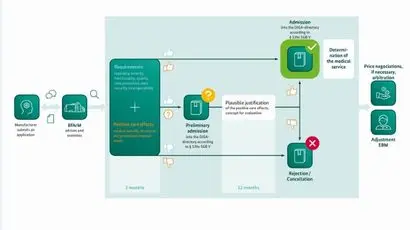
All procedures for DiGA registration are overseen by BfArM. BfArM confirms the application, review process, and requirements for listing in the DiGA Directory, and companies enter the insurance-covered market through either preliminary or final registration.
Currently, about 60 apps are officially registered in the DiGA directory. While various fields such as mental health, pain management, and rehabilitation are included, the number of new approvals is gradually decreasing. This is because it takes millions of euros and a significant amount of time to handle clinical trial design, data protection certification, and review responses.
A Market Exists, but the Medical Field Lags Behind
The German business newspaper 'Handelsblatt' recently addressed the reality of this system in an article titled "The Other Side of Digital Health Application Sales Partnerships." It highlighted examples of collaborations between startups developing digital health apps and pharmaceutical companies, such as HelloBetter–Ratiopharm, KranusHealth–Pohl-Boskamp, and Selfapy–Pfizer.
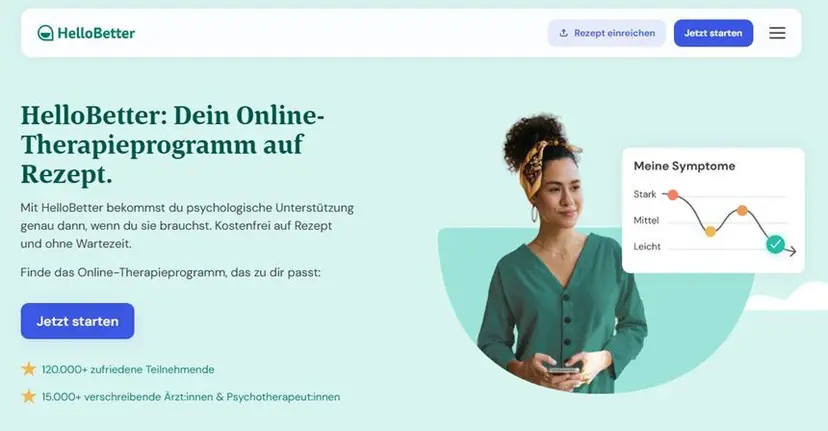
All of these companies tried to inform doctors and increase prescriptions through sales partnerships with pharmaceutical companies. However, they did not achieve as much success as expected. Dominik Pförringer, an orthopedic surgeon in Munich, lamented, "I have never seen a DiGA sales representative in a hospital or a private clinic. Most doctors don't even know the DiGA prescription process itself."
Thorsten Kristan, a consultant at the digital healthcare consulting firm Digital Oxygen, explains the market situation: "Initially, startups chose a strategy of approaching doctors directly, but that approach did not work well. It has changed to a much more cost-effective approach through collaborations with pharmaceutical or insurance companies." German healthcare consultant Claudia Schmidt emphasized cooperation with pharmaceutical companies and large enterprises, stating, "It is almost impossible for a DiGA startup to handle sales on its own. Without a partnership with a pharmaceutical or MedTech company, the road is too difficult."
Synergy of Korean-German Innovative Technology: The Challenge of 'Cogthera'
Munich-based startup Cogthera is finding practical solutions within this complex structure.
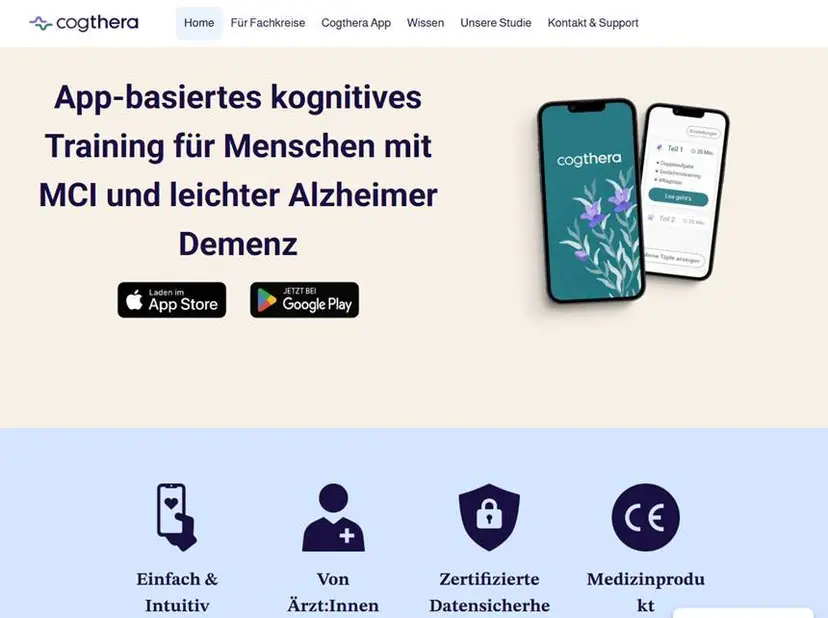
Cogthera is the German subsidiary of the Korean cognitive science-based health tech company Emocog, established in Munich in 2021. Emocog was founded in 2017 by cognitive and neuropsychology researchers from Seoul National University and has developed cognitive training and digital treatment solutions for dementia and mild cognitive impairment (MCI) patients. After verifying clinical efficacy in Korea, they established the German subsidiary Cogthera to enter the European market and are currently pursuing DiGA certification.
Cogthera is redesigning the app's UX and data security system to fit the German local medical regulatory framework and is conducting clinical trials and commercialization focusing on local hospital and physician networks. Emocog serves as the parent company providing technical and clinical evidence, while Cogthera acts as the strategic hub responsible for certification and market entry in Germany and Europe.
In an interview, Cogthera co-founder Hannes Funk stated, "DiGA certification is not the end, but the beginning. Certification alone doesn't earn money. It is important that doctors prescribe it and patients actually use it."
The figures he presented are realistic and sober. "It requires at least 1 million to 2 million euros (for DiGA registration), including clinical trials and data security certification. Even preliminary clinical trials alone cost nearly half of that." Therefore, a concrete sales plan after DiGA certification is necessary.
Cogthera defines the DiGA market as a "structure centered on prescribing doctors, but where patient and guardian awareness is ultimately equally important." Thus, the sales strategy consists of three axes: doctors, patients, and guardians. However, since the actual prescriber is the doctor, 70–80% of marketing is focused on them. Cogthera's sales pipeline resembles the traditional pharmaceutical approach: making cold calls to potential customers with no prior relationship, building connections through medical conferences and continuing medical education (CME) programs. They also employ a PR strategy that introduces the company's story to professional medical journals and general economic media.

Cogthera has set "young female doctors with high receptivity to innovation" as its primary target. They judged that within a limited budget, it is necessary to target the group that accepts change most quickly in the medical field.
Although there was an app already developed by the Korean parent company, they completely overhauled the app design. Funk emphasized localization, saying, "Korean users prefer bright and warm colors, but German seniors feel those colors are 'childish.' Even for the same app, the German version uses much more restrained and calm color tones." This difference is not just an aesthetic element, but a matter of experience design that leads to trust and prescriptions. It is because when a doctor recommends an app to a patient, the trust that 'this app seems right for you' must be conveyed.
Everything from certification to sales is a new challenge, but Cogthera is optimistic. Funk predicted, "All stakeholders have begun to recognize the necessity of digital treatment. Now is a time of trial and error, but this market will definitely grow." This is why we are eagerly awaiting the DiGA registration of Cogthera, which started in Korea and is taking on the challenge of Germany's new system.
Korean-German Healthcare Cooperation on a New Stage
On October 23 (local time), the 'Korea-Germany Innovative Bio-Healthcare Partnering Day 2025' will be held near Frankfurt. This event is a symbolic stage showing how Korea and Germany can continue digital health innovation in the midst of these changes.
This event is hosted by the Consulate General of the Republic of Korea in Frankfurt and the KOSME (Korea SMEs and Startups Agency) Frankfurt GBC, with participation from Germany's EIT Health and 5-HT Chemistry & Health. In the panel talk 'Entering the German Digital Healthcare Market,' leading Korean digital healthcare companies such as WELT therapeutics, Lunit Europe, and EIT Health representatives are expected to share their strategies and practical experiences for entering the German market.
Germany's DiGA is still an evolving system rather than a "completed model." However, its experiment shows the direction that global healthcare is heading in advance. The goal of reducing medical costs and improving patient accessibility, and the attempt to bring technological innovation into the system, are ultimately inevitable trends. The task now is not to 'make a good app,' but to design a structure that doctors, patients, insurers, and regulators can trust together.
For Korean digital healthcare startups, Germany remains a difficult market, but it is also a testing ground that presents the clearest standards. If backed by clinical evidence, data, and a deep understanding of the local medical culture, more Korean companies like Cogthera will emerge to open that door. And their attempts will write the next chapter of the European digital health market.
The author, Eunseo Lee, majored in law in Korea and studied theater in Berlin. Based in Berlin, a city of art and a European startup hub, she leads 123factory, bridging the startup ecosystems of Korea and Germany while growing alongside the city.