

[비즈한국] While the entire liquor industry is struggling due to the economic downturn and changes in drinking culture, OB Beer is facing a difficult time as it has been embroiled in various controversies this year. Its brand image has been shaken by successive legal risks, such as an indictment for customs duty evasion and a tax audit, and recently, a controversy over 'Chinese-style management' has also emerged. Amid the string of setbacks, critics suggest that OB Beer’s title as 'Korea's Beer' is now in jeopardy.
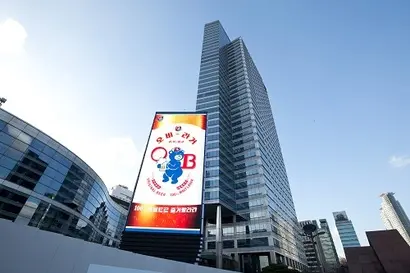
First Chinese CEO appointed, public reaction remains cold
OB Beer recently appointed Zhou Yu, a Chinese national born in 1982, as a new CEO. Consequently, the company has transitioned to a co-CEO system alongside the existing CEO Ben Verhaert (Korean name Bae Ha-jun, Belgian national). Zhou Yu is known to have been an executive overseeing OB Beer's production safety management division. Regarding this appointment, an OB Beer official stated, "It was a decision to independently strengthen the production safety management division," adding, "We have appointed an expert as CEO to build a more detailed management system."
OB Beer's parent company is AB InBev, the world's largest liquor company. Once considered a core subsidiary of the Doosan Group, OB Beer was sold to Belgium's Interbrew (now AB InBev) in 1998 during the process of Doosan liquidating its food and beverage division due to a liquidity crisis. Currently, OB Beer is a wholly-owned subsidiary of AB InBev; although it exists as a separate legal entity in Korea, management rights are held entirely by the overseas headquarters.
Because management control lies with the overseas headquarters, OB Beer's executive board is also composed primarily of foreigners. According to the corporate registry, 5 out of the 6 registered executives at OB Beer are foreigners (of Belgian, Chinese, American, and Canadian nationality). The only Korean is a single auditor.
The position of CEO at OB Beer has also been consistently held by foreigners. Since Frederico Freire Jardim from Brazil became the first foreign CEO in 2014, he was followed by Bruno Caireira Cosentino of the same nationality in 2018, and Ben Verhaert from Belgium in 2020. Then, with the addition of Chinese national Zhou Yu as the new CEO this past September, the first Chinese representative in OB Beer's history was appointed.
However, domestic public opinion regarding this appointment is cold. Even though it is natural for a global company to hire personnel of various nationalities, the recent spread of negative perceptions regarding Chinese capital and brands has led many consumers to feel a sense of resistance toward the appointment of a 'Chinese CEO' itself. Among some consumers, there is even a move to interpret this personnel change as a 'transition to Chinese-style management.' In online communities and elsewhere, reactions such as "Has it been handed over to Chinese capital?" can be seen, along with signs of a potential boycott.
Lee Eun-hee, a professor of Consumer Science at Inha University, said, "Recently, fear has been growing among domestic consumers that the economy is being encroached upon by Chinese capital. In this situation, the appointment of a Chinese individual as CEO is highly likely to give the perception that a Korean company has been taken over by China. It could have a significant impact on the company's image."
OB Beer stated, "We plan to operate under a co-CEO system by sector, with CEO Zhou Yu appointed to oversee production and safety. CEO Bae Ha-jun will continue to head the commercial division, including sales and marketing, as well as serve as the representative for the East Asian region, including Korea and Japan."
OB Beer has long maintained its position as the No. 1 player in the domestic beer market by building an image as 'Korea's Beer,' led by its flagship product 'Cass.' However, with the recent series of controversies, concerns are growing that the brand's credibility is beginning to crack.
This year, OB Beer has been hit by a series of setbacks, including allegations of customs duty evasion, tax audits, and price hike controversies. In June, the Seoul Northern District Prosecutors' Office indicted 10 people, including CEO Ben Verhaert, on charges of evading approximately 16.5 billion KRW in customs duties by abusing the Free Trade Agreement (FTA) tariff-rate quota system during the process of importing malt. In July, a high-intensity tax audit by the National Tax Service followed. The Seoul Regional Tax Office launched a tax audit into suspicions that OB Beer colluded with a shipping company to manipulate sea and land freight charges for malt, with about 100 personnel deployed for the investigation.
The price hike implemented at the beginning of the year also sparked criticism from consumers. Even though OB Beer recorded its highest-ever performance last year, it raised the factory prices of major products like 'Cass' and 'Hanmac' by an average of 2.9%, citing rising costs for raw and subsidiary materials. Last year, OB Beer recorded its highest revenue since being acquired by AB InBev in 2014. In 2024, revenue reached 1.7 trillion KRW, and operating profit was 367.6 billion KRW. Revenue grew by 12.6% compared to the same period last year (1.55 trillion KRW), and operating profit increased by 55.4% compared to 2023 (236.5 billion KRW).
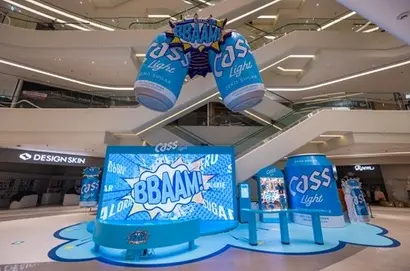
With accumulated brand risks, the performance in the first half of this year appeared somewhat stagnant. Although OB Beer did not disclose specific figures for its second-quarter performance, parent company AB InBev mentioned in its earnings announcement that "a high single-digit (7-8%) decline in revenue occurred in the Korean market." An OB Beer official stated, "It is difficult to see the price hike as leading directly to a drop in sales," adding, "We judge that external factors, such as a contraction in consumption across the market, have had an impact."
Amid increasing uncertainty in the domestic market, OB Beer appears to be turning its eyes toward overseas markets. Recently, OB Beer launched a new export-only soju product, 'Geonbae-Jjan.' This is the first soju brand introduced since the acquisition of Jeju Soju last year, and it is targeting overseas markets such as Malaysia, Singapore, Taiwan, and Canada. An OB Beer official explained, "We are receiving overseas orders and shipments are underway via sea. As it is being sold through local distribution networks, specific sales indicators will be available starting next year."
In the domestic market, the company is focusing on strengthening its non-alcoholic product lineup. The aforementioned official said, "The industry's interest in the non-alcoholic and low-alcohol market has been rising recently. While the preference for non-alcoholic drinks is not yet high in the domestic market, we see significant future growth potential. Accordingly, we plan to focus on the non-alcoholic sector."