

[비즈한국] Amid recent controversy over the use of human tissue in cosmetic procedures, it has been confirmed that human tissue can be transplanted based solely on a doctor's judgment without any separate prescription or disease codes, and that there are no verification procedures for such actions. Under current law, human tissue transplantation is only required to be performed by 'ethically sound and medically recognized methods,' but specific transplantation procedures are not defined. Some in the medical community point out that this loophole allows for the abuse of human tissue transplants.
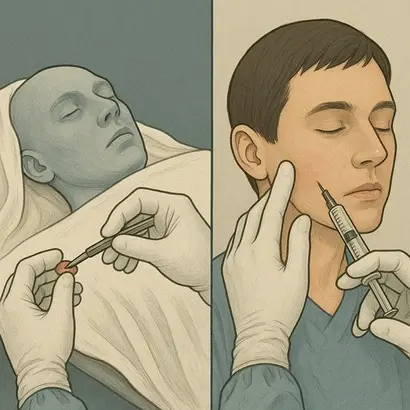
"Pore reduction," "blemish improvement." These are promotional phrases for human tissue transplant products used in dermatology clinics. Human tissue from deceased donors is being used for skin aesthetics, such as "skin boosters." How can human tissue be used for cosmetic purposes?
While some explain that human tissue is prescribed based on medical judgment, in reality, it is possible to transplant human tissue without any prescription or disease codes. One dermatologist explained, "Like other cosmetic procedures, human tissue grafts do not involve an actual prescription, and no prescription or disease codes are entered."
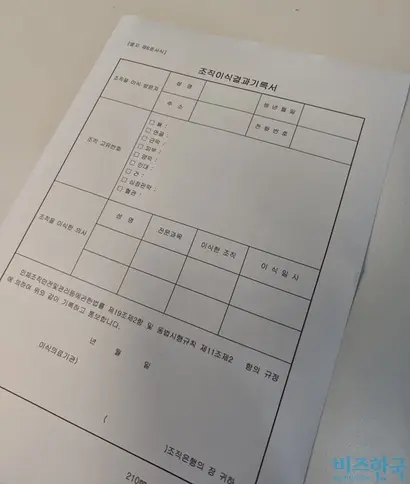
The explanation is that human tissue can be used just like cosmetic products that don't require functional impairment to be used. In fact, after a human tissue transplant, the tissue transplant record must be submitted to a tissue bank in accordance with relevant laws, but the purpose of the transplant or a prescription code is not recorded. The aforementioned doctor said, "The difference from other skin boosters is that a tissue transplant record must be submitted, but the company that produces the graft material advises that they are not legally obligated to inform the patient of this fact."
Because of this situation, human tissue can be 'freely' transplanted even when there are no functional issues. Beyond the recently spreading skin boosters, human tissue is also being utilized in procedures such as genital enlargement and rhinoplasty.
Since regulations regarding transplantation methods are not clear, it is possible to transplant graft materials in various cosmetic forms, such as skin booster injections or needle injections. An official from the medical industry remarked, "Doesn't this mean that creating a form of human tissue that can be consumed like a health drink and prescribing it would not be a legal issue?"
The Health Insurance Review and Assessment Service (HIRA), which determines whether human tissue grafts (treatment materials) are subject to medical benefits, explained, "The principle is for healthcare providers to use them according to their medical judgment within the scope of relevant laws. In some cases of human tissue treatment materials, the scope or frequency is defined by benefit criteria, such as public notices on details." However, not all human tissue graft materials have such detailed criteria.
In the end, while the management and distribution of human tissue are strictly regulated, the actual transplantation process lacks clear standards, leading to blind spots. The Korea Public Tissue Bank also manages whether domestic human tissue is safe and distributed appropriately, but it does not judge whether the 'prescription' of the distributed tissue is appropriate. The Ministry of Food and Drug Safety (MFDS), which manages overseas human tissue, is the same. It manages the donor's infection status, tissue safety, and the distribution process, but does not verify the appropriateness of the actual transplantation stage.
Current law states that human tissue transplantation must be performed by 'ethically sound and medically recognized methods.' Regarding the purpose of the transplant, it specifies, "for the purpose of ensuring the integrity of the human body and restoring physiological functions." The Ministry of Health and Welfare explains that the legal provisions are ambiguous and it is difficult to clearly distinguish whether a procedure is for cosmetic purposes. For instance, it is difficult to clearly differentiate between medical treatment and cosmetic purposes for procedures like breast reconstruction for breast cancer patients or skin reconstruction for burn victims. However, the Ministry of Health and Welfare has stated that it will prepare supplementary measures, such as requiring the purpose of the transplant to be recorded during tissue transplantation, through consultation with the MFDS.
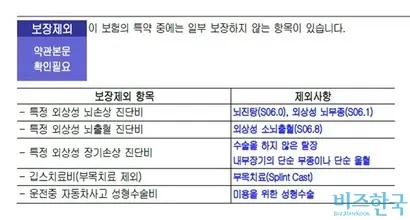
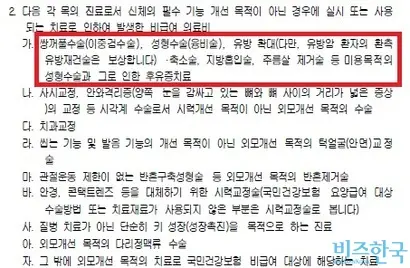
However, industry insiders say otherwise. They explain that even if there may be some abuse, distinguishing the purpose itself is not difficult. In fact, private insurance policies, such as indemnity health insurance, state in their terms and conditions that medical expenses for 'purposes of appearance improvement rather than essential physical function improvement' cannot be claimed.
An insurance industry official said, "Insurance claims are impossible for purely cosmetic purposes without a prescription code; therefore, it is not difficult to distinguish between cosmetic and therapeutic purposes. Even if it is a non-covered item, claims can be made based on prescription codes. Of course, in medical practice, there are cases where prescription codes or disease names are adjusted to make insurance claims possible. For example, when performing rhinoplasty, it can be covered by insurance if claimed alongside a diagnosis of a deviated septum. However, this is a technical case of partial abuse, and there is no confusion in distinguishing the purpose itself."