

[비즈한국] Cultured meat, based on biotechnology, is emerging as a core sector of the green bio (agriculture and food) industry. It is seen as a solution to address increasing meat consumption while tackling food security, climate change, and animal ethics issues. However, lowering production costs and reducing the consumer's psychological barrier remain the primary challenges for future industry expansion.
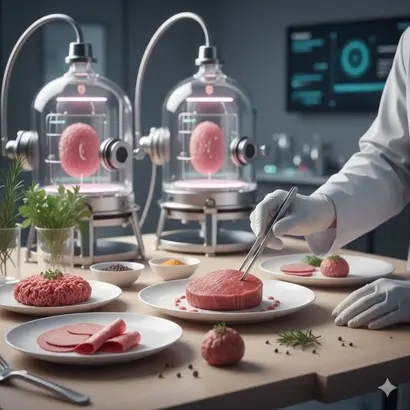
According to global market research firm Precedence Research, the global cultured meat market is expected to grow at an average annual rate of 51.65%, reaching a market size of $36.6 billion (52 trillion KRW) by 2034. While cultured meat currently accounts for less than 1% of the global meat market, it is projected to capture more than 10% after 2030.
Cultured meat is attracting attention as a next-generation eco-friendly protein source to meet the surging demand for meat. Global meat production currently exceeds 350 million tons, a more than threefold increase over the past 50 years. Meanwhile, global meat consumption has risen more than fourfold from 71 million tons in 1961 to 340 million tons in 2020. Projections suggest that demand will reach 460 million to 570 million tons by 2050, leading to predictions that supply will fail to keep pace. Given the land, feed, water, and energy required for raising cattle, pigs, and chickens, increasing production is not easy. Meat consumption is directly linked to global warming, with a UN Food and Agriculture Organization (FAO) report stating that approximately 18% of greenhouse gas emissions originate from the livestock industry.
In June 2023, the U.S. Food and Drug Administration (FDA) approved cell-cultured chicken from Upside Foods and Good Meat, respectively. This marked the world's second approval of cultured meat following Singapore (cultured chicken) in December 2020. Subsequently, Israel (beef) approved it in January 2024, and Australia and New Zealand (cultured quail) followed suit this past April. The era of cultured meat has truly begun.
Interest in green bio, including cultured meat, is also rising in Korea. In his opening address at BIX2025 held at COEX in Samseong-dong, Seoul, on the 15th, Ko Han-sung, Chairman of the Korea Biotechnology Industry Organization, delivered a message advocating for the expansion of the bio-industry ecosystem from the existing focus on red bio (health, medicine, and pharmaceuticals) to green bio and white bio (environment and energy). "Bio can create many things closely related to our lives, not just pharmaceuticals or diagnostic devices," Ko emphasized. "We must pay attention to these technologies and ecosystems because we can produce useful substances for daily life using synthetic biology, starting with cultured foods."
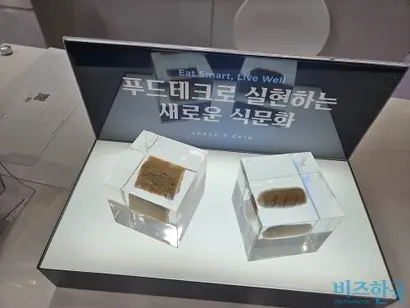
Domestically, companies such as SpaceF, SeaWith, and Simple Planet are taking on the challenge of commercializing cultured meat. SpaceF has secured technology to produce 1kg of cultured meat from a single cow muscle cell in about a month. It received recognition as a food ingredient from the Ministry of Food and Drug Safety this past February and is in the final stages of approval. A SpaceF official stated, "We expect to obtain authorization for cultured meat as early as the second half of next year." SpaceF plans to engage in B2B (business-to-business) sales targeting food companies and expects to be able to replace up to 30% of the existing fresh meat market. Having obtained GMP certification for its production facilities, the company plans to pursue CDMO (contract development and manufacturing organization) business for latecomers and, in the long term, utilize cultured meat as space food.
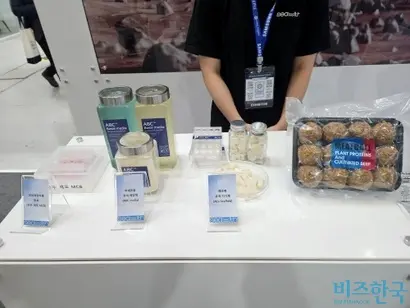
SeaWith is developing cultured meat by utilizing plant-based seaweed as a scaffold. The company is building a cell culture facility in the Gyeongbuk Uiseong Cell-Culture Food Regulatory-Free Zone, with the ambition to commercialize meat in the form of meatballs and handle everything from production to sales by 2027. A SeaWith official said, "After creating a commercial batch early next year and conducting animal toxicity tests, we expect to receive approval from the Ministry of Food and Drug Safety by the end of next year or the year after and then launch it on the market."
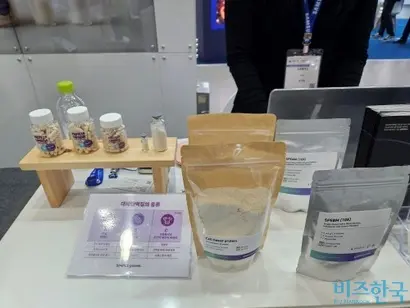
Simple Planet is developing high-protein cell-cultured food ingredients in powder form. The reasoning is that it is easier to overcome consumers' psychological rejection with powder than with solid cultured meat. A Simple Planet official explained, "It can replace seasonings that enhance flavor or beef powder in ramen, and because it has high protein content and is easier to absorb, it can be used in protein shakes, kids' food, and health functional foods."
However, there are many hurdles to clear before cultured meat can be commercialized. First is the high production cost. When cultured meat first appeared in 2013, the production cost of a single hamburger patty was $325,000 (460 million KRW). With over a decade of technological advancement and innovations in the production process, the cost of a single patty has dropped to the $10 (14,000 KRW) level. However, the cost of a patty based on fresh meat is in the 1,300 to 1,500 KRW range, meaning cultured meat production costs remain significantly higher. A SpaceF official said, "The cost of cultured meat is 50 to 200% higher than that of fresh meat. Although production costs are continuously falling, for now, we are trying to meet the price point through a hybrid form that mixes it with existing fresh meat or plant-based meat."
Unlike other companies that use fetal bovine serum (FBS) as a component of the culture medium, SeaWith uses seaweed (microalgae, chlorella), addressing both ethical and price issues simultaneously. FBS accounts for 70–80% of the cost of culture media and can cost between 500,000 and 1.5 million KRW per 500ml. Furthermore, obtaining FBS requires slaughtering pregnant cows. A SeaWith official noted, "We have lowered the cost to 28,000 KRW per 1kg of meatballs, and our goal is to lower it to the 10,000 KRW range through future mass production." The official predicted that the participation of large corporations would be a catalyst for the cultured meat industry, stating, "For industrial growth, major food or bio conglomerates must participate."
Overcoming the consumer perception of cultured meat as "lab-grown meat" is also a critical issue. In a June 2023 survey of 2,000 U.S. consumers, 49% of respondents stated that cultured meat is not safe, and 40% described eating it as "creepy." A SpaceF official emphasized, "We conducted a toxicity safety assessment on rats for 16 weeks and received the highest grade. When we tasted it internally, many commented that it tasted similar to canned ham on the market. The nutritional content is also more than 90% identical compared to existing meat."