

[비즈한국] It has been confirmed through BizHankook’s reporting that the Seoul Housing & Communities Corporation (SH) recently lost a lawsuit filed against tax authorities to reclaim 78.9 billion won in comprehensive real estate taxes paid over the past five years. SH had argued that the tax law designating the public housing provider as a taxpayer for the comprehensive real estate tax was unconstitutional, but the court dismissed the claim, stating it lacked merit.
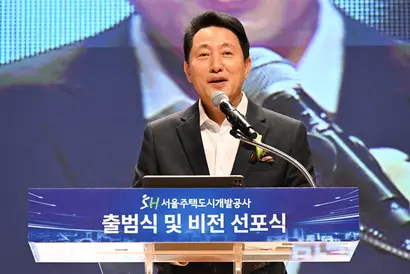
On August 28, the 2nd Division of the Seoul Administrative Court (Presiding Judge Ko Eun-seol) dismissed the lawsuit filed by SH against the head of the Samsung Tax Office seeking the cancellation of the refusal to rectify comprehensive real estate tax assessments. Previously, SH had filed a request for tax rectification to receive a refund for the comprehensive real estate taxes paid over the five-year period from 2018 to 2022, but after the tax authorities rejected the request, the corporation initiated legal action. The court ruled, “Even if the legal provisions do not exclude the plaintiff from the group of taxpayers subject to the comprehensive real estate tax on housing, it cannot be seen as violating the principle of prohibition of excessive restriction or infringing upon property rights.”
SH is a local public enterprise responsible for housing supply and urban development in Seoul. Designated as a public housing provider under the Special Act on Public Housing, it conducts projects to lease and sell public housing in Seoul. From 2018 to 2022, SH reported and paid comprehensive real estate taxes for the properties it owned as of the taxation reference date (June 1) each year. The total amount paid over those five years reached 78.9 billion won: 4.2 billion won in 2018, 6.9 billion won in 2019, 11.2 billion won in 2020, 32.1 billion won in 2021, and 24.5 billion won in 2022.
The dispute over the comprehensive real estate tax began two years ago. In July 2023, SH filed for a tax rectification, requesting a full refund of the comprehensive real estate taxes paid over the five-year period. However, the Samsung Tax Office rejected this request in September of the same year. Furthermore, in May of last year, the office issued a re-rectification notice, increasing the 2019 comprehensive real estate tax assessment by approximately 500 million won to 7.3 billion won. In response, SH filed a lawsuit against the Samsung Tax Office in July of last year, demanding the cancellation of both the refusal to rectify and the re-rectification decision.
SH argued that the tax law, which treats the corporation—a public housing provider—as a taxpayer subject to the comprehensive real estate tax, is unconstitutional. Their position was that both the current and previous comprehensive real estate tax laws violate the principle of prohibition of excessive restriction and infringe upon property rights, making any actions based on them illegal. The current Comprehensive Real Estate Tax Act defines those liable for property tax on housing as of the taxation reference date as taxpayers subject to the comprehensive real estate tax. The previous tax law considered those whose combined officially assessed price of housing subject to property tax exceeded 600 million won as having the obligation to pay.
The court dismissed SH’s argument that the Comprehensive Real Estate Tax Act violates the principle of prohibition of excessive restriction. The court viewed the legislative purpose of the Act—established for tax equity and real estate price stabilization—as justifiable, and concluded that imposing the tax on property tax payers is a suitable means to achieve such purposes. It also noted that the applied tax rate of 2–6% is neither arbitrary nor excessive, and since SH can pay it without disrupting its public housing business, the public interest being protected outweighs the restricted private interest.
The court stated, “Considering SH’s assets, financial condition, and business status, it is difficult to see that the imposition of the comprehensive real estate tax would hinder SH from continuing its projects, such as the supply and management of public rental housing. Conversely, the public interest in protecting actual residents, including those without homes, and promoting the sound development of the national economy by imposing the tax on large-scale property owners like SH is significant. In light of this, a balance of legal interests between the private interest restricted by the relevant law and the public interest intended to be protected is maintained.”
The claim that the Comprehensive Real Estate Tax Act infringes upon property rights was also dismissed. The court held that the tax does not violate the essential aspects of property rights. The judgment noted, “The degree of the tax burden imposed by the relevant legal provisions is a limitation on property rights within the bounds that still leave the private usability and the fundamental right to disposal—the essential elements of property rights—to the plaintiff as the property owner. It is difficult to conclude that this threatens private usability or the right to disposal by resulting in the confiscation or erosion of the principal property in a short period.”
During the lawsuit, SH also requested that the court file a motion for an adjudication on the constitutionality of the Comprehensive Real Estate Tax Act with the Constitutional Court. However, on the day of the ruling on the 28th, the court dismissed this request as well, reiterating that the legal provisions do not violate the principle of prohibition of excessive restriction or infringe upon property rights.
As SH did not appeal, the ruling was finalized on the 16th of last month. BizHankook inquired about the stance of SH regarding the lawsuit, but did not receive a response.