

[비즈한국] Samsung Electronics005930 and LG Electronics066570 have released their preliminary earnings for the third quarter of this year. Samsung Electronics, riding the "semiconductor supercycle" driven by artificial intelligence (AI), posted its highest-ever quarterly revenue and exceeded 10 trillion won in operating profit for the first time in five quarters. While LG Electronics' performance also outperformed market expectations, its operating profit declined compared to last year amidst challenging conditions, including the impact of U.S. tariffs and slowing demand.
While Samsung Electronics showed a clear rebound in advanced sectors such as semiconductors, fueled by the expansion of AI and increasing demand for data centers, LG Electronics saw limited growth due to a slowdown in profitability for its core businesses, such as home appliances and TVs. Analysts suggest that the difference in the two companies' business portfolios and growth engines led to this performance gap.
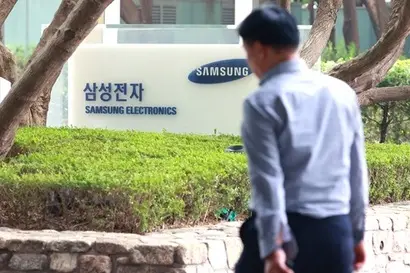
Samsung, Quarterly Revenue Hits Record High of 80 Trillion Won
Samsung Electronics announced on the 14th that its operating profit for the third quarter of this year is estimated at 12.1 trillion won. This is a 31.81% increase from the same period last year, marking a return to the 10 trillion won range in quarterly operating profit after one year and three months. It is the highest level since the second quarter of 2022 (14.1 trillion won). Compared to the second quarter, when inventory losses were reflected due to export restrictions to China, profit increased by 1.6 times. It also easily exceeded market expectations (approximately 10.1 trillion won).
Revenue reached 86 trillion won, up 8.72% from the same period last year and 15.33% from the second quarter of this year. This is the first time Samsung Electronics has recorded 80 trillion won in quarterly revenue, marking an all-time high for a single quarter.
Samsung Electronics succeeded in returning to the "10 Trillion Won Club" and preserved its reputation amidst growing uncertainties such as a global economic slowdown and currency fluctuations.
The turnaround is being led by the semiconductor (DS) division, which was in a slump as recently as the first half of this year. With the memory supercycle in full swing due to AI expansion, the DS division is estimated to have generated an operating profit in the range of 6 trillion to 7 trillion won in the third quarter, thanks to favorable factors such as increased shipments of High Bandwidth Memory (HBM) and rising prices for general-purpose DRAM. The semiconductor foundry (contract manufacturing) business also showed a notable improvement, with losses significantly narrowing due to new customer acquisitions and synergistic effects.
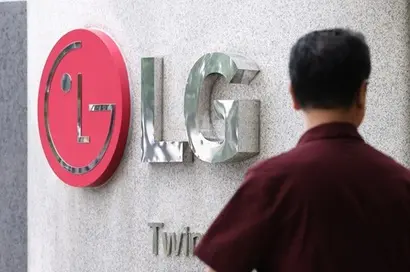
LG, Vehicle Component Business Achieves Record Quarterly Profitability
LG Electronics managed to defend its performance by doing well in home appliances and the vehicle component (VS) business. Initially, the market expected profitability to deteriorate by more than 20% compared to the previous year due to the burden of U.S. tariffs and personnel restructuring costs in the TV business. According to the preliminary earnings disclosure on the 13th, LG Electronics recorded consolidated revenue of 21.8751 trillion won and an operating profit of 688.9 billion won in the third quarter. While these figures represent an increase of 5.5% and 7.7% respectively compared to the second quarter, they are down 1.4% and 8.4% from the same period last year. The cumulative operating profit from January to September of this year is 2.5874 trillion won, a 21.2% decrease from the previous year (3.2843 trillion won).
The third-quarter scorecard, with an operating profit more than 10% higher than market forecasts (approximately 600.5 billion won), is evaluated as a positive result. The main driver is the VS business. LG Electronics stated, "The expansion of sales of premium products in the automotive infotainment business contributed significantly to profitability," adding, "We are diversifying our business model from products to vehicle content platforms." Although the performance by business division was not disclosed on this day, the vehicle component business is expected to have recorded its highest level of profitability in the third quarter. The strong performance of LG Innotek011070, which is reflected in LG Electronics' consolidated financial statements, also contributed to the improved performance.
Park Kang-ho, a researcher at Daishin Securities, explained, "The effective response to the implementation of tariffs, the expansion of production in the U.S. and Mexico, proactive inventory securing, and price adjustments were effective."
Impact of the Gap Created by AI
The prevailing assessment is that while Samsung Electronics, which reorganized its business portfolio centered on technology, has fared well by riding the AI special boom, LG Electronics still reveals the limitations of a structure centered on finished products, despite defending its position with the vehicle component business.
Samsung Electronics benefited directly from the expansion of AI infrastructure and the data center investment boom, driving a semiconductor-led rebound in earnings. It quickly absorbed demand for the AI-centered memory market—from memory to foundry to display—through a company-wide portfolio structure, such as cooperating on mega-scale AI projects with OpenAI and diversifying large clients.
While general-purpose semiconductors led the third-quarter results, expectations are that the role of HBM will become more prominent from the fourth quarter onwards. Kim Sun-woo, a researcher at Meritz Securities, pointed out, "We must pay attention to the structural changes in the DRAM industry in the AI era," adding, "The large-scale demand increase centered on AI data centers will change future demand curves into a step-like explosion."
On the other hand, LG Electronics saw limited growth as the profitability of its core home appliance division remained stagnant despite the expansion of new businesses like vehicle components.
The situation LG Electronics faces is complex. In the U.S. market, demand for home appliances has dropped significantly due to tariff increases and an economic slowdown. Since this year, the U.S. has begun imposing a 10% universal tariff on all imported appliances, along with additional tariffs based on steel content. LG Electronics earns about 30% of its revenue from the Americas. However, the cost of major export items such as refrigerators, washing machines, and dryers has risen, and as price competitiveness has weakened in its main market, competition with local companies and Chinese products has intensified.

The slowdown in profitability of finished products is a problem both companies are facing. The market expects that the sluggishness of the home appliance and TV businesses will be prolonged due to the impact of the seasonal off-season in the second half of this year and global uncertainties. In the fourth quarter, it is suggested that the operating profit of Samsung Electronics' DA (Digital Appliances) and VD (Visual Display) business divisions could fall to the 100 billion won range, and that LG Electronics' HS (Home Appliance & Air Solution) division could shift to a deficit from its third-quarter estimate of 350 billion won.
Both companies are working in parallel on organizational efficiency and supply chain reorganization to respond to the market slowdown and increased cost burdens. The strategy is to diversify into Southeast Asia and Latin America to mitigate tariff and geopolitical risks. LG Electronics is moving away from a business axis centered on the U.S. and China and is targeting emerging countries like India as a new growth axis. It marked a turning point by listing its Indian subsidiary on the Indian stock exchange on the 14th. The cash that will come in through future share sales is highly likely to be used for new business investments or as a source for dividends.
LG Electronics stated, "We are focusing on areas of qualitative growth and maintaining the fundamentals of the business. In particular, as we are planning large-scale fundraising following the listing of the Indian subsidiary, we plan to further accelerate the improvement of our business structure and future growth."