

[비즈한국] Competition in the domestic botulinum toxin market is intensifying, with over 20 participants currently in the field. The "Big 3" companies—Medytox086900, Daewoong Pharmaceutical069620, and Hugel145020—are now setting their sights on the global stage. However, despite being the first to launch a botulinum toxin product in Korea, Medytox has delivered performance results that lag behind the global achievements of Daewoong Pharmaceutical and Hugel. In response, Medytox plans to turn the tide with its new product lineup.
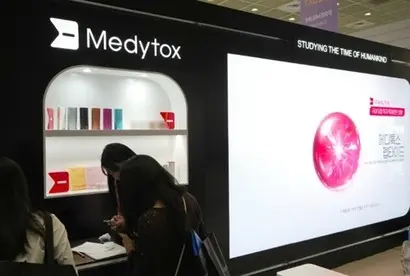
According to industry sources on the 14th, Medytox plans to submit an application for its liquid-form botulinum toxin, "MT10109L," to the U.S. Food and Drug Administration (FDA) within the year. However, given that Daewoong Pharmaceutical and Hugel have already entered the U.S. botulinum toxin market, questions are being raised about its marketability.
MT10109L offers the advantage of convenience and consistent effectiveness, as it does not require dilution by medical staff during the procedure. It is also considered highly safe due to a lower risk of contamination. However, the current U.S. market is dominated by lyophilized (freeze-dried) products. As a result, some observers suggest that demand for a liquid version might be limited, as medical professionals are already accustomed to mixing lyophilized products with saline. Liquid formulations also make it difficult for practitioners to customize the effect by adjusting the dilution concentration. Furthermore, they face limitations such as the need for strict temperature control during transport and storage, shorter shelf life, and higher production costs.
Medytox also appears to be facing setbacks in its plans to build overseas production facilities for botulinum toxin. The strategy was to build an MT10109L production facility in the Middle East to supply Europe and the Middle East, but concerns are mounting that the project may have lost its momentum. In January 2023, Medytox CEO Jung Hyun-ho joined the economic delegation for former President Yoon Suk-yeol’s visit to the UAE and signed a Memorandum of Understanding (MOU) with the UAE's TECOM Group for the construction of a botulinum toxin plant at Dubai Science Park. However, the Letter of Intent (LOI) was only signed last May, leaving the timeline for a definitive contract uncertain, while the domestic political climate has also shifted, including the impeachment of former President Yoon, who led the economic delegation at the time.
Medytox is also aiming for a rebound by pushing the global expansion of "Newlux," its fifth botulinum toxin product in a lyophilized form, which received approval from the Ministry of Food and Drug Safety in September 2023. Medytox explains that Newlux has enhanced safety by excluding animal-derived components during the strain cultivation and bulk production processes, and by minimizing the denaturation of active neurotoxin proteins during the non-chemical processing stage. Additionally, the latest manufacturing processes have been applied to improve production yield and quality. It is known that Medytox's third plant has an annual production capacity for Newlux worth approximately 600 billion won. A Medytox official stated, "We are continuously expanding our target to over 20 registration countries to accelerate the global reach of Newlux, our next-generation affiliate toxin product," adding, "We will remain committed to achieving our key projects and developing new pipelines."
Although Daewoong Pharmaceutical and Hugel entered the botulinum toxin market later than Medytox, they have surpassed Medytox in global performance. Last year, Medytox exported 55.7 billion won worth of botulinum toxin products. In contrast, Daewoong Pharmaceutical’s exports of "Nabota" reached 156 billion won, and Hugel’s "Letybo" reached 121 billion won.
Daewoong Pharmaceutical is aiming for a major leap forward by pursuing re-entry into China, the world's second-largest botulinum toxin market. It applied for approval from China’s NMPA in December 2021, but after no approval was granted for over three years, it voluntarily withdrew the application on July 30. After supplementing its data, it resubmitted the application for the product license of Nabota 100 units on the 15th of last month. In the U.S., where it was the first domestic company to enter, it is estimated to have captured about 14% of the market, ranking fourth in the U.S. botulinum toxin market.
Hugel appears to be strengthening its global business more aggressively. Following the appointment of Jang Doo-hyun, former CEO of Boryung003850, as the representative executive officer last month, the company recruited Carrie Strom, former global president of Allergan—the world’s top botulinum toxin company—as its global CEO on the 13th.
Representative Executive Officer Jang contributed to Boryung surpassing 1 trillion won in annual revenue by expanding overseas business during his tenure as CEO of Boryung from August 2021 to February of this year. Global CEO Strom led Allergan's aesthetics business, which generates 5 billion dollars (7 trillion won) in annual revenue, starting in 2011. Hugel is expected to begin full-scale efforts to penetrate overseas markets, especially the U.S., through the leadership of Jang and Strom. Hugel received FDA approval for Letybo 50 units and 100 units in February of last year and aims to secure more than 10% of the U.S. market share within three years. It is also settling into the Chinese market, where it was the first Korean company to receive approval in October 2020, and is estimated to hold a mid-10% share of the Chinese market.