

[비즈한국] Looking at the market these days, it feels like a "world where everything rises." The domestic stock market is hitting new highs day after day, fueled by expectations for artificial intelligence (AI) and semiconductors, and apartment prices in major areas of Seoul are rising sharply. Gold prices have hit all-time highs, and Bitcoin has reignited amidst the rise of the U.S. stock market and the inflow of capital into Bitcoin exchange-traded funds (ETFs). The saying "everything you buy goes up" no longer sounds like a joke. Experts call this phenomenon an "Everything Rally," created by expectations for a combination of favorable factors. However, there are also those who remember the irony that when the market was at its hottest, it was also at its most dangerous.
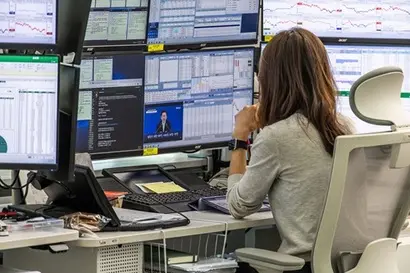
According to iM Securities, the current rise is based on three factors rather than economic recovery: the construction of an AI ecosystem, the expansion of liquidity, and the stabilization of credit risk. It suggests that the reorganization of the AI supply chain centered on the U.S., the collective growth of core companies like NVIDIA and OpenAI, and the yen-based liquidity triggered by Japan's "Sanae-nomics" have pushed the market up. Assets are rising even amidst a so-called "blind economy," where major economic indicators cannot be announced due to the U.S. federal government shutdown. Interest rates are stabilizing, credit spreads are narrowing, and money is flowing back into risky assets.
However, this rally is a product of policy expectations and sentiment rather than the real economy. Park Sang-hyun, a senior analyst at iM Securities, predicted, "Although the global economy is moving at a snail's pace, the rally in major asset prices will continue by relying on the establishment of an AI ecosystem and the power of liquidity."
History has shown similar scenes many times. The dot-com bubble in the early 2000s, the 2008 global financial crisis, and the 2021 liquidity rally all began when "expectations outpaced reality." In 2000, when the internet was changing the world, people said, "This time, there is substance." But the greed of investors grew faster than the speed at which technology changed the world. The result was a crash. In 2008, there was a conviction that "real estate never falls," and the greed combined with financial engineering and leverage eventually brought down the financial system itself. In 2021, zero interest rates and massive liquidity lifted all assets. Stocks, real estate, coins, and even artwork were all rising, and people said a "new world" had opened. But when interest rates rose, that new world vanished in an instant.
Of course, the difference in this cycle is that the substance of technological innovation is clear. The productivity revolution that AI will bring is definitely a reality. However, the "speed of innovation" and the "speed of profit" are different. The internet of the 2000s did indeed change the world, but for 10 years after the bubble burst, investors could not recover the money they lost. In other words, just because the technology is right doesn't mean stock prices will rise forever.
Another variable is the imbalance of liquidity. Policy rates have paused, but real interest rates remain high, and corporate earnings are slowing down. A market where money isn't abundant but expectations run ahead—this is a typical early phase of a bubble. This is why the market can be severely shaken by even a small shock.
Financial market crises do not end just once. This is because human greed is repetitive. In the tug-of-war between greed and fear, the market forms a bubble when greed wins, and a crisis strikes when fear wins. The saying "financial crises happen every 10 years" is not just a simple proverb.
Recently, as Samsung Electronics005930's stock price hit the 94,000 won range, investors who had suffered for a long time are smiling brightly. There is even a joke that "the rescue team has finally arrived, but I don't want to be rescued anymore."
What is needed now is preparation, not conviction. Instead of the impatience of thinking, "I'll be late if I don't buy now," the coolness of thinking, "this might be the last wave," is important. That is why some are revealing their caution by saying, "I should sell everything by the end of the year," or "I should cash out early next year."
However, most investors are still hesitant. "If everything is rising, won't I be a fool if I sell now?" This is the most realistic dilemma in the market right now. But this is not simply a matter of "don't sell" or "sell." It is a matter of what perspective you view the market from.
The Everything Rally may continue for a while. But no one knows how long it will last. This is because assets are rising without the strength of the real economy. It is too early to conclude that this is the "peak," but it is dangerous to view this rally as "proof of structural recovery." In the future, the market could fluctuate significantly depending on macroeconomic variables, such as a shift in the interest rate cut stance or a breakdown in Korea-U.S. tariff negotiations.
There used to be a saying in the brokerage industry: "When mothers with babies on their backs appear at the stock exchange, the market is a bubble." The market was always at its peak when everyone jumped into investment without asking or checking. To reduce the damage of a bubble burst, it is necessary to recall Warren Buffett's advice: "Never invest in a business you cannot understand."
Historically, the market has always collapsed at the moment when people thought, "just a little more." The Everything Rally is not over yet, but we must start preparing for the impact when it does end.