

[비즈한국] The Korean Art Support Project, which began as an initiative solely to assist artists, has continued for 10 years. Staying true to its initial intent, the project has supported around 230 artists. It was a unique endeavor, the likes of which had never been attempted by any media outlet, cultural organization, or state agency in Korea. We take pride in the belief that this decade of steadfastness has carved a distinct value into the 21st-century Korean art scene. As a result, it is evaluated as having created a "point of observation from which to track the flow of contemporary Korean art through the 10-year history of the Korean Art Support Project." Now, in Season 11, we aim to pave yet another path for Korean art.
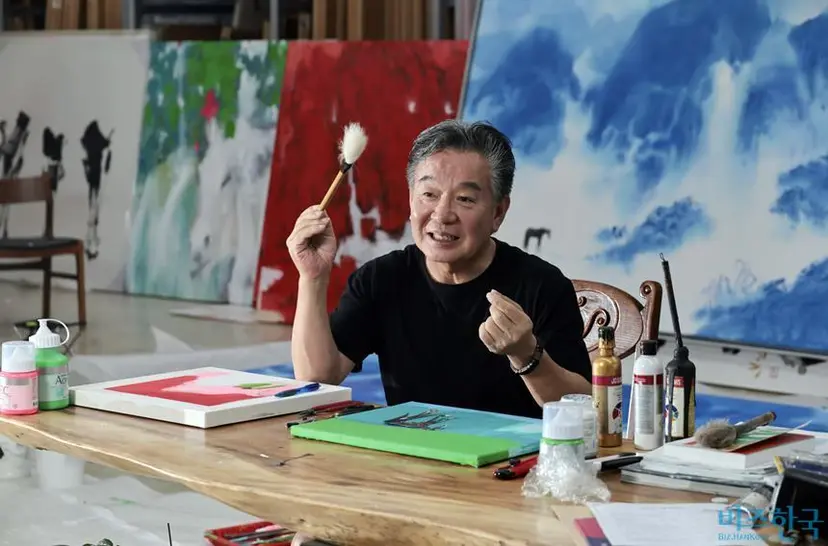
One of the most important elements for an artist is imagination. It has served as a fundamental driving force for humanity in creating the world we know today.
While film is currently considered the genre that best realizes imagination, painting led the way prior to its emergence. This is why science fiction and fantasy films, which rely on imagination as their lifeblood, still frequently reference paintings even today.
In Western art history, imagination was brilliantly demonstrated through Symbolism, which emerged in the late 19th century. At the time, the European art world was highly focused on the visible world. The thoughts of the realist painter Courbet, who said, "If you show me an angel, I will paint one," and the aesthetic theory of the Impressionist painter Monet, who argued that "what we see is a fleeting image created by light," were both rooted in an interest in how to interpret the visible world.
Symbolism was a new movement that went against the dominant trends of the art world at the time. Therefore, Symbolism set its sights on the invisible world. In other words, it became interested in the supernatural, the artist's inner thoughts, and abstract concepts. Consequently, the themes favored by Symbolist painters were life and death, abnormal psychology, anxiety, love, sex, dreams, and fantasies.
However, these tendencies of Symbolism had already appeared long ago in Eastern art. One such example is "Giun Saengdong" (conveying the inherent spirit and temperament of a subject through vibrant expression), one of the "Six Principles of Painting" (proposed by Xie He during the Southern Qi dynasty) considered the highest ideal in Chinese painting. Thus, in landscape painting, capturing the artist’s thoughts through nature was considered a high-class work of art. In a sense, they used all things in nature as tools of symbolism to contain their own ideas.
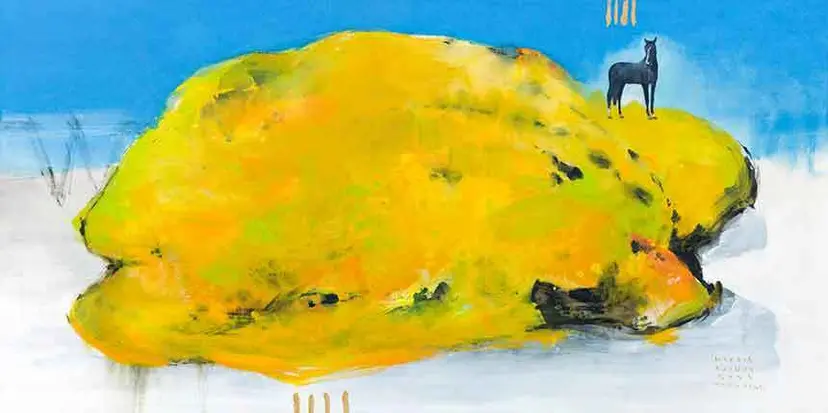
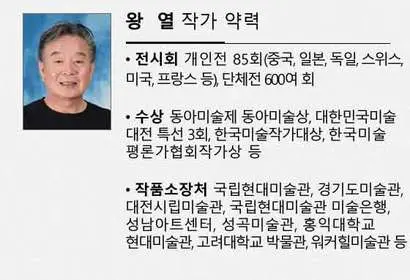
Wang Ryul captures his own thoughts by adding symbolic metaphors to these traditional methods of Oriental painting. He is an artist who has opened up a unique world of contemporary ink and wash painting, based on orthodox ink and color techniques. His paintings, which reveal long-honed skills and talent, have garnered attention for planting spaces of imagination within landscape paintings.
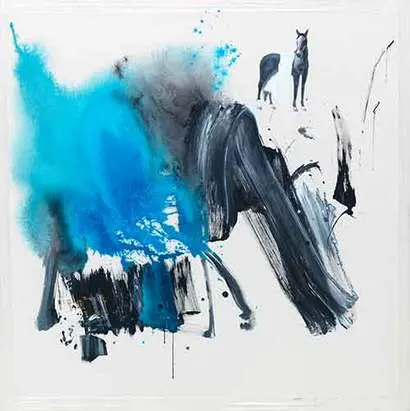
The thoughts of the artist embedded in these landscape scenes are a utopia that everyone dreams of—a world of perfect harmony as demonstrated by the laws of nature. Appearing as a symbol of humanity yearning for this is a horse with abnormally long legs. It is a "horse lost in thought." The horse carries a dual symbolism: in the horse deep in meditation, we see a representation of humans craving utopia, while in its long legs, we can infer the modern aesthetic of "long legs."
Let us seek the utopia guided by these long-legged horses in the paintings of Wang Ryul, where we can catch a glimpse of the symbolism found in traditional painting.