

[비즈한국] The US-China trade conflict is reigniting as China shifts to a rare earth export permit system, met by the U.S. threat of retaliatory tariffs. Regarding the summit with Chinese President Xi Jinping, which was scheduled to take place during the APEC meeting in Gyeongju in late October, U.S. President Donald Trump suggested the possibility of a cancellation, stating, "I was scheduled to meet with President Xi, but now I see no reason to do so."
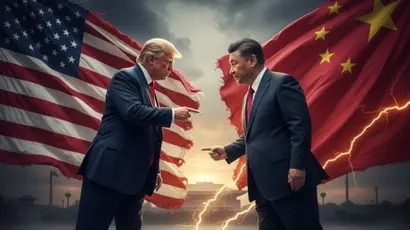
On the 10th (local time), President Trump criticized China via social media, stating, "China is attempting to impose export controls on rare earth production elements," adding that it is "an act of holding the entire world hostage." Concerns are mounting that the face-to-face meeting between Trump and Xi, which was being pursued for the first time in six years since the 2019 Osaka G20 summit, could be canceled.
This reignition of trade tensions stems from the Chinese Ministry of Commerce’s announcement on October 9 regarding "measures to strengthen rare earth export controls." Through a notice titled "Decision on Export Controls for Offshore (Foreign) Rare Earth Materials," the Ministry of Commerce announced that it would shift rare earth exports to a permit-based system. Rare earths refer to rare metals used as core materials in high-tech industries.
The Chinese Ministry of Commerce designated rare earth metals and their related alloys and compounds as dual-use materials for both civilian and military purposes, making Ministry of Commerce approval mandatory for exports. Furthermore, it announced that export controls would also be implemented for overall related technologies and production facilities, including rare earth mining, smelting, and the manufacturing of magnetic materials.
Additionally, items such as permanent magnets manufactured overseas that contain Chinese rare earths have been included under export controls. This measure is interpreted as an intention to fundamentally block not only the rare earth raw material supply chain but also indirect routes where Chinese intermediate goods are processed in third countries and then exported to the United States.
In response to China's measures, the U.S. has threatened strong retaliation. President Trump declared that starting November 1, he would impose an additional 100% tariff on China on top of the tariffs currently in place. He also announced that he would control the export of key software to China. It is a situation of "technology weaponization" countering the "resource weaponization" of rare earths.
The rekindling of the US-China trade conflict immediately shocked financial markets. On the 10th (local time), when President Trump signaled a strong response, the New York stock market plummeted. Compared to the previous day, the S&P 500 index fell by 2.71%, the Dow Jones by 1.9%, and the Nasdaq by 3.56%.
In particular, Big Tech companies took a major hit. Nvidia's stock price plummeted by 4.89% from the previous day, Tesla fell by 5.06%, and Apple dropped by 3.45%. Microsoft and Amazon also declined by 2.19% and 4.99%, respectively.