

[비즈한국] U.S. President Donald Trump announced on October 6 (local time) that a 25% tariff will be imposed on imported medium and heavy-duty trucks starting November 1. This measure delays the implementation date, which was originally scheduled for October 1, by one month.
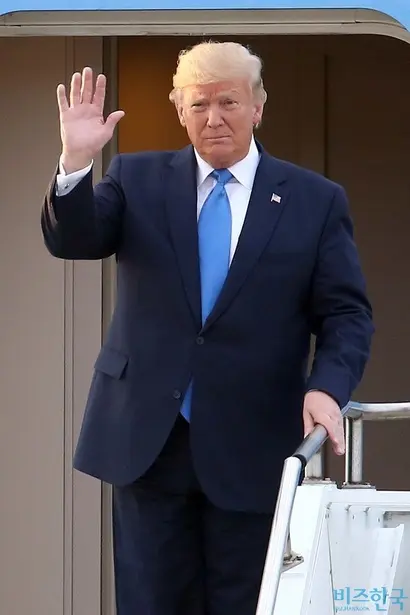
President Trump stated on his social media platform, Truth Social, that "Beginning November 1st, 2025, all Medium and Heavy Duty Trucks coming into the United States from other Countries will be Tariffed at the Rate of 25%."
Last month, President Trump warned that he would impose a 25% tariff on heavy-duty trucks, citing "necessity for national security purposes." In this latest announcement, the scope has been expanded to include medium-duty trucks. However, the timing of the imposition has been delayed by one month from the initial warning. Medium-duty trucks refer to vehicles with a gross weight between 14,001 pounds (approx. 7 tons) and 26,000 pounds (approx. 13 tons), while heavy-duty trucks refer to vehicles weighing 26,001 pounds or more.
The Trump administration launched a "Section 232 Investigation" earlier this year to review the impact of truck imports on U.S. national security. Section 232 of the Trade Expansion Act grants the President the authority to impose high tariffs if it is determined that certain imported goods pose a threat to national security. Citing this clause, President Trump has been raising tariffs on steel and aluminum since June.
The tariffs on trucks appear to be applied separately from existing automotive tariffs. On the 25th of last month, President Trump also signaled the imposition of tariffs on a wide range of household products beyond heavy trucks, including pharmaceuticals, kitchen and bathroom furniture, and sofas. Consequently, there are concerns that domestic pharmaceutical companies and related industries will be affected.
South Korea reached an agreement with the U.S. last July to lower reciprocal tariffs from 25% to 15%, but a formal Memorandum of Understanding (MOU) was not signed. As a result, tariff negotiations with the U.S. are still ongoing.
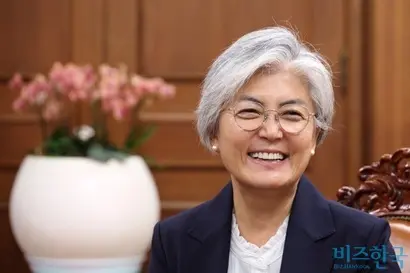
The Lee Jae-myung administration appointed former Foreign Minister Kang Kyung-wha as Ambassador to the U.S. on the 6th. In her inaugural address, Ambassador Kang stated, "The South Korea-U.S. alliance is at the core of pragmatic diplomacy," and expressed her intent to find common ground regarding tariff negotiations. Some lawmakers from the ruling Democratic Party of Korea plan to visit the U.S. during the Chuseok holiday to convey South Korea's position on investment in the U.S. to American business leaders.
Some observers suggest that South Korea and the U.S. may finalize detailed tariff negotiations during the Asia-Pacific Economic Cooperation (APEC) summit held in Gyeongju on October 27. It is also reported that U.S. President Donald Trump will visit South Korea on the 29th.