

[비즈한국] “My 7-month-old baby needed a flu shot, but the hospital mistakenly administered a COVID-19 vaccine,” or “I was told to return to the hospital because my 31-month-old was given a vaccine approved only for those 36 months and older after I had just brought them in for a flu shot.”
Representative Baek Jong-heon of the National Assembly’s Health and Welfare Committee (People Power Party, Geumjeong-gu, Busan) stated in August last year, citing data received from the Korea Disease Control and Prevention Agency (KDCA) on the “Status of COVID-19 Vaccine Utilization and Disposal,” that approximately 30% of COVID-19 vaccines had been discarded. Based on data from 2021 to August 2024, a total of 216.79 million doses of COVID-19 vaccines were imported, of which 61.6 million doses (28.4%) were discarded due to expiration.
Efficient vaccine management, including preventing vaccination errors and disposing of expired stock, has become a pressing social issue. Amid this reality, one company has developed a “Vaccine Integration Management System” that allows recipients to monitor their vaccination history and adverse reactions. Established in 2018 and now in its seventh year, Realtime Medi-Check has built a business model that even provides pharmaceutical companies with directions to improve vaccine safety by utilizing data on adverse reactions from recipients. Some in the industry expect this to open a new chapter in vaccine development and distribution. We met with Realtime Medi-Check CEO Im Jae-jun at the AI Festa held at COEX in Gangnam-gu, Seoul, on the 1st to hear about the motivation behind his startup and his future goals.
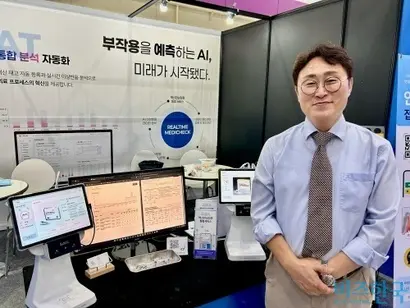
CEO Im explained that while consulting on vaccine distribution with SK Bioscience302440 in 2018, he discovered structural problems in vaccine distribution, which led to the development of the vaccine management system. “At that time, and even now, vaccines are mass-produced and supplied to medical sites based on aggregate demand forecasts, leading to large volumes of waste,” he said, explaining the motivation for his startup. “I determined that a system capable of precise demand forecasting based on AI and real-world data was necessary.” After conducting pilot projects for three years starting in 2021—covering 30,000 people in the Gangwon Regulation-Free Special Zone and approximately 10,000 people in the Seoul metropolitan area last year—he refined the service and launched the AI-equipped Vaccine Integration Management System this past March.
When a medical professional scans the UDI (Unique Device Identification) attached to a vaccine using a device linked to the system, it connects to public data from the Ministry of Food and Drug Safety to verify the vaccine's information. If the vaccine has expired, the device displays a message saying, “Please recheck the vaccine,” preventing administration errors. In essence, vaccine recipients can avoid the risk of medical accidents. CEO Im noted, “For oral medications, post-administration measures like stomach pumping are possible if taken incorrectly, but once a vaccine is administered, that’s it. Considering the nature of vaccinations, a proactive prevention system is crucial.”
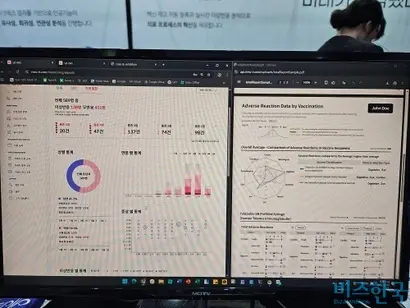
Recipients can check information about the vaccine they received via a QR code provided by the medical institution, which also helps in the systematic management of their vaccination history. Additionally, they can report any adverse reactions after the shot, and this information can be monitored in real-time by the medical institution using the system. CEO Im explained, “The AI analyzes the adverse reactions recorded by the recipient, enabling effective post-vaccination management. It allows for not only individual patient care but also statistical analysis of post-vaccination side effects.”
Currently, seven locations use Realtime Medi-Check’s system, including Gangnam-gu Public Health Center, Yangcheon-gu Public Health Center, Yeonsu-gu Public Health Center in Incheon, Seongnam Medical Center, Saeul Hospital in Incheon, Samsan Hospital in Wonju, Gangwon, and Ma-eum Internal Medicine Clinic in Ansan, Gyeonggi. Following the additional service launch this December, the company plans to begin full-scale expansion targeting medical institutions and pharmaceutical companies. The additional service will focus on integrated analysis of data such as adverse reactions collected from multiple hospitals. This service targets vaccine manufacturers and is expected to be used to improve future vaccines.
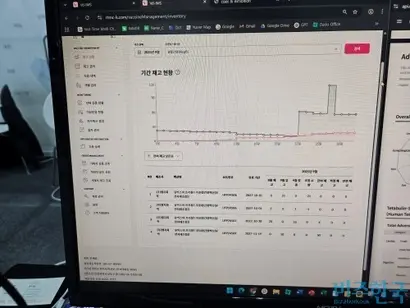
CEO Im also expects this system to contribute to the efficiency of vaccine distribution. Because medical institutions can use AI to predict vaccine usage and inventory levels before they end up with excessive supplies that must be returned to the manufacturer and discarded after expiration, they can order more accurately. For pharmaceutical companies, this means more effective utilization of resources used in vaccine production by reducing the volume of discarded doses.
The company also plans to increase the versatility of the Vaccine Integration Management System in the long term. While it currently only services vaccines, CEO Im's goal is to expand the scope of the service to other injectable treatments similar to vaccines in the future.
The company is also accelerating its global expansion. In March of this year, it signed an MOU (Memorandum of Understanding) with Target Health, a US-based CRO (Contract Research Organization), and signed LOIs (Letters of Intent) with the Flanders regional government of Belgium and the Belgian Embassy in Korea, respectively. CEO Im explained, “Global pharmaceutical company Moderna recently began operating ‘ShotCare,’ a vaccine management notification program that includes features like KakaoTalk notifications, a vaccine integration management screen, and patient consultation guides. Although these are only some of our features, the fact that a global pharmaceutical company has released a competing program actually makes it easier for us to explain our own services.”