

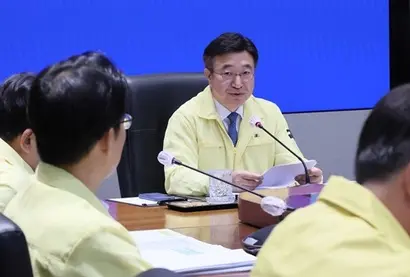
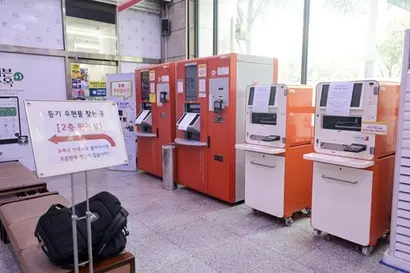
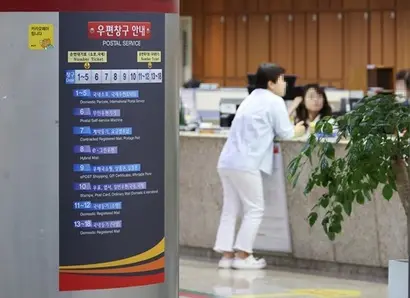
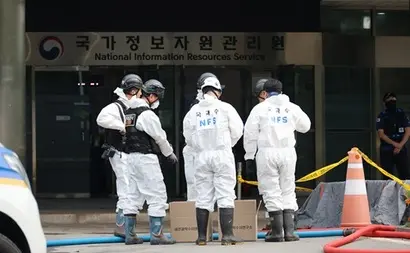
[비즈한국] As government administrative system failures continue for the sixth day in the wake of a fire at the Daejeon headquarters of the National Information Resources Service (NIRS), the government’s dedicated data center (IDC), the inadequate disaster recovery system has come under fire. As of the morning of the 1st, the overall recovery rate was around 15%, while the recovery rate for Grade 1 systems, which have high importance and usage rates, remained at half capacity for the second consecutive day. While there is criticism that cloud redundancy measures were insufficient, experts agree that the structural limitations of the national computer network have been exposed and that an overhaul of the entire disaster response system is urgently needed.
Where did site safety management collapse?
The consensus is that this fire at the NIRS, which crippled the national computer network, was not an unpredictable, sudden accident. Similar incidents have occurred in both the public and private sectors recently, such as the government’s "Government24" administrative system failure in 2023 and the KakaoTalk outage in 2022. The Ministry of the Interior and Safety had already confirmed the possibility of battery fires and the resulting risks to information systems in government-level research, yet the vulnerabilities in the government's computer network remained.
The fire broke out while work was being done to separate lithium-ion batteries for an Uninterruptible Power Supply (UPS)—a device that provides continuous power to multiple computing systems—from the servers in the server room. A significant number of the 192 stacked battery packs were burned, and the primary issue cited is that the physical conditions, such as the server room layout and the distance between servers and batteries, were inadequate. According to US safety standards, to ensure safety, a non-combustible barrier must be installed between servers and batteries, and a distance of at least 90 cm must be maintained. According to fire authorities, the distance between the batteries and servers in the affected server room was 60 cm.
Experts pointed out the need to strengthen safety management in server rooms. Although it has been just over two years since relevant measures, such as strengthened safety standards for lithium-ion batteries, were introduced, there were gaps in practice at the site.
Lee Young-joo, a professor of Fire and Disaster Prevention at the University of Seoul, explained, "While there were no separate isolation guidelines for lead-acid batteries, which have lower risks than lithium-ion, lithium-ion batteries require space separation or distancing due to their relatively higher fire risk. In particular, there is already a history of battery room fires, such as the Kakao case. The necessity of spatial separation is emphasized, and measures like installing battery rooms in completely partitioned spaces, rather than just simple distancing, are being implemented in the field."
However, some suggest that physical and technical safety measures alone cannot completely prevent damage. Professor Lee said, "In a special situation like this, where relocation construction was underway, it is difficult to completely eliminate the risk of accidents due to various variables, no matter how well-equipped the facility is, so it is hard to be purely critical."
Clear limits to ‘redundancy’: “Fundamental check of network structure needed”
It is expected to take considerable time to clearly determine the direct cause of the fire. However, the current situation where government computer networks and public administrative services have stopped can be viewed as a structural problem stemming from a lack of disaster recovery (DR) systems and redundant computing infrastructure.
How far has South Korea’s information disaster recovery system come? Experts assess that it is at a stage where only basic data backups and a limited level of redundancy are built.
The NIRS, which manages national computer systems, currently has data backup linkage functions with the Gwangju and Daegu centers, but an "active-active" disaster recovery environment that realizes "zero service interruption" has not been built. This means there was a hole in the real-time cloud disaster recovery system that would allow for services to be immediately handed over and resumed even if data backup was successful.
Lee Ki-hyuk, a professor of Convergence Security at Chung-Ang University, said, "The server room where the fire occurred had a server DR system, but the cloud DR system was not fully built. The Gongju Center, which is pushing for redundancy with the Daejeon headquarters, is experiencing delays in operation due to budget shortages."
The Gongju Center, which was originally promoted for data backup in the event of emergencies like fires, completed construction in May 2023, but its operation was postponed again when the government administrative network failure occurred in November of the same year. In the process, the plan was modified to a dualized method featuring an active-active system, which was accompanied by budget cuts for operations, maintenance, and management. Regarding next year’s budget, the Ministry of the Interior and Safety requested 7.4 billion won, but it has been reduced to 4.3 billion won during the Ministry of Economy and Finance’s adjustment process.
Yeom Heung-yeol, a professor of Information Security at Soonchunhyang University, pointed out, "Grade 1 and 2 systems with high impact or usage rates require site dualization to ensure service continuity, but the system was insufficient and flaws have been exposed."
There are also technical challenges when dualizing. When the headquarters and the backup center operate servers and databases, respectively, all changes must be accurately reflected. Professor Yeom pointed out, "This is because a total of four systems—one set of redundant systems and a dualized system between centers—must synchronize to manage common data. If immediate dualization is difficult, it is necessary to take a realistic approach by practically implementing the 'active-standby' structure (a structure where a standby center is activated when an accident occurs) proposed by the government. A plan to cooperate with private sector companies is also worth considering."
Professor Lee emphasized, "The reality that only security personnel are sought when data-related problems arise has been repeated, and neither large corporations nor the government can properly explain the structure of the systems they operate. This situation has clearly shown that a long-term plan and a big picture are needed in national information management. We must redraw the entire framework from the ground up, including a comprehensive inspection of battery storage and operations."