

[비즈한국] Regardless of whether content is invested in, produced by, or entirely owned by Korea in terms of IP, Korean-themed content is yielding positive effects. Beyond simply increasing the brand value of K-content or tourism revenue, historical facts are being shared globally. This impact manifests not only through direct effects via the works or content themselves but also in entirely unexpected dimensions, emerging from the voluntary participation of fans and the "digging culture."
In 2022, the Apple TV+ drama "Pachinko" produced an unforeseen effect. Although based on the novel of the same name by Korean-American author Min Jin Lee, many viewers were unfamiliar with the book and may have had preconceived notions about the term "Pachinko." Since "Pachinko" is a Japanese gambling machine, few expected the drama to deal with Korean history. However, the series received critical acclaim for artistically sublimating the realities of the Japanese colonial era. A scene that poignantly captures this is when the protagonist Sunja’s mother tries to buy rice.
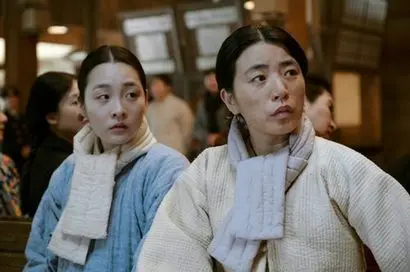
"I’ve come to buy some rice today. I don’t need much, just two hop (a small measurement unit) will do." "You know I can't sell rice to just anyone, right? If a Japanese official comes to inspect and I’m short on stock to sell to the Japanese, I’ll be in big trouble." During the Japanese colonial period, Joseon people could not freely buy or eat rice. Despite the circumstances, the mother wanted to cook a meal for Sunja before she left for Japan for her marriage. Sunja had to marry Isak and move to Osaka, where his brother lived. "My daughter is leaving for Japan to join her husband soon. I’m not in a position to do much for her, but I wanted her to taste the rice of our own land at least once. I want to feed her that before I send her off."
This dialogue, which illustrates the reality of being watched even while eating rice grown on Joseon soil, conveyed the harshness of the era more powerfully than a thousand words. It also showed the warmth and kindness of the Joseon people. "Here’s three hop." "Thank you." "Sunja's mom, eat some too, and swallow some of your sorrow."
In Season 2, which aired in 2024, the drama "Pachinko" explicitly showed the persecution faced by Sunja and the Joseon people who had moved to the Japanese archipelago. The scenes where Sunja’s children, Noa and Mozasu, were bullied and insulted at school stirred public indignation. And what about the scene using kimchi to incite ethnic discrimination? People around the world learned about the lives of Zainichi (Koreans in Japan). Conversely, the scenes depicting the warmth and mutual encouragement among the people of the same ethnicity improved the image of Koreans as a whole, including the Zainichi community.
The Netflix series "Gyeongseong Creature," released in December 2023, also had an unexpected effect. Since the show starred Park Seo-jun, a Hallyu star who gained immense popularity in Japan through the drama "Itaewon Class," Japanese fans eagerly tuned in. However, they were taken aback when scenes of the Japanese military performing human experiments during the colonial era appeared. While some claimed it was historical distortion, they eventually had to acknowledge it; although not taught in the official Japanese curriculum, one could easily find the reality of Unit 731 by searching the internet.
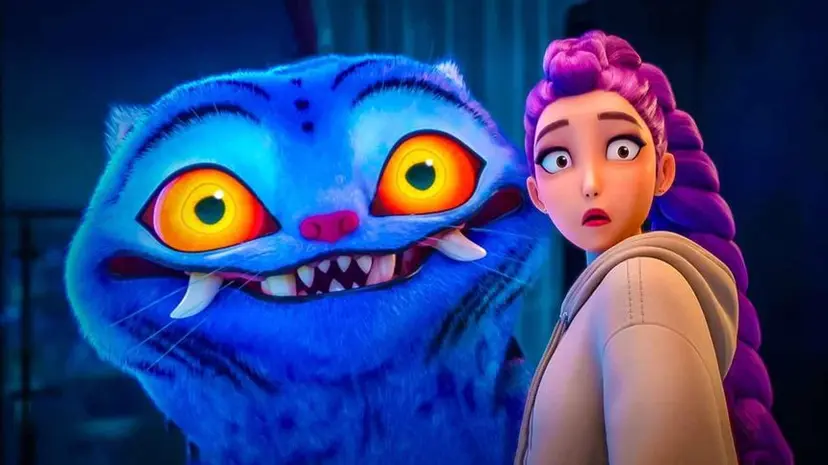
Thus, overseas platforms like Netflix and Apple TV+ have come to play a crucial role in spreading historical truths. This effect triggered a butterfly effect in a completely different way for "K-Pop Demon Hunters." A fan who loved the tiger "Duffy," inspired by the tiger from traditional Korean folk paintings (Hojakdo), discovered the history of the extermination of Korean tigers and shared it with the world.
The film dealing with the last tiger of Joseon is "The Tiger," starring Choi Min-sik. The story follows a Japanese military general named Maenozō in 1925, who is obsessed with acquiring a tiger skin before returning to Japan. His confrontation with Chun Man-duk (Choi Min-sik), the best hunter in Joseon who seeks to protect the last tiger, ends in tragedy. While the film highlights the personal greed of a Japanese military officer, the actual Japanese colonial government defined tigers as "harmful beasts" and organized the "Jeongho-gun (Tiger Extermination Force)" in 1917 to engage in indiscriminate hunting. Because of this, there are no official records of tiger captures on the Korean Peninsula after 1924. That a young Black woman—neither Korean nor a descendant of Koreans—discovered and shared this history is a highly encouraging case.
This event prompted people around the world to take an interest in Korean history and played a role in denouncing the behavior of Japan, which remains ignorant of its history of colonial aggression and avoids reflection and responsibility. This is thanks to Korean-American director Maggie Kang and the production team. Moreover, it was ironic that an animation produced by a Japanese company, Sony Pictures, exposed the history of Japanese imperialism. It was a case demonstrating the vital role of Korean-heritage creators and a good example of establishing historical awareness using global OTT platforms. Thanks to this, even overseas fans are now taking an interest in history and engaging in welcoming and beneficial activities regarding Korea.
Regarding Korean-heritage creators, there is recent good news. Korean-American author Susan Choi’s novel "Flashlight" has been nominated for the UK's Booker Prize. Similar to "Pachinko," "Flashlight" features a setting that alternates between the Zainichi community and the Korean-American community. The author has a solid track record of awards: "Trust Exercise" won the 2019 National Book Award, and "American Woman" was a Pulitzer Prize finalist in 2004.
The Booker Prize, which selects works published in the UK and Ireland, carries more influence than the International Booker Prize. We look forward to the results in November. If the novel "Flashlight" were to be made into a drama, it could create an unexpected butterfly effect. In the adoption cycle model, K-content is crossing the chasm from the enthusiast preference stage into the early adopter stage. This is a phase where solidarity, cooperation, and collaboration must be active. If historical facts are globally recognized through such efforts, Korea’s image and brand value will also rise.
The author, Kim Heon-sik, has walked and navigated the forest of pop culture phenomena since his 20s, with the expectation that there is a way to make the world a better place through culture. In the 21st century, where AI and quantum computers are at work, he continues to follow the same path with the same belief.