

[비즈한국] Lately, intense reactions to the movie 'Can't Help It' have been popping up all over social media and online communities. The film is directed by Park Chan-wook, one of the most prominent directors in South Korea. The cast is filled with incredibly star-studded names, including Lee Byung-hun, Son Ye-jin, Park Hee-soon, Lee Sung-min, Yeom Hye-ran, and Cha Seung-won. Although it didn't win an award, it drew attention as the first Korean film to enter the competition section of the Venice International Film Festival in 13 years. However, since its release, the film has faced a fierce wave of negative reactions, contrary to initial expectations. While Park Chan-wook's films are known for being polarizing and niche, I don't think anyone anticipated this level of response.
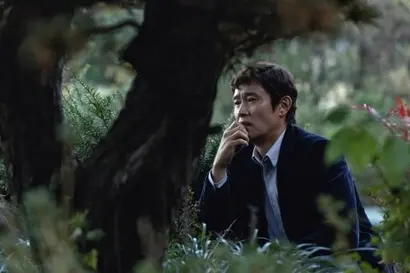
I enjoyed watching 'Can't Help It.' I’ve always liked the texture of Park Chan-wook’s films, and I also appreciated the dark comedy sensibilities of this one. I don't consider it Park’s absolute masterpiece. Many people compare it to his previous work, 'Decision to Leave,' but as the director himself has said, it is a completely different type of film, so it’s unreasonable to compare them directly. While I admire the cinematic quality of 'Decision to Leave,' personally, I found 'Can't Help It' more entertaining. Moreover, given that everyone is debating Park's film so vigorously, there is no way I could avoid covering it in this column while it is still showing in theaters.
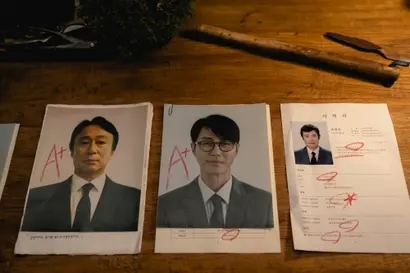
What people seem to understand the least about 'Can't Help It' is the protagonist Yoo Man-soo’s (Lee Byung-hun) choices and his motivations. After working for 25 years at a paper company and being laid off in an instant, Man-soo guarantees he will find new employment within 3 months, but he fails to do so for over a year. Unable to endure any longer, he makes a dangerous choice: if there are no openings, he will secure a job by removing his competitors, and he proceeds to carry out this plan. At this point, people fail to understand him, arguing that he is using "can't help it" as a cowardly excuse when his situation is not actually unavoidable. They criticize his motivation as weak and lacking probability. Some even go on at length, comparing it to 'Sympathy for Mr. Vengeance,' to argue that his situation wasn't truly desperate.
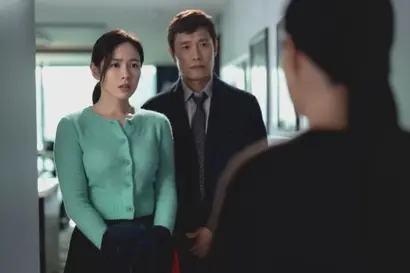
But... are Man-soo's motivations really worth such harsh criticism, and do they seriously ruin the film's quality? Of course, a normal person wouldn't kill their competitors just because they can't find a job. In the film, Man-soo’s situation is clearly not what anyone would call "unavoidable." As his wife Mi-ri (Son Ye-jin) suggests, he could have sold the house, paid off the remaining loan, and moved to a smaller apartment. He could have even considered changing fields by leveraging his high-end hobby of bonsai. Above all, even though he hasn't found a job for over a year, the only things that have changed in Man-soo's household are Mi-ri giving up her tennis and social dance lessons, taking on a part-time job, having a sparser dining table, and canceling their Netflix subscription. Oh, and sending their two Golden Retrievers to live with his in-laws. I can understand why people find it frustrating and incomprehensible that he would resolve to murder over this.
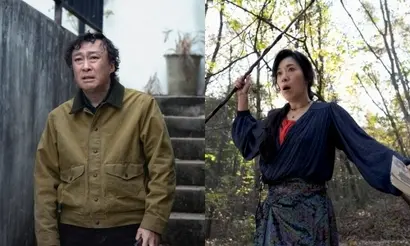
However, from the perspective of the middle class, Man-soo's desperation is entirely understandable. Man-soo did not sit idle during his unemployment. He worked part-time at a large supermarket while consistently looking for job opportunities. His wife mentioned a new field like bonsai, but let's be honest, don't we know? How hard is it for someone who has worked in one field for 25 years to suddenly transition to another? With only hobby-level skills, it is not easy to break into the cold, harsh world of making a living. It’s not impossible, but even if he did, a 25-year veteran would likely be treated as a mere entry-level recruit. And how many job seekers are out there trying to get those entry-level spots? There is no reason to hire an older man like Man-soo.
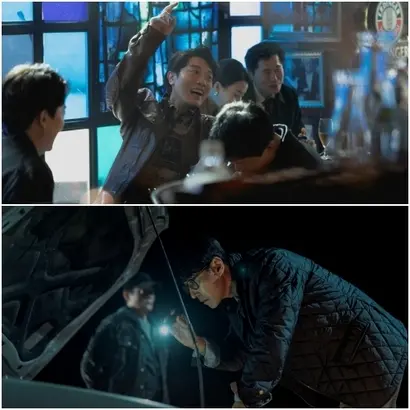
Whether it’s the supermarket or changing fields, that level of compensation might allow one to survive, but it cannot sustain the life Man-soo had built. He can't return to the days of barbecuing in the yard and dancing with his wife. He cannot manage the roughly 300 million won in remaining loans and his daughter’s increasingly expensive cello lessons. He cannot bring back the two Golden Retrievers he raised like family. His wife would have to continue working as a part-time dental hygienist, and the future of their daughter, who seems to border between genius and autism, finding success as a cellist and becoming independent would look bleak. As for Man-soo’s sense of pride as a breadwinner and a veteran professional, which he expressed at the beginning of the film by saying he had "achieved everything"? It would be completely shattered. He might be able to live, but is that the life of a person who once stood at the pinnacle, believing they had achieved everything in their family and career? Wouldn't people like Gu Beom-mo (Lee Sung-min), Go Si-jo (Cha Seung-won), and Choi Seon-chul (Park Hee-soon)—who, like Man-soo, throw their lives into their work and identify with it—also understand his desperation?
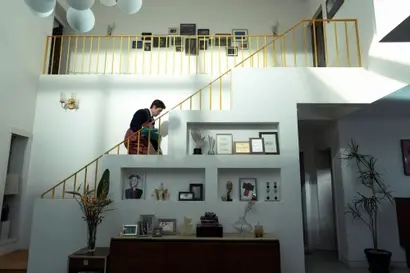
In terms of the differences between Park Chan-wook and Bong Joon-ho that people keep mentioning: if Bong draws audiences into the unfolding situation to gain empathy, deliver a message, and ultimately leave a lingering emotion, Park constantly reminds the audience that this is a story, emphasizing a sense of distance while simultaneously captivating them with alluring devices to deliver his message. An old Twitter thread about the 'difference in weirdness between Park and Bong' puts it clearly: Park's films are like slicing a beautiful mermaid into raw sashimi while it’s still alive, while Bong’s films are like a shop owner at a Gwangalli fish market shouting, "Today, mermaid sashimi is only 10,000 won!" 'Can't Help It' is the same. This film is a black comedy. A black comedy made by Park Chan-wook. It means you don't have to start by empathizing with and supporting the protagonist's choices. Isn't the attempt to empathize with the protagonist in a black comedy—a genre that draws the absurdities of life in a way that is funny, yet impossible to laugh at—itself absurd?
'Can't Help It' surpassed 1 million viewers in just five days and is sailing smoothly, but it will never be the "10 million viewer" film that Director Park Chan-wook always wishes for(?). Although it was claimed to be an accessible, popular film, it is not a movie that everyone, young and old, will enjoy. I’d like to insist that it’s a great film to enjoy with family during the Chuseok holidays, but it might actually leave your family with questions. However, if you treat a movie as just a movie, there is no reason not to enjoy it. There is great fun in seeing Park's signature mise-en-scène and listening to the music, which starts with the second movement of Mozart's Piano Concerto No. 23, goes through 'Red Dragonfly' and 'Yes, Let's Walk,' and finishes with cellist Jean-Guihen Queyras’s performance of 'Le Badinage.' Most of all, the acting ensemble of actors who complete Park’s bizarre worldview is a pleasure you cannot miss.
The film’s ending song, 'Le Badinage,' is said to mean a joke or light banter. I encourage you to take the chance to experience this light joke from Park Chan-wook in a theater, along with the heavy emotion that will remain at its end. Personally, I am very curious about what kind of impressions my father, who was once a successful executive at a major corporation before retiring, would have had about this film. If my father, who was extremely logical but also enjoyed reciting classical Chinese poetry, had seen it, he might have wiped away a tear.
Rating ★★★☆
A trigger for a joke fashioned from the weight of a breadwinner and human dignity.
Who is the author, Jung Su-jin?
I have worked for several magazines, covering and writing about movies, travel, and pop culture. I don’t want to fall behind trends, but I’ve become an "old person" who watches the latest dramas and only predicts obvious clichés for the next scene. I am currently trying to regain my sense of intuition while drifting through the vast world of OTT platforms; my current wish is for a unified OTT subscription plan.