

[비즈한국] The search for a new owner for Cleanopia has begun in earnest. The private equity firm JKL Partners is pushing for a plan to sell its 100% stake, which it acquired for approximately 190 billion won in 2021, for around 600 billion won. While the market views this as a "successful exit after four years," the franchisees themselves look upon it with a jaundiced eye. There is a barrage of criticism that the "squeezing of franchisees" intensified during the process of boosting performance under JKL’s ownership, and concerns are growing that this intensity could heighten if it is acquired by another private equity firm.

JKL triples the valuation... Allegations of "inflated revenue for the sake of sale"
JKL Partners is in the process of selling Cleanopia. The sale target is the 100% stake in Cleanopia held by the JKL Partners fund. It is known that Stick Investment was selected as the preferred bidder for the acquisition at the end of August, and due diligence is currently underway.
JKL acquired a 100% stake in Cleanopia for approximately 190 billion won in 2021. The current sale price is reported to be around 600 billion won. This means the company’s value has more than tripled in just four years since the acquisition. Industry insiders estimate that if this deal is successful, it will be the largest scale among JKL's investment recoupment cases.
Indeed, Cleanopia’s performance grew rapidly following JKL’s acquisition. In 2020, just before the acquisition, the company recorded 84.7 billion won in revenue and 9.2 billion won in operating profit; by 2024, revenue had surged to 279.7 billion won, with operating profit reaching 31.1 billion won.
Among Cleanopia franchisees, however, there are claims that this performance improvement is an illusion caused by changes in the settlement structure rather than actual business success. One franchisee argued, "In the past, we paid a certain amount to the regional office (laundry plant) from the revenue generated by the store. But now, it has changed to a method where the headquarters settles the amount excluding franchisee earnings as total revenue first, and then pays only a portion to the regional office," adding, "JKL changed the settlement structure to boost corporate value and used that to drive up the price."
At the heart of these claims is the increasingly difficult reality for franchisees. Criticism is mounting that "while the headquarters was boosting its performance, some 3,000 franchisees were pushed to the brink. It’s classic private equity management that raises headquarters profits by squeezing the franchisees."
One franchisee vented, "The headquarters is not interested in franchisee profits. It's common for stores of the same brand to enter the same trade area because restrictions on opening new locations are lax." They added, "Focusing only on expanding revenue, they mandate operating hours from 9 AM to 8 PM and impose penalties if not followed. Since the profit margin for the store decreases if a penalty is received, we are forced to follow headquarters' guidelines against our will."
Another franchisee complained, "Even if I wanted to provide my own laundry collection and delivery service to increase sales, it's practically impossible because there are disadvantages if I don't stick to the operating hours set by the headquarters."
There is also deep concern among store owners that the situation for franchisees could worsen if sold to another private equity firm. Consequently, voices are growing to file an injunction against the sale to block it. One franchisee said, "If a company that bought it for 190 billion won and is selling it for 600 billion won is like this, imagine what a company that buys it for 600 billion won and thinks about reselling it for double would do."
Expansion of online services… "Franchisees' rice bowls are being snatched away"
Franchisee dissatisfaction has grown even further with Cleanopia’s recent launch of a new service in collaboration with Karrot (Danggeun Market). In June, Cleanopia began the 'My Neighborhood Laundry Service' through its partnership with Karrot. Consumers can request laundry services through the Karrot app without visiting a store. When a service is requested via the app, Cleanopia directly collects, processes, and delivers the laundry. The official Cleanopia pricing is applied, and free delivery is currently offered for the first order.
Cleanopia franchisees are strongly protesting, calling this a "measure that marginalizes offline stores." This service is operated independently of franchisees, with the headquarters performing the entire logistics process. There is a palpable fear among owners that as online orders connect directly to the headquarters, fewer customers will visit offline stores, leading to a decline in revenue.
One franchisee slammed the move, saying, "Who would want to go through the trouble of carrying and picking up laundry themselves? Once a customer leaves for an online service, they never return." They added, "I suspect the headquarters is planning to abandon and kill off offline franchisees. If they had considered coexistence, this service should never have been introduced in the first place."
The franchisees are particularly outraged because this service was pushed forward unilaterally without their consent. A Cleanopia franchisee vented, "When receiving laundry from Karrot, the packaging has a phrase that says, 'Meet Cleanopia conveniently without visiting the store.' This is a matter of survival for some 3,000 franchisees across the country, yet the headquarters launched this service without even listening to our opinions."
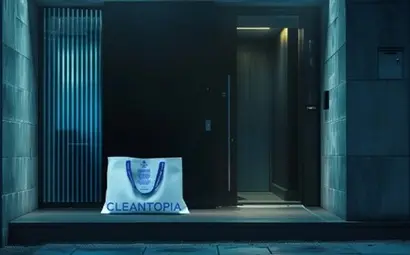
Cleanopia has recently been expanding its collection and delivery services through its own app and other online channels. Because the online service is structured so that the headquarters receives and processes orders directly without going through franchisees, the resulting profits go entirely to the headquarters.
According to franchisees, during the early days of online service introduction, the headquarters paid 38.5% of the laundry fee in the form of profit sharing to account for the regional franchisees' rights. However, this ratio dropped to around 18.5% in the subsequently introduced late-night collection/delivery service. Franchisees explain that for the new service in collaboration with Karrot, there is no profit sharing at all. One franchisee expressed frustration, saying, "The profit that used to be shared at a certain ratio has now become 'zero.' Are they trying to steal the franchisees' entire livelihood?"
A Cleanopia official stated, "The partnership with Karrot aims to increase service usage and store visits by expanding brand awareness and attracting new demand." They added, "It is currently in a pilot operation stage, focusing on verifying customer experience. At this stage, where the scope and transaction volume are limited, it is not at a level that causes significant changes to the franchisee profit structure."
The official further stated, "As most of the company's revenue is based on franchisees, we consider them the core axis of our business. We place top priority on enhancing customer experience and the sustainable growth of franchisees, and we are reviewing and introducing new services and collaborations in stages in line with market changes."