

[비즈한국] The path for domestic pharmaceutical and biotech companies to export to the U.S. is expected to become increasingly difficult. U.S. President Donald Trump's "Made in USA" strategy, aimed at protecting domestic manufacturing, is now extending to the pharmaceutical and biotech industry.
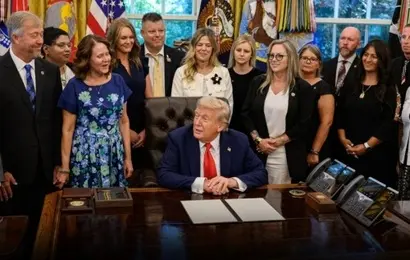
According to the pharmaceutical and biotech industry on the 30th, a 100% tariff rate will be applied to domestically produced patented drugs (original drugs) exported to the U.S. starting next month on the 1st (local time). While countries that have finalized reciprocal tariff agreements, such as those in Europe and Japan, are subject to a 15% tariff on pharmaceutical exports under the Most-Favored-Nation (MFN) principle, South Korea has yet to sign such an agreement. However, individual pharmaceutical and biotech companies with manufacturing plants in the U.S. are expected to avoid the "tariff storm," as the tariffs are waived for those that have already broken ground on or are currently constructing production facilities in the U.S.
SK Biopharmaceuticals326030 and Celltrion068270 are prime examples. SK Biopharmaceuticals has decided to establish a production facility for its epilepsy treatment "Xcopri (ingredient: cenobamate)" in Puerto Rico, a U.S. territory. Celltrion recently signed a final agreement to acquire a U.S. manufacturing plant from American pharmaceutical company Eli Lilly for 460 billion KRW. With an additional 240 billion KRW for operating capital and a projected 700 billion KRW for further facility expansion, the total investment for securing U.S. production facilities is expected to reach 1.4 trillion KRW. Celltrion Chairman Seo Jung-jin emphasized, "Through this plant acquisition, we have enabled domestic production in the U.S., effectively eliminating all uncertainty regarding tariffs."
Meanwhile, companies selling generics maintain that the 100% tariff rate does not apply to them. A representative from Huons243070 stated, "We understand that generic drugs are excluded from the tariff imposition," adding, "However, we are closely monitoring the situation." Huons currently exports five types of generic injections to North America (saline injection, 1% lidocaine hydrochloride injection 5ml ampoule, 0.75% bupivacaine hydrochloride injection 2ml ampoule, 1% lidocaine hydrochloride injection 5ml vial, and 2% lidocaine injection 5ml vial). Furthermore, in May of this year, the company received additional product approvals from the U.S. Food and Drug Administration (FDA) for two types of injections: the multi-dose 1% lidocaine hydrochloride injection 5ml vial and the multi-dose 2% lidocaine injection 5ml vial.
The company drawing the most attention in this tariff policy is Samsung Biologics207940. Samsung Biologics currently operates its Plants 1 through 5 in Songdo, Incheon, and has announced plans to locate Plants 6 through 9 in Songdo as well. Despite a rapid surge in U.S. sales, the company has yet to make any concrete moves toward securing local U.S. factories, making it a focal point of industry interest.
As of the first half of this year, U.S. sales accounted for 36.8% of Samsung Biologics' total revenue, an 11 percentage point increase in just six months from 25.8% at the end of last year. Because of this, Samsung Biologics is also leaving open the possibility of securing U.S. local production facilities. John Rim, CEO of Samsung Biologics, said at the '2025 BIO International Convention (BIO USA)' held in Boston, U.S. last June, "We are considering both building new factories in the U.S. and acquiring existing ones," adding, "We always consider good assets if the timing is right, but there haven't been any suitable ones yet."
For Samsung Biologics, the prolongation of U.S. tariff policies is inevitably a burden. While the nature of the CDMO (Contract Development and Manufacturing Organization) business allows for passing some tariff costs onto clients, a 100% tariff rate is a significant figure even for clients. Industry experts anticipate that to secure CDMO contracts, sharing the tariff burden to some extent will be unavoidable.
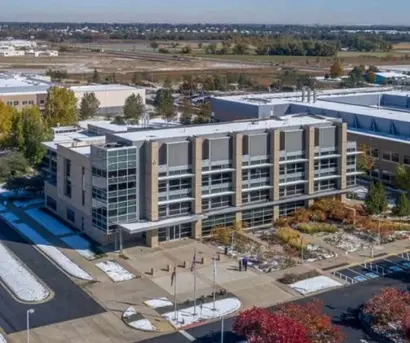
In this situation, the recent availability of pharmaceutical production facilities has drawn attention to Samsung Biologics' potential choices. Japanese CDMO firm AGC Biologics recently announced plans to sell its Boulder and Longmont plants in Colorado. The Boulder plant, capable of producing antibody treatments, holds two 20,000-liter cell culture bioreactors—larger than Samsung Biologics' Plant 1 (30,000 liters total). The Longmont plant is one that might interest Samsung Biologics, which is currently expanding its capabilities into new modalities. It is not only equipped with 'iCELLis,' a cell culture solution for gene therapy and vaccine production, but can also accommodate up to eight 20,000-liter mammalian cell bioreactors or perform large-scale filling processes. Novartis acquired the Longmont plant in 2019 through its subsidiary AveXis to produce 'Zolgensma,' a gene therapy for the rare genetic disorder spinal muscular atrophy (SMA), and AGC Biologics had also more than doubled the viral vector suspension technology and production capacity at the Longmont site in the third quarter of 2022.
The Bioeconomy Research Center of the Korea Biotechnology Industry Organization (KoreaBIO) analyzed that the Boulder plant's large-scale mammalian-based therapeutic protein manufacturing facility serves as a primary production base not only for major CDMOs like Samsung Biologics but also for biosimilar companies. Jung Yoon-taek, head of the Pharmaceutical Industry Strategy Research Institute, advised, "If the CDMO sector faces long-term tariff burdens, it seems necessary for Samsung Biologics to consider at least performing labeling or packaging processes within the U.S."
Meanwhile, Daewoong Pharmaceutical069620, Lotte Biologics, Samsung Biologics, Celltrion, and SK Biopharmaceuticals discussed the impact and response measures regarding U.S. pharmaceutical tariffs with the Ministry of Health and Welfare, the Ministry of Trade, Industry and Energy, the Korea Health Industry Development Institute, the Korea Pharmaceutical and Bio-Pharma Manufacturers Association, and KoreaBIO on the 29th. Reportedly, companies expressed concerns over weakening export competitiveness due to the U.S. tariffs and requested active government support, including expanded aid for entering the U.S. market and support for strategies to diversify export countries. The government plans to support pharmaceutical exporters by allocating 349 billion KRW in export-specialized budgets for the bio-health industry, including support for establishing overseas hubs and consulting, funding for global marketing and transportation costs, and expanding support for open innovation.